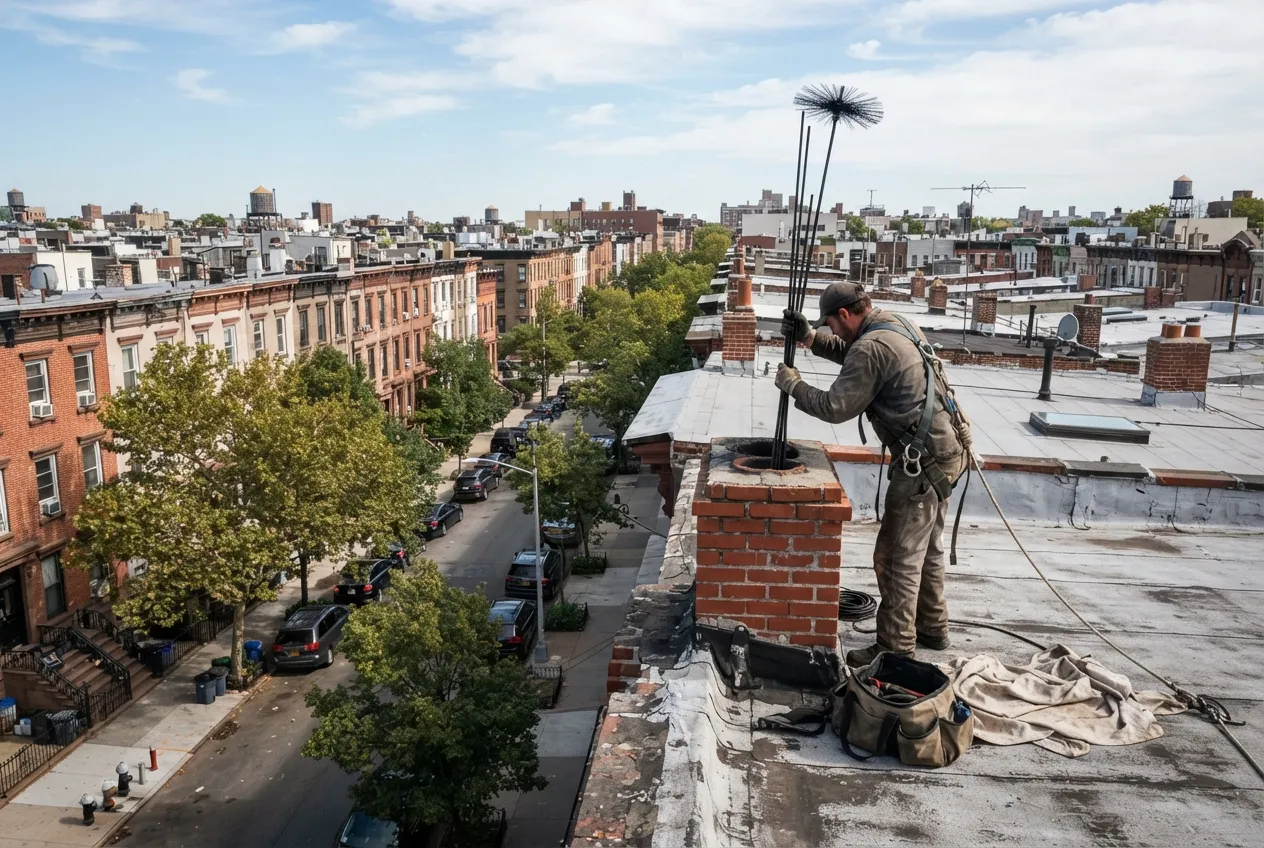
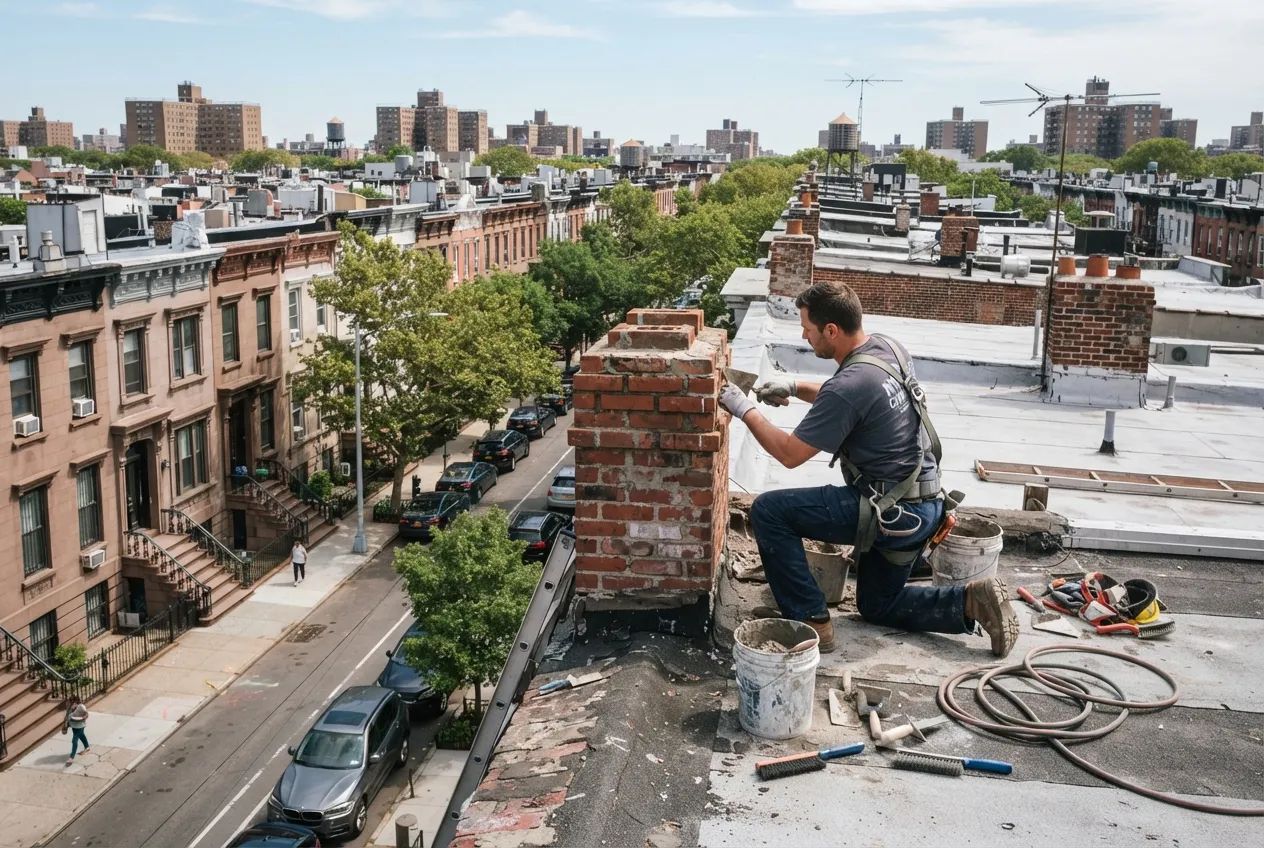
The short answer
You need chimney repair when you see water in the firebox, brick or mortar flakes, white staining on the masonry, or smoke that won't draft properly. All Star Chimney Sweep inspects the chimney to find the cause, then repairs the crown, mortar joints, flashing, cap, damper or liner as needed.
A chimney takes a beating in Brooklyn. Freeze-thaw cycles, wind-driven rain and years of heating all wear on mortar, brick, crowns and liners. Small cracks let water in, and water causes most of the damage that follows: crumbling joints, rusted dampers, stained walls and flues that no longer vent safely. All Star Chimney Sweep repairs masonry chimneys and flues for homeowners in Brooklyn and nearby cities. Our certified technicians find the cause first, explain what they see in plain terms and photos, and fix what needs fixing before a small problem becomes a rebuild.
Signs you need it
Most chimney damage starts slowly and out of sight, on the roof or inside the flue. By the time you notice something from the living room, water or heat has usually been working on the masonry for a while. If you see any of the following, schedule an inspection before your next fire or before heat season starts.
- Water dripping into the firebox or pooling on the hearth after rain
- Brick flakes, mortar sand or chunks of flue tile collecting in the firebox
- White, chalky staining on the outside brick or on an interior wall near the chimney
- A smoke or creosote smell in the room, especially on humid days
- Poor draft: smoke rolls into the room instead of rising up the flue
- Water stains or peeling paint on the ceiling or wall where the chimney passes through
What's included
Every repair visit starts with finding out why the damage happened, not just patching what's visible. Depending on what the inspection shows, our work can include any of the items below. We tell you which ones your chimney actually needs before we start.
- Inspection of the firebox, smoke chamber, flue, crown, cap and flashing
- Repointing: grinding out failed mortar joints and packing in fresh mortar
- Replacing spalled or broken bricks
- Rebuilding or resealing a cracked chimney crown
- Resealing or replacing flashing where the chimney meets the roof
- Installing or replacing a chimney cap to keep out rain and animals
- Repairing or replacing a rusted or stuck damper
- Relining a damaged flue, including liners for oil-to-gas conversions
- Photos of the problem and the finished repair
How our crew works inside your home and on the roof
Inside, the crew lays drop cloths from the door to the fireplace and seals the fireplace opening before any brushing or grinding starts. HEPA vacuums run during the work to capture soot and masonry dust at the source, so it doesn't drift into the room. When the flue needs cleaning before we can inspect it properly, we use rotary brushes sized to your flue.
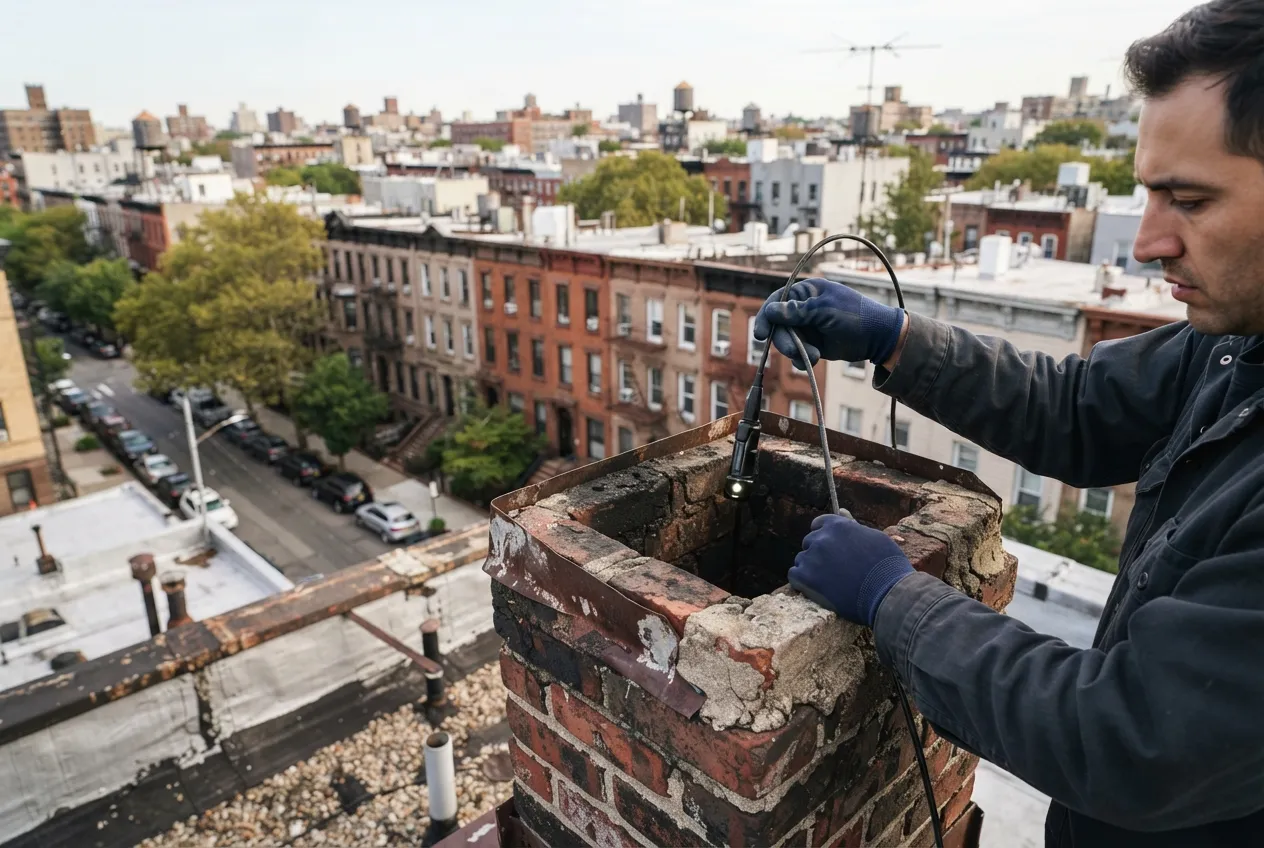
For anything we can't see with a flashlight, we run a camera up the flue. That shows cracked tiles, gaps in mortar joints and liner damage, and you see the same footage we do. We don't recommend a liner or a rebuild based on a guess.
On the roof, technicians set up ladders and roof protection before climbing, and they check the crown, cap, brick and flashing by hand. Repairs like repointing, crown work and flashing are done from the roof or from staging when the chimney is tall. When we leave, the debris and old material leave with us.
Time for your annual chimney check?
The standard we follow
Our inspections follow NFPA 211, the national standard for chimneys, fireplaces and vents. It calls for these systems to be inspected once a year, and it lays out three inspection levels. A Level 1 inspection fits when nothing has changed and you use the chimney as before. A Level 2 inspection applies when the system changes, for example when you add a new appliance or switch fuels, or when the home is sold. A Level 3 inspection is for cases where a hidden hazard can only be reached by opening part of the chimney or the building.
Fuel changes matter a lot in New York City. When a building converts its boiler from oil to gas, the chimney has to be evaluated as part of the job. A new liner is often needed, because gas exhaust produces acidic condensate that can corrode a masonry flue. If you're planning a conversion, bring us in early so the chimney work doesn't hold up the rest of the project.
Timing also counts. The city's heat season runs from October 1 through May 31, and owners of buildings with tenants must keep apartments at the required minimum temperatures during that time. Repairs that touch the heating flue are easier to schedule in late spring and summer.
What affects the price
We give you a written quote after the inspection, once we know what the job involves. The main factors are:
- Chimney height and how hard it is to reach the roof safely
- Fuel type: wood, oil or gas, and whether you're switching
- Flue size and the condition of the existing tiles or liner
- How much creosote or debris has to be cleared before repair
- Whether a camera inspection or a Level 2 or Level 3 inspection is needed
- The scope of the repair, from a few joints to a crown rebuild or new liner
How a visit works
You call or book online and tell us what you're noticing. We schedule a time, and the technician arrives, protects the work area and inspects the chimney inside and on the roof. You get photos or camera footage and a plain explanation of what's wrong and why.
If repair is needed, we give you a written quote. Smaller repairs can often be done the same day. Larger jobs like relining or crown rebuilds are scheduled as a follow-up visit. After the work, we clean up, show you the finished repair and tell you when the chimney should be inspected next.
Chimney Repair by city
- Chimney Repair in Carroll GardensLocal service & repairs
- Chimney Repair in Cobble HillLocal service & repairs
- Chimney Repair in GowanusLocal service & repairs
- Chimney Repair in Red HookLocal service & repairs
- Chimney Repair in Brooklyn HeightsLocal service & repairs
- Chimney Repair in Downtown BrooklynLocal service & repairs
- Chimney Repair in DUMBOLocal service & repairs
- Chimney Repair in Boerum HillLocal service & repairs
- Chimney Repair in Park SlopeLocal service & repairs
- Chimney Repair in Fort GreeneLocal service & repairs
- Chimney Repair in Prospect HeightsLocal service & repairs
- Chimney Repair in Financial DistrictLocal service & repairs