The short answer
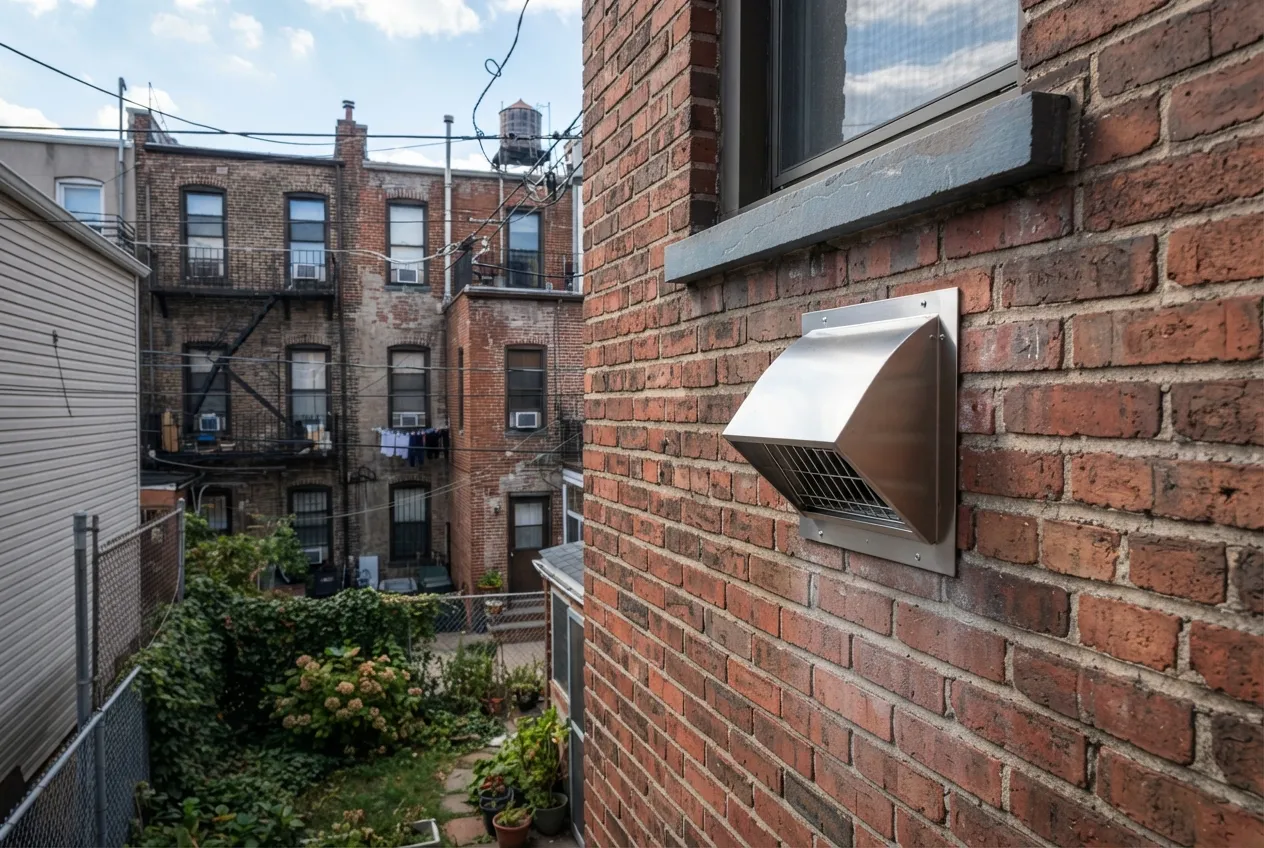
Dryer vent cleaning removes the lint that collects inside the duct between your dryer and the outside of your home, which restores airflow and removes a common fire fuel. The U.S. Fire Administration identifies failure to clean as the leading factor in home clothes dryer fires. Our crew cleans the entire run, including the outside hood or roof cap.
Every load of laundry pushes warm, damp air and fine lint through your dryer vent. Some of that lint stays behind. It builds up along the duct walls, collects in bends, and packs into the outside hood. Over time the dryer works harder, clothes take longer to dry, and that lint becomes fuel sitting next to a heat source. All Star Chimney Sweep cleans dryer vents for homeowners in Brooklyn and nearby areas. We handle short runs that exit through a back wall and long ducts that climb several floors to the roof of a rowhouse or small multifamily building. Our certified technicians clean the full length of the vent, from the back of the dryer to the outside termination. We check that air moves freely when we are done and tell you plainly what we found.
Signs you need it
Most homeowners call us because the dryer has started acting differently. A clogged vent rarely fails all at once. It gets a little worse with every load, so the warning signs are easy to get used to. If you notice any of the following, have the vent checked before you keep running long cycles.
- Clothes take two or more cycles to dry, or come out damp and hot
- The dryer cabinet or the clothes feel unusually hot at the end of a cycle
- A burning or scorched smell when the dryer runs
- Lint building up around the door seal, behind the dryer, or on the floor nearby
- The outside flap barely opens, or you feel little air at the exterior hood while the dryer runs
- Chirping, scratching or nesting material at the outside vent, a sign that birds or rodents have moved in
- Musty odors or extra humidity in the laundry area
What's included in a dryer vent cleaning
We clean the whole vent system rather than just the lint trap and the first few feet of duct. Each visit covers the items below. If we find something that needs repair, we explain it and leave the decision to you.
- Carefully pulling the dryer out and disconnecting it, including safe handling of the gas connection on gas dryers
- Inspecting and cleaning the transition hose between the dryer and the wall
- Rotary brushing the full length of the duct, including bends and vertical sections
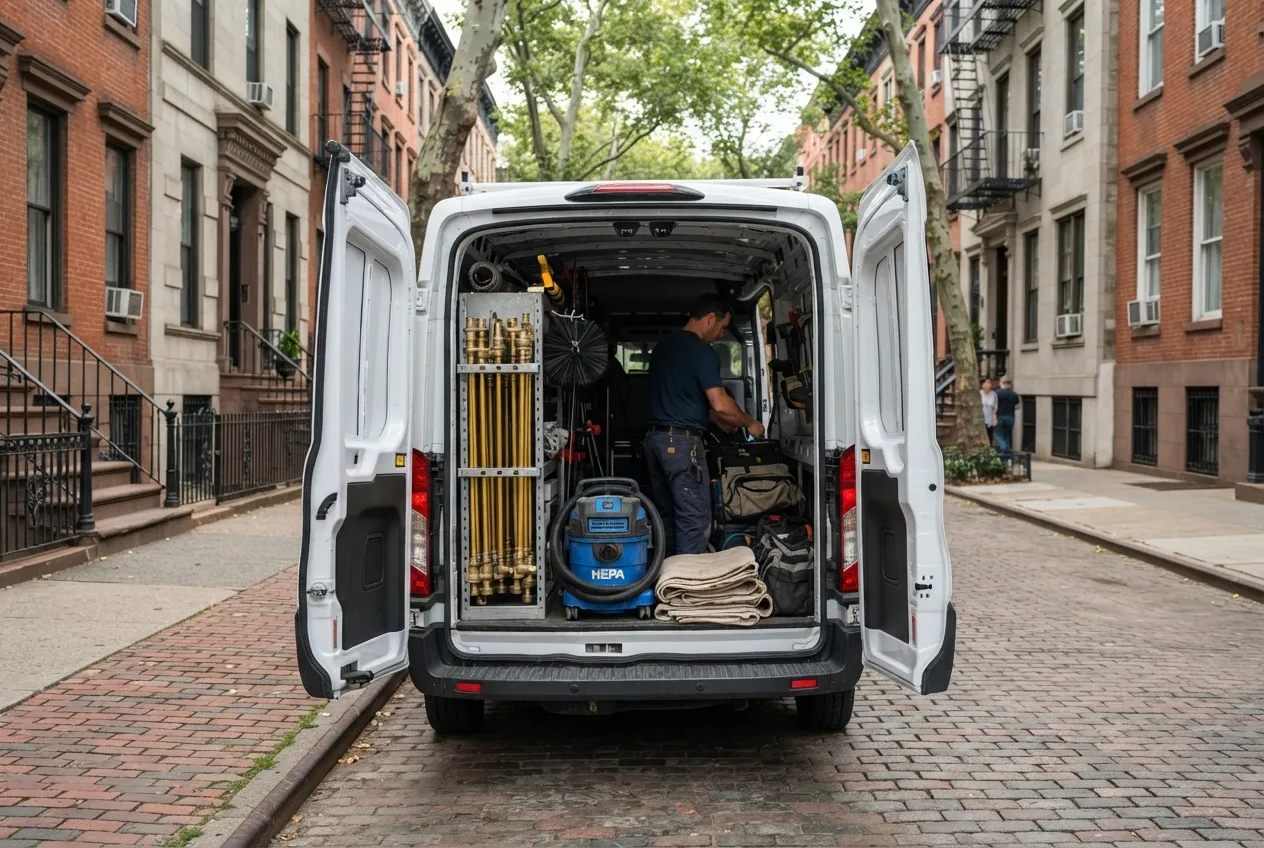
- Removing loosened lint with a HEPA vacuum
- Clearing the lint trap housing inside the dryer cabinet
- Cleaning the exterior hood or roof termination and checking that the damper flap opens and closes
- Removing nests or debris from the outside opening
- A camera look inside the duct where the run is long, hidden or hard to reach
- Reconnecting the dryer and running it to confirm strong airflow at the outside
- A plain summary of the vent's condition, including crushed hoses, loose joints or materials that should be replaced
How our crew works in your home and on the roof
Inside, we lay drop cloths from the door to the laundry area before moving anything. Lint is light and spreads easily, so we run a HEPA vacuum during brushing to keep it out of the room. Our rotary brushes spin through the duct and break lint off the walls without tearing the pipe. When the vent passes through walls, ceilings or closets where we can't see it, we use a camera to check for blockages, separated joints or sagging sections that trap lint.
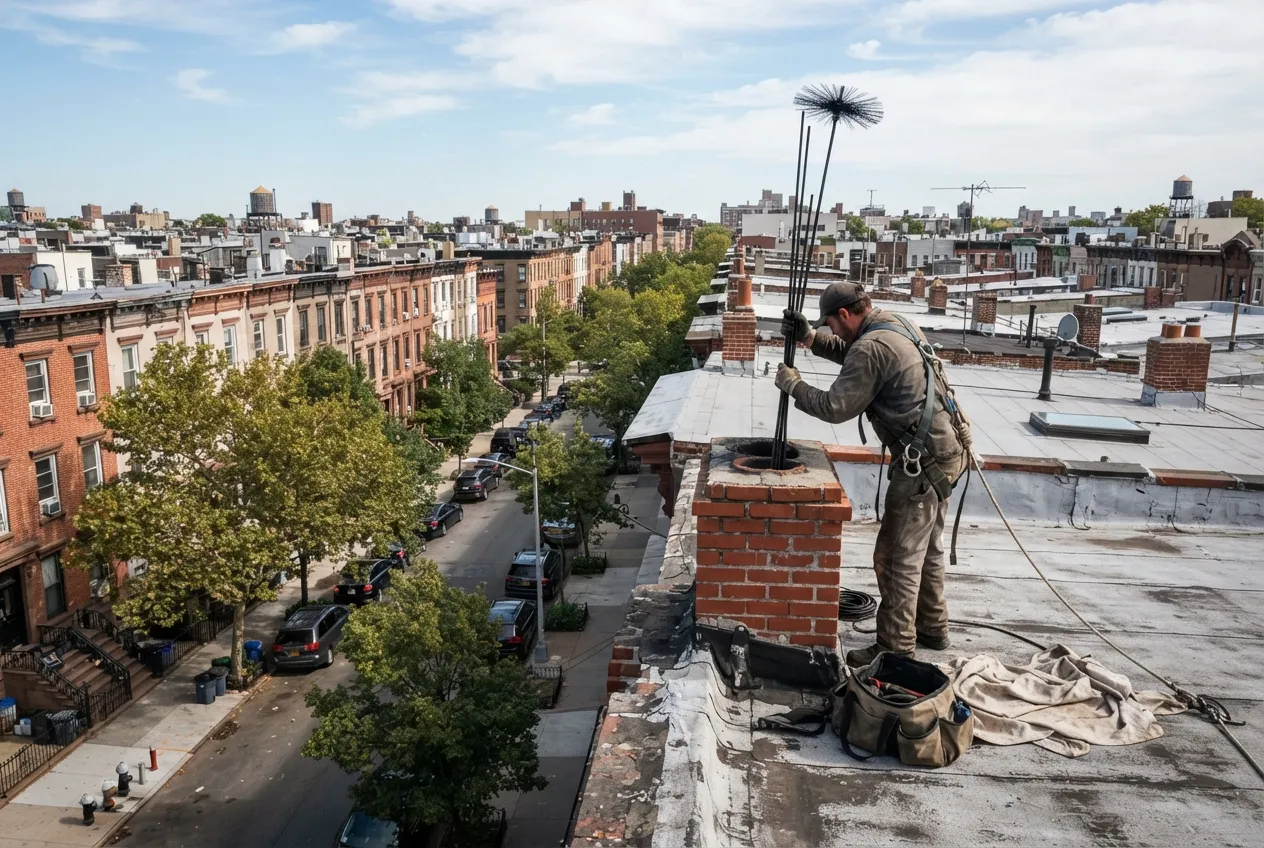
Many Brooklyn homes vent the dryer up through the building to the roof. Those runs are long and vertical, and lint tends to collect at the top where the air cools. When the vent ends on the roof, a technician goes up to clean the cap, clear any nesting material, and brush down from above as needed. We check that the cap is secure and that the damper isn't stuck. Before we leave, we put the dryer back, reconnect it, and run it so you can see the result at the outside vent.
Time for your annual chimney check?
Why regular cleaning matters
According to the U.S. Fire Administration, failure to clean is the leading factor contributing to clothes dryer fires in homes. The lint screen catches much of the lint but not all of it, and what passes through settles in the duct. A restricted vent also traps heat inside the dryer. That combination of heat and fuel is what makes a neglected vent risky.
Cleaning also helps the machine itself. With a clear vent, the dryer moves moist air out faster, finishes loads sooner, and runs with less strain on its heating element and blower. How often a vent needs cleaning depends on how much laundry you do and how long the run is. Large households and long rooftop runs usually need attention more often.
What affects the price
No two dryer vents are the same, so we look at the setup before giving you a price. The main factors are:
- Length of the run and the number of bends between the dryer and the outside
- Height of the building and whether the vent ends on the roof, which affects access and setup
- Gas or electric dryer, since gas units take extra care to disconnect and reconnect
- How much lint has built up, and whether nests or debris are blocking the opening
- The duct's size, material and condition, including crushed or foil hoses
- Whether a camera inspection is needed to see hidden sections
- Any repairs, such as replacing a transition hose, resealing joints or fixing a damaged cap
How a visit works
When you contact us, we ask a few questions: where the dryer is, where the vent seems to exit, and what you've noticed. That helps us bring the right equipment and set a realistic time window.
On the day of the visit, the technician confirms the plan with you, protects the floor, and gets started. Most of the time goes to brushing and vacuuming. Roof access or a camera inspection adds time. If we find a problem beyond cleaning, we stop and explain it before doing any extra work. At the end, we run the dryer, show you the airflow at the outside vent, and go over anything you should keep an eye on.