The short answer
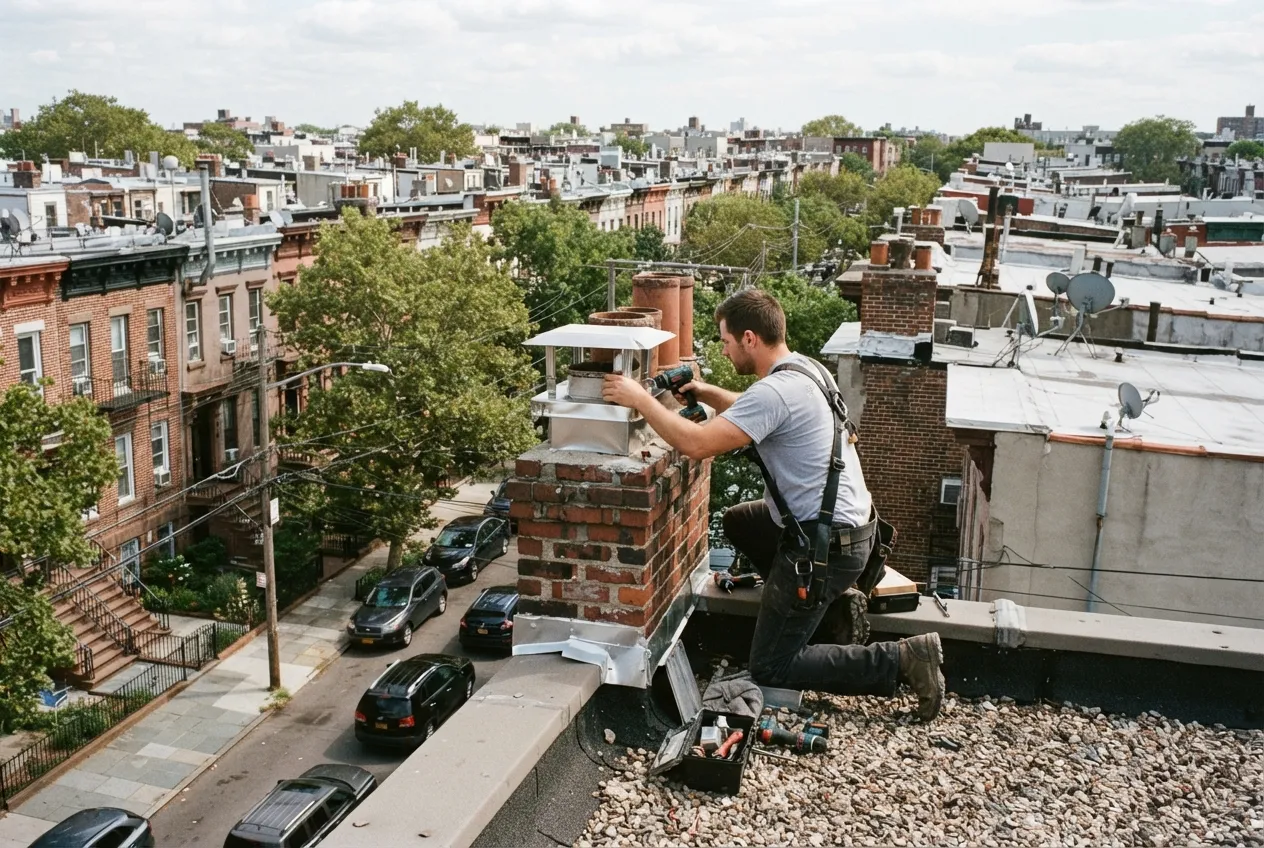
A chimney cap and chase cover stop water, debris and animals from getting into your chimney, and they prevent much of the rust, masonry damage and nesting we find on Brooklyn roofs. We measure each flue, fit a cap or cover sized to it, and inspect the chimney during the same visit.
A chimney cap and a chase cover keep the top of your chimney closed to rain, snow, leaves and animals while still letting smoke and exhaust escape. On Brooklyn brownstones, rowhouses and frame homes, these parts face wind, freeze-thaw cycles and salt air. Once they rust, crack or blow loose, water and critters have a straight path into the flue and the structure around it. All Star Chimney Sweep's certified technicians measure, supply and install chimney caps and chase covers for homes in Brooklyn and nearby cities. While we're on the roof, we also check the flue below so you know what condition it's in.
Signs you need a new chimney cap or chase cover
Most owners notice a missing or failing cap from inside the house before they ever look at the roof. Problems often show up after a heavy storm, after a windy week, or in spring when birds and squirrels go looking for a place to nest. If you notice any of these signs, have the top of the chimney checked.
- Animal noises in the chimney, such as scratching, chirping or fluttering, especially in spring
- Water in the firebox, or a damp, musty smell from the fireplace after rain
- Debris, leaves, twigs or brick flakes collecting in the firebox or at the base of the flue
- White staining on the brick, which shows water is moving through the masonry
- Rust streaks running down the siding or chase of a factory-built (prefab) chimney
- Poor draft or smoke backing up, which can happen when a nest or leaves block the flue
- A cap that is visibly bent, loose, rusted through or missing after a storm
What's included in our cap and chase cover service
Every job starts with the actual chimney. We don't guess at sizes or install a one-size-fits-all part. Here is what a standard visit covers:
- Measuring each flue tile or chase top so the cap or cover fits properly
- Removing the old, damaged or rusted cap or chase cover
- Checking the flue opening for nests, debris and blockages, and clearing what we find
- Installing a stainless steel cap with animal-proof mesh sized for your flue
- Installing a chase cover on prefab chimneys with a drip edge and a sloped or cross-broken top so water runs off
- Sealing and fastening the cap or cover so it holds up to wind
- A look at the crown, mortar joints and flashing near the top of the chimney
- Photos of the before-and-after condition, with notes on any repairs we recommend
How our crew works inside your home and on the roof
Even though most of this job happens on the roof, we often need to work from the fireplace or appliance connection too. Before we start, we lay drop cloths from the door to the hearth and cover the area around the firebox. HEPA vacuums run during any work that disturbs soot or debris, so dust stays out of your living space.
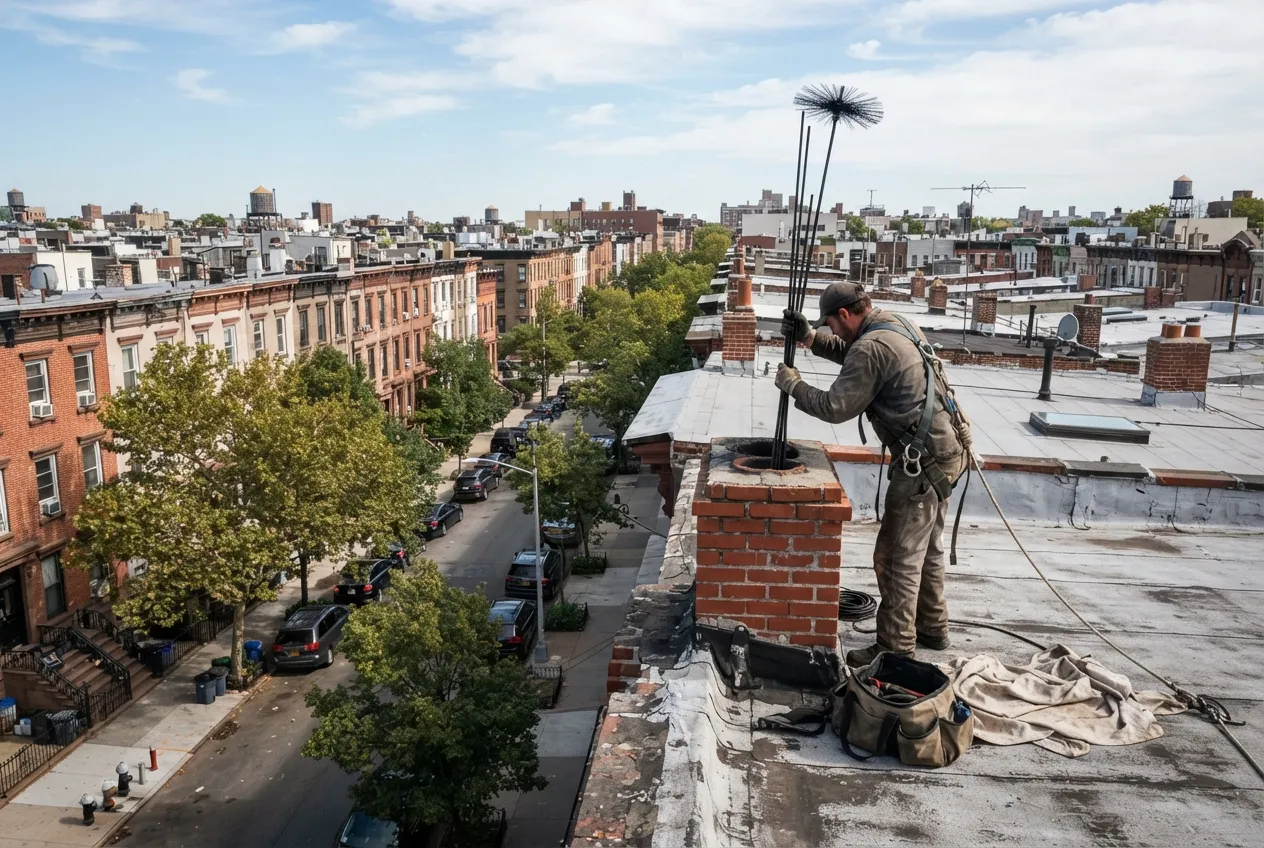
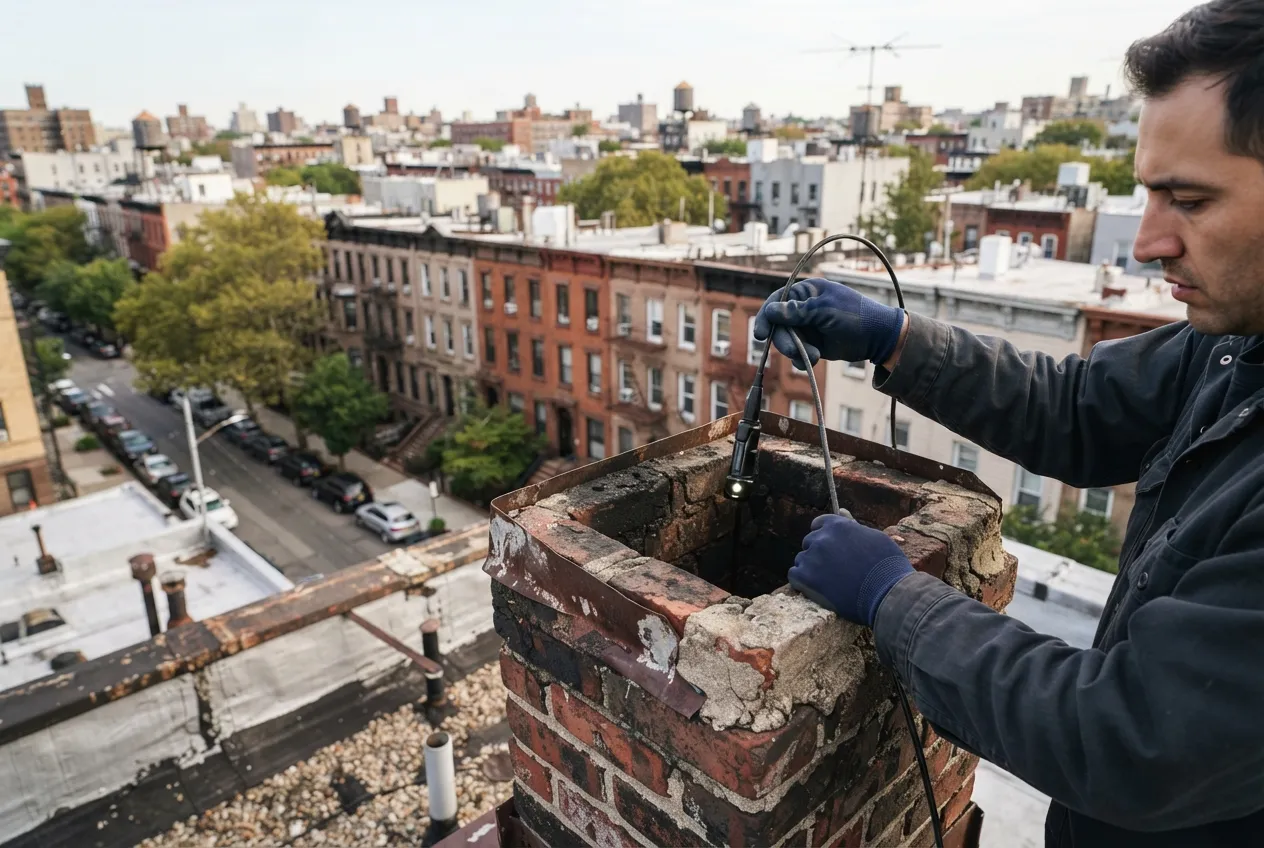
If the flue holds nesting material, leaves or heavy soot, we clear it with rotary brushes and remove the debris from below. When it makes sense, we run a camera up the flue to look for cracked tiles, gaps or damage that the old cap let in. You'll see that footage and know exactly what we found.
On the roof, we work from the access your building has, whether that's a roof hatch, a bulkhead door or a ladder setup for a pitched roof. We protect roofing materials where we stand and work, fasten caps securely to the flue or crown, and take any old parts and debris with us when we leave.
Time for your annual chimney check?
The standard we follow
We follow NFPA 211, the national standard that calls for chimneys, fireplaces and vents to be inspected once a year. Chimney professionals use three inspection levels: Level 1 when nothing about the system has changed, Level 2 when something changes (such as a new appliance, a switch of fuel or the sale of the home), and Level 3 when a hidden hazard can only be reached by opening part of the chimney or building.
A cap or chase cover visit usually includes a Level 1 look at the top of the system. If we find signs of deeper damage, we'll explain which level of inspection makes sense and why. Your fuel matters here too. When a New York City building converts its boiler from oil to gas, the chimney has to be evaluated as part of that work, and a new liner is often needed because gas exhaust creates acidic condensate that can corrode a masonry flue. The cap has to fit that liner correctly.
What affects the price
Every chimney is different, so we quote after we know what the job involves. These are the main factors:
- Building height and how we reach the roof, such as by hatch, bulkhead or ladder
- Fuel type, since wood, gas and oil flues call for different cap styles
- Flue size and condition, and how many flues share the chimney
- Whether you need a single-flue cap, a multi-flue cap or a full chase cover
- How much nesting material, debris or soot has to be cleared first
- Whether a camera inspection or repairs to the crown, mortar or flashing are needed
How a visit works
When you call, we'll ask about your home, the type of chimney and what you've noticed, such as water, animals or a cap that's gone. We schedule a time that works for you and arrive ready to protect your floors and get to the roof.
Our technician inspects the top of the chimney, measures the flue or chase, and explains what we recommend before any work begins. If the part is ready, installation usually happens the same visit. Custom chase covers may need a second trip once they're fabricated. Before we leave, we walk you through the photos and any follow-up the chimney needs.