
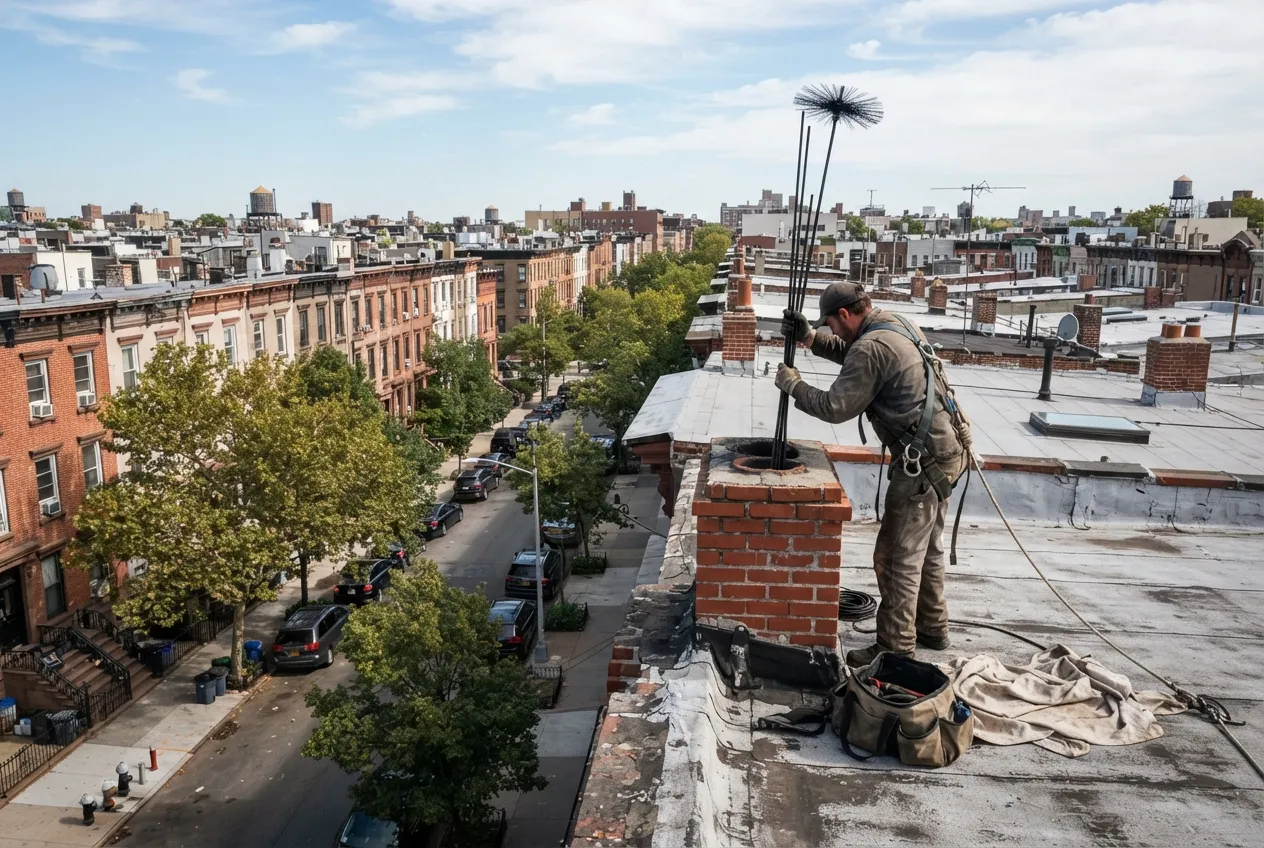
Chimney Inspection Levels: Level 1, Level 2 and Level 3 Explained
Serving Brooklyn and nearby cities.
- Diagnosis before any repair
- Written price up front
- Written price before we start
Not every chimney inspection is the same. The NFPA 211 standard calls for chimneys, fireplaces and vents to be inspected once a year, and chimney professionals use three inspection levels depending on what is happening with your system. A routine yearly check is very different from an inspection after a fuel switch or one that looks for damage hidden inside a wall. This guide explains what each level covers, when you need it, what you receive afterward and how to get your home ready. Knowing the differences helps you ask for the right inspection and understand the results.
Level 1: The Yearly Check-Up
A Level 1 inspection is the standard annual inspection for a chimney that is used the same way it has been in the past, with no changes to the appliance, fuel or structure. Our certified technicians look at the parts of the system that can be readily reached without tools for opening walls or panels.
This level confirms that the chimney is structurally sound, the flue is free of blockages, and creosote or soot has not built up to a level that needs a chimney sweep. It is often done during the same visit as a sweep.
- Accessible portions of the chimney exterior and interior
- The firebox, damper and smoke chamber where they can be seen
- Connections between the appliance and the chimney
- Signs of creosote, soot, nesting animals or debris in the flue
- Basic clearance from combustible materials in accessible areas
Level 2: When Something Changes
A Level 2 inspection includes everything in a Level 1, plus a closer look at accessible areas such as the attic, basement and crawl spaces around the chimney. It also includes a video camera scan of the inside of the flue so cracks, gaps in the liner and deterioration can be seen along its full length.
Under NFPA 211, a Level 2 is called for when the system changes or the home is sold. That includes installing a new stove, insert or boiler, relining the flue, or switching fuels. In New York City, converting a boiler from oil to gas requires the chimney to be evaluated as part of the work. A new liner is often needed, because gas exhaust produces acidic condensate that can corrode a masonry flue.
We also recommend a Level 2 after a chimney fire, after a severe storm that may have damaged the chimney, or when you notice a new problem such as smoke entering the room, strong odors or water coming in.
Level 3: Reaching Hidden Hazards
A Level 3 inspection is the most involved, and it is not routine. It is used when a Level 1 or Level 2 inspection points to a serious hazard that cannot be reached without removing part of the chimney or the building, such as a section of interior wall, a chimney crown or chase cover, or masonry.
Because it involves opening components, we explain exactly what needs to be removed and why before any work begins. Most homeowners never need a Level 3, but when one is called for, it is the only way to confirm whether concealed damage is a real danger.
What You Receive After the Inspection
You should come away understanding the condition of your chimney, not just a pass or fail. After the visit, we provide documentation you can keep for your records, share with a buyer or seller, or use to plan repairs.
If the inspection finds problems, the report will point to the service that addresses them, whether that is a chimney sweep, chimney repair, chimney liner installation, a new chimney cap and chase cover, chimney waterproofing, fireplace and damper repair or, in more serious cases, chimney rebuilding.
- Photos of the chimney, firebox, damper and any problem areas
- Video from the flue camera scan for Level 2 and Level 3 inspections
- A written report stating the inspection level performed, what was found and recommended next steps
- Time to walk through the findings with the technician and ask questions
How to Prepare for the Visit
A little preparation makes the inspection faster and more thorough. If your chimney serves a boiler, keep in mind that New York City's heat season runs from October 1 through May 31, when building owners must keep apartments heated to city minimums. Scheduling inspections and any needed work before October gives you time to finish repairs without heating interruptions.
- Stop using the fireplace, stove or insert at least a day ahead so it is cool
- Clear furniture, rugs and decorations away from the hearth
- Make sure the attic, basement or boiler room is unlocked and reachable
- Arrange roof access with your super or building manager if you live in a multifamily building
- Keep pets in a separate room during the visit
- Have past inspection reports and details of any recent changes, such as a new appliance or fuel switch, ready to share
- Write down any symptoms you have noticed, like smoke, odors, drafts or leaks
Inspections
Three levels of chimney inspection
The NFPA 211 standard calls for a yearly inspection. Which level you need depends on what has changed since the last one.
-
Level 1
Annual check
For a chimney and appliance that have not changed and will be used the same way: the readily accessible parts of the chimney, the flue and the connection, checked for soundness, blockages and deposits.
-
Level 2
Camera inspection
When something changed — a new stove, insert or boiler, a fuel switch such as oil to gas, the sale of the home, or a chimney fire, storm or quake. Adds a video scan of the whole flue and the accessible attic, roof and crawl spaces.
-
Level 3
Concealed areas
Only when a Level 1 or 2 points to a hidden hazard that cannot be checked any other way: parts of the chimney or building are opened to reach it.
How often should my chimney be inspected?
The NFPA 211 standard calls for chimneys, fireplaces and vents to be inspected once a year, even if you rarely use them. Animals, weather and age can cause problems whether or not you light a fire.
Which inspection level do I need?
If nothing has changed, a Level 1 is usually enough. If you added or replaced an appliance, switched fuels, are buying or selling a home, or had a chimney fire or storm damage, you need a Level 2. A Level 3 is only used when a hidden hazard must be reached by opening part of the chimney or building.
Do I need an inspection when converting from oil to gas?
Yes. In New York City, the chimney has to be evaluated when a boiler is converted from oil to gas, and a new liner is often needed because gas exhaust creates acidic condensate that can corrode a masonry flue.
Is a chimney inspection the same as a chimney sweep?
No. An inspection evaluates the condition of the system, while a sweep removes creosote, soot and debris. They are often done during the same visit, and a sweep can make it easier to see the flue clearly.
Will a Level 3 inspection damage my home?
A Level 3 requires removing certain components, such as part of a wall or chimney crown, to reach a suspected hazard. We explain what needs to be opened and why before starting, so you know what to expect.
Why does selling a home call for a Level 2 inspection?
A sale is one of the situations NFPA 211 lists for a Level 2. The camera scan and broader review give buyers and sellers a clear record of the chimney's condition before ownership changes.
Find out what's going on in your chimney
Tell us what you're noticing, whether it's smoke, odors, leaks or a slow dryer, and we'll set up a visit. You'll get photos of what we find and a written price before any work begins.