The short answer
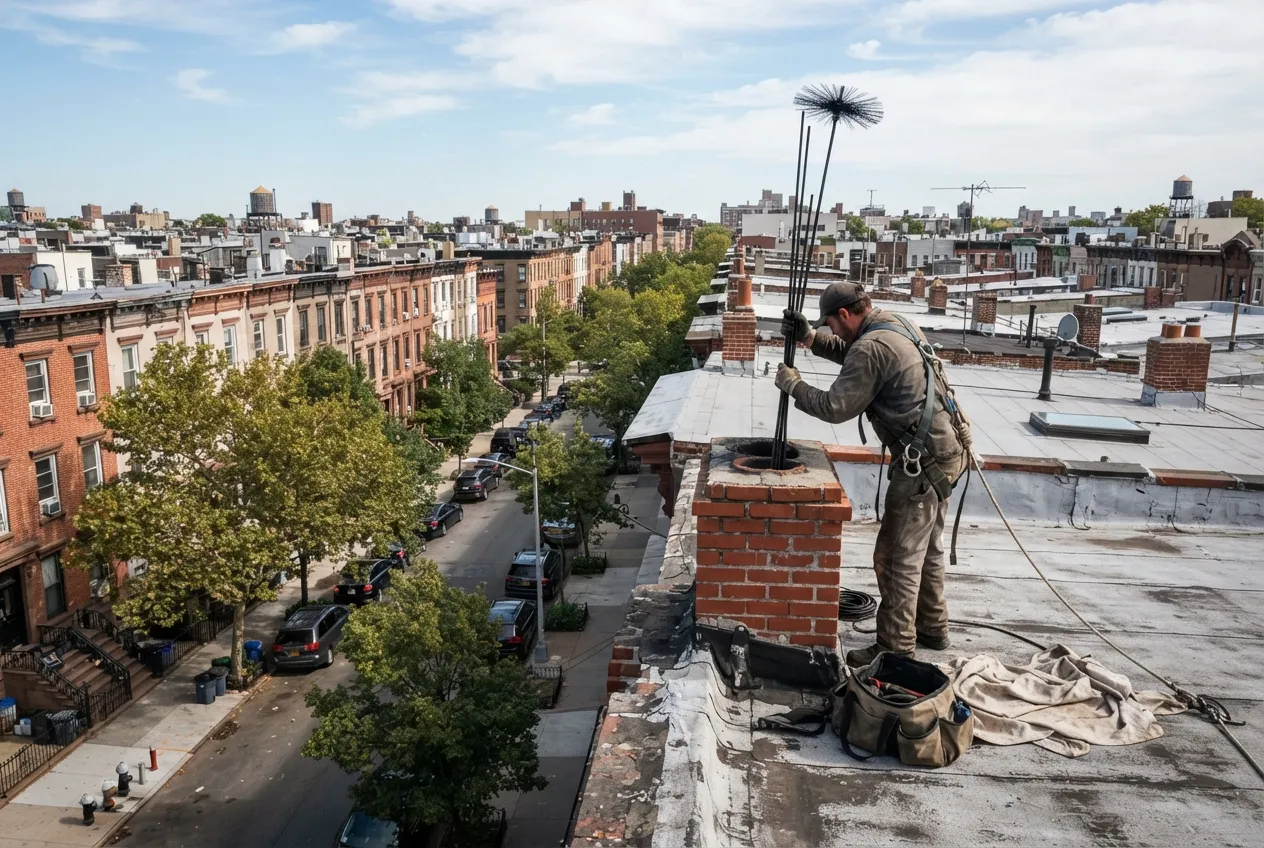
Yes, All Star Chimney Sweep serves Downtown Brooklyn (ZIP 11201), about a mile from our Brooklyn office. We sweep, inspect, repair, reline and waterproof chimneys, and we clean dryer vents and air ducts for brownstones, rowhouses and apartment buildings in the neighborhood.
Downtown Brooklyn is about a mile northeast of our Brooklyn office, so our crews are close by whether you live in a brownstone, a rowhouse or a pre-war apartment building in the 11201 ZIP code. All Star Chimney Sweep handles the full range of chimney and vent work here: sweeping, inspections, repairs, liner installation, caps and chase covers, waterproofing, fireplace and damper repair and rebuilding. We also clean dryer vents and air ducts. Below is what matters most for homes and buildings in this part of the borough and how we approach the work.
Chimney Work for Downtown Brooklyn's Older Buildings
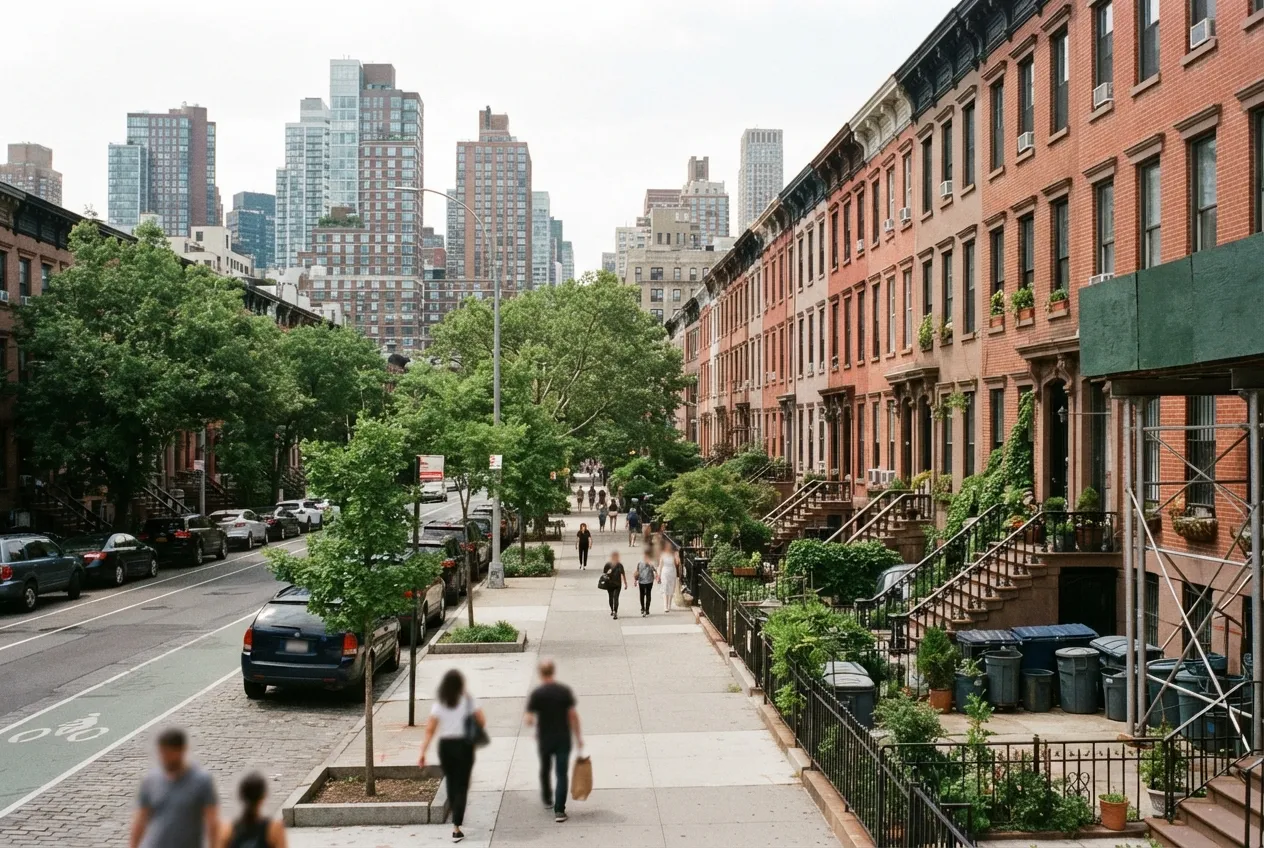
Much of Downtown Brooklyn's older housing is masonry: brownstones, brick rowhouses and pre-war apartment buildings, many with chimneys that have served several heating systems over their lifetime. Original fireplaces are common in townhouses, though some were closed off decades ago and later reopened. Others vent a boiler or water heater instead of a wood fire.
Each setup has its own needs. A fireplace that burns wood builds up creosote and needs regular sweeping. A flue that vents a gas boiler may look clean, but it can be quietly deteriorating inside. We start by figuring out what your chimney actually serves today. Then we recommend only the work that fits.
How New York Weather Wears Down Masonry Chimneys
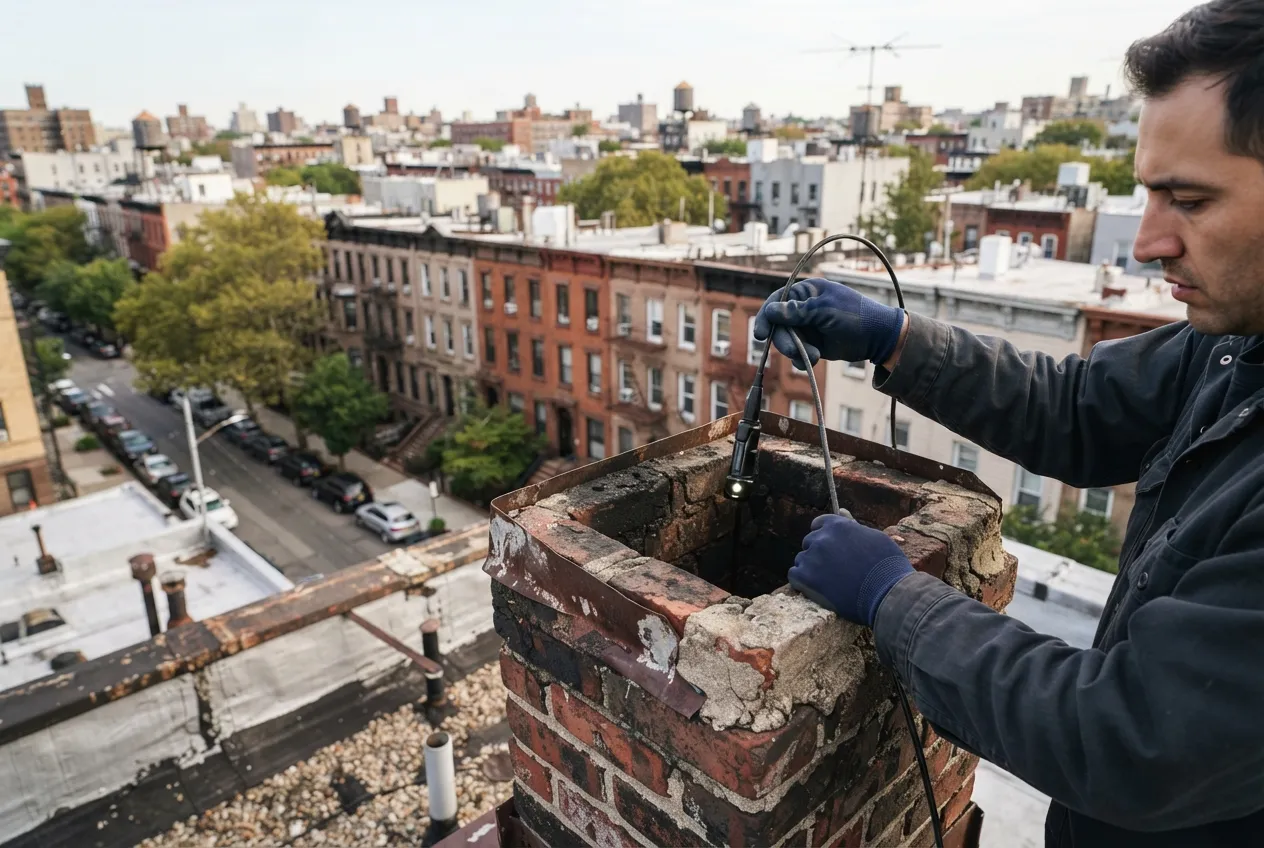
Brooklyn winters swing above and below freezing again and again. Water that soaks into brick and mortar freezes, expands and widens small cracks a little more each cycle. Coastal storms and heavy summer downpours add to the moisture load. Chimneys are usually the most exposed masonry on the roof, so they take the brunt of it.
Signs of water damage include:
- Crumbling or missing mortar joints
- Spalling brick, where the face flakes or pops off
- White staining (efflorescence) on the chimney or an inside wall
- Water stains on the ceiling or wall next to the fireplace
- Rust on the damper or firebox components
- A cracked crown or a missing chimney cap
Repairs, Caps, Waterproofing and Rebuilding
Most moisture problems are cheaper to stop early. A properly fitted chimney cap keeps rain, birds and debris out of the flue. A chase cover does the same job on framed chimneys. Repointing worn mortar and applying a breathable waterproofing treatment help the masonry shed water while still letting it dry out.
When brick has deteriorated too far, partial or full rebuilding above the roofline may be the right call. Inside the house, we repair dampers that won't seal and firebox damage so the fireplace works safely and holds heat when it's closed.
Time for your annual chimney check?
Oil-to-Gas Conversions and Chimney Liners
Many Brooklyn buildings have converted their boilers from oil to gas. When a New York City building makes that switch, the chimney has to be evaluated as part of the work. A new liner is often needed, because gas exhaust produces acidic condensate that can corrode an unlined masonry flue.
We install liners sized for the appliance they serve. Because the city's heat season runs from October 1 through May 31, owners need heating systems that vent reliably all winter. Scheduling liner and flue work before fall helps avoid a mid-season problem.
Annual Chimney Inspections
The NFPA 211 standard calls for chimneys, fireplaces and vents to be inspected once a year. A Level 1 inspection fits when nothing about the system has changed. A Level 2 inspection applies when the system changes, such as a new appliance or a switch of fuel, or when the home is sold. A Level 3 inspection is used when a hidden hazard has to be reached by opening part of the chimney or building.
Our certified technicians explain what they find in plain terms and show you photos where possible.
Dryer Vent and Air Duct Cleaning
According to the U.S. Fire Administration, failure to clean is the leading factor contributing to clothes dryer fires in homes. In rowhouses and apartments, dryer vents often run long distances or through tight turns, where lint collects quickly. Clothes that take longer to dry are a common warning sign.
For air ducts, we follow the U.S. EPA's guidance: cleaning makes sense when there is substantial visible mold growth, vermin, or excessive dust and debris. The EPA notes that duct cleaning hasn't been shown to prevent health problems. It also advises caution with chemical treatments and very cheap advertised offers, so we tell you honestly whether cleaning is worthwhile.
ZIP codes we serve
- 11201
Services in Downtown Brooklyn
- Chimney Sweep in Downtown BrooklynLocal service & repairs
- Chimney Inspection in Downtown BrooklynLocal service & repairs
- Chimney Repair in Downtown BrooklynLocal service & repairs
- Air Duct Cleaning in Downtown BrooklynLocal service & repairs
- Chimney Liner Installation in Downtown BrooklynLocal service & repairs