The short answer
If your Downtown Brooklyn chimney has a cracked or missing flue lining, or your building is converting its boiler from oil to gas, you likely need a new liner. Our certified technicians inspect the flue, confirm what the appliance needs, and install a correctly sized liner so exhaust vents safely.
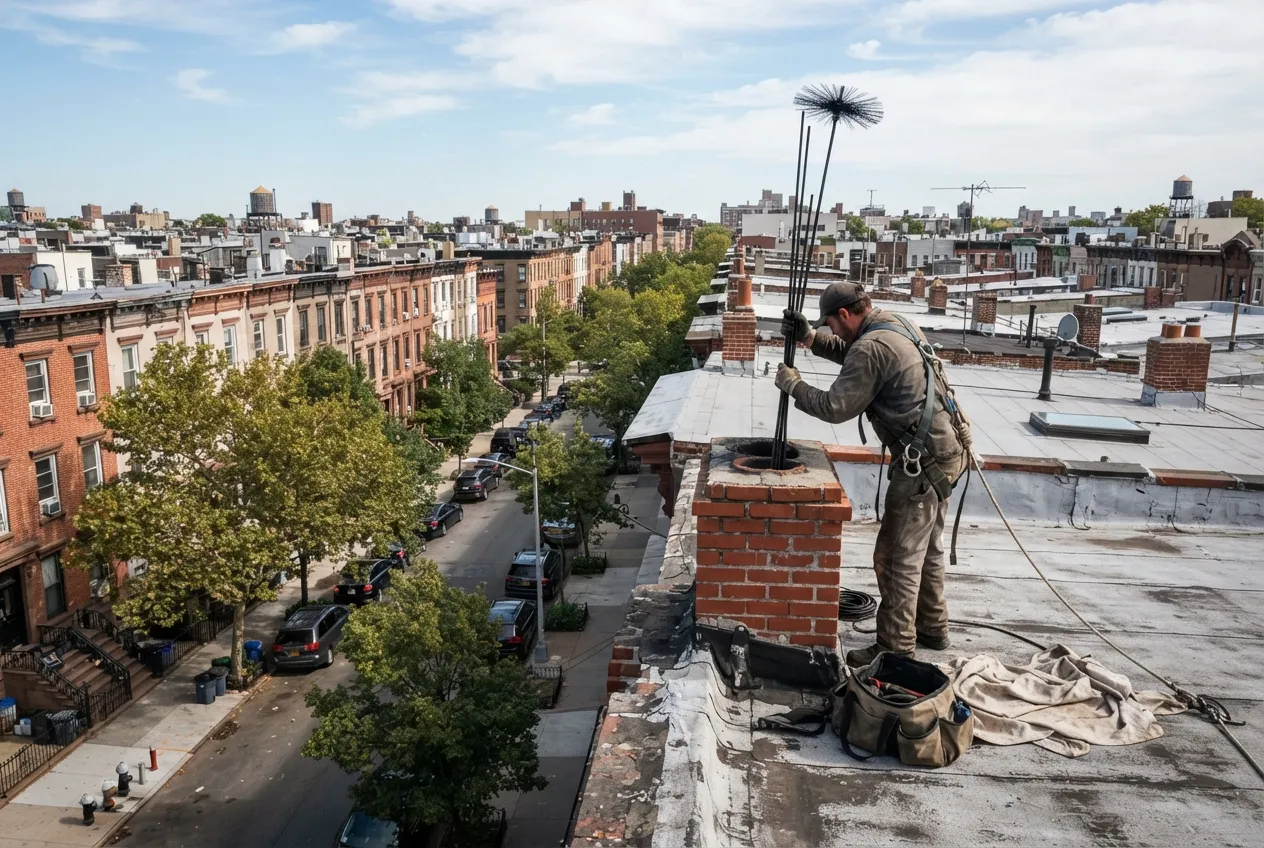
A chimney liner keeps heat, smoke, and exhaust gases inside the flue and away from the brick, mortar, and wood framing around it. In Downtown Brooklyn, many chimneys serve boilers and water heaters as well as fireplaces, and many were built long before today's heating equipment existed. All Star Chimney Sweep is based about a mile southwest of Downtown Brooklyn, so we work in this neighborhood and the 11201 ZIP code regularly. We install liners in pre-war apartment buildings, brownstones, and rowhouses, and we size each liner to the appliance it serves.
Why Liners Matter in Downtown Brooklyn Buildings
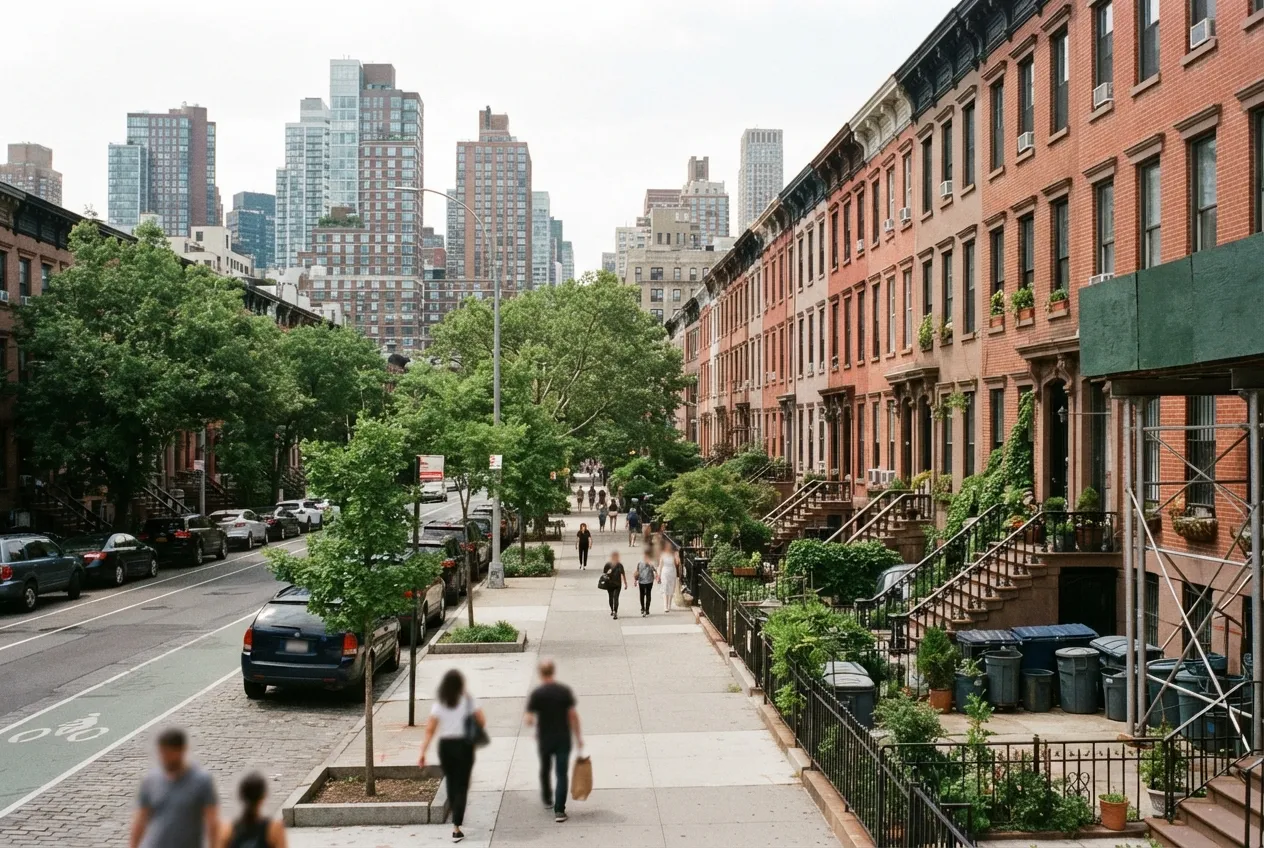
Downtown Brooklyn mixes older masonry buildings with newer construction. Pre-war apartment buildings and brownstones often have chimneys lined with clay tile, or with no liner at all. Decades of heat cycles, moisture, and settling can crack tile sections and wear away mortar joints. Once that happens, exhaust and heat can reach the brick and nearby framing, and combustion gases can leak into living space through gaps in the masonry.
A sound liner also helps the chimney draft properly. When a flue is too large or too rough for the appliance attached to it, exhaust cools and moves slowly. That leads to condensation, buildup, and in some cases backdrafting into the home.
Oil-to-Gas Conversions and New Liners
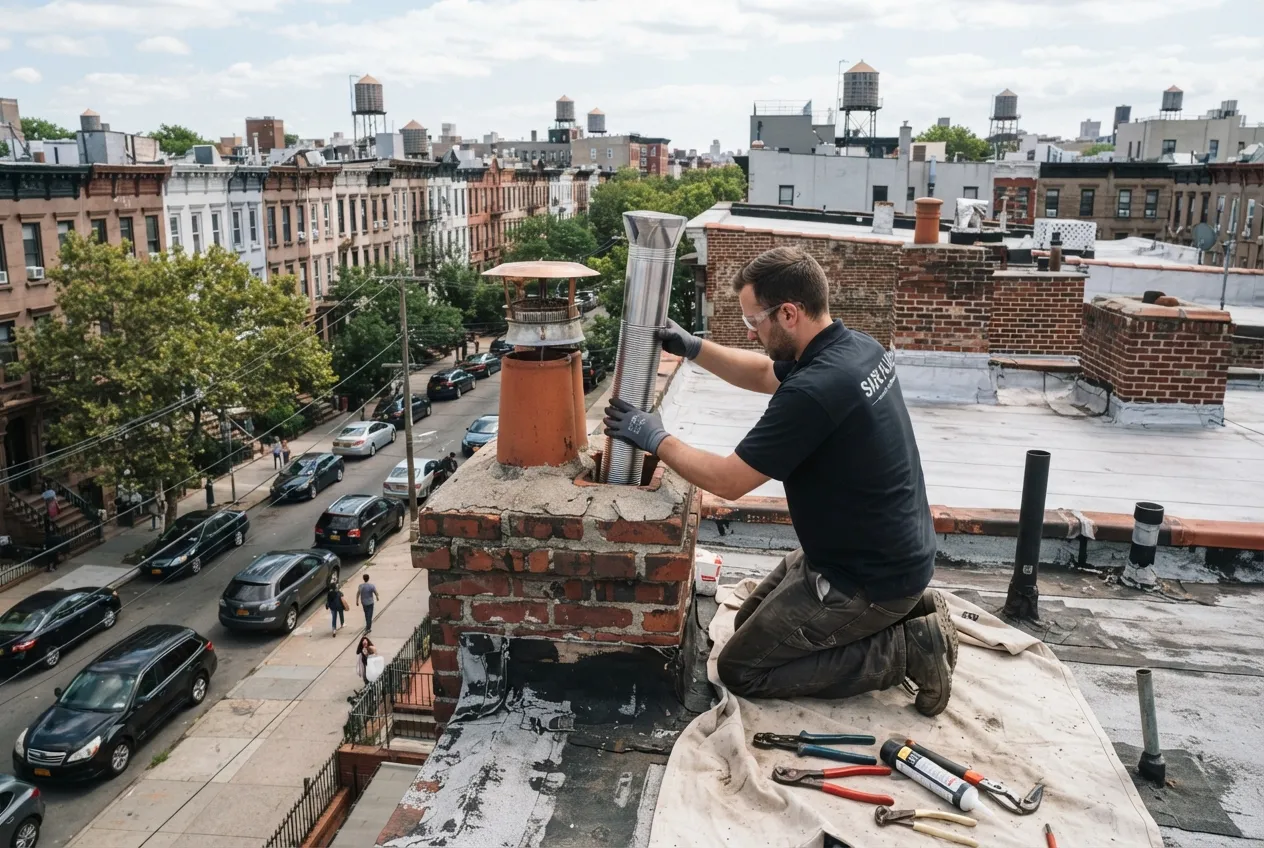
Many buildings in and around Downtown Brooklyn have moved their boilers from oil to gas. When a New York City building converts from oil to gas, the chimney has to be evaluated as part of the work. A new liner is often needed because gas exhaust produces acidic condensate that can corrode a masonry flue.
An old flue that handled oil exhaust for years can deteriorate quickly once it starts carrying gas exhaust. We work with building owners and their heating contractors to evaluate the chimney, recommend a liner sized for the new boiler, and install it so the conversion can move forward.
Signs Your Flue May Need a New Liner
Some problems only show up during an inspection, but these signs are worth a call:
- Pieces of clay tile or flaky masonry falling into the firebox or cleanout
- Water stains, white staining, or damp spots on walls near the chimney
- Smoke or fumes that linger indoors when the fireplace or boiler runs
- A recent or planned change in fuel or heating appliance
- An inspection report noting cracked, gapped, or missing flue tiles
Time for your annual chimney check?
How Liner Installation Works
Every job starts with an inspection. The NFPA 211 standard calls for chimneys to be inspected once a year, and it describes three inspection levels. A change in the system, such as a new appliance or a switch of fuel, calls for a Level 2 inspection, which includes a camera look at the inside of the flue. If a hidden hazard has to be reached by opening part of the chimney or building, that is a Level 3 inspection.
Once we know the flue's condition and dimensions, we match the liner to the appliance. Most installations follow these steps:
- Clean the existing flue and remove loose debris
- Measure the flue and confirm the liner size the appliance requires
- Lower the liner from the roof and connect it at the appliance end
- Add insulation where the installation calls for it
- Fit a top plate and cap to keep out rain and animals
- Test the draft and review the finished work with you
Timing Around Heat Season
New York City's heat season runs from October 1 through May 31. During that time, building owners must keep apartments heated to the city's minimum temperatures. If your building depends on a boiler, plan liner work for late spring or summer when you can, so the heating system is not down when tenants need it. If a problem turns up mid-season, we will talk through how to keep the outage as short as possible.
Besides Downtown Brooklyn, we install liners in DUMBO, Boerum Hill, Brooklyn Heights, Fort Greene, and Carroll Gardens.
More services in Downtown Brooklyn
- Chimney Sweep in Downtown BrooklynLocal service & repairs
- Chimney Inspection in Downtown BrooklynLocal service & repairs
- Chimney Repair in Downtown BrooklynLocal service & repairs
- Air Duct Cleaning in Downtown BrooklynLocal service & repairs