The short answer
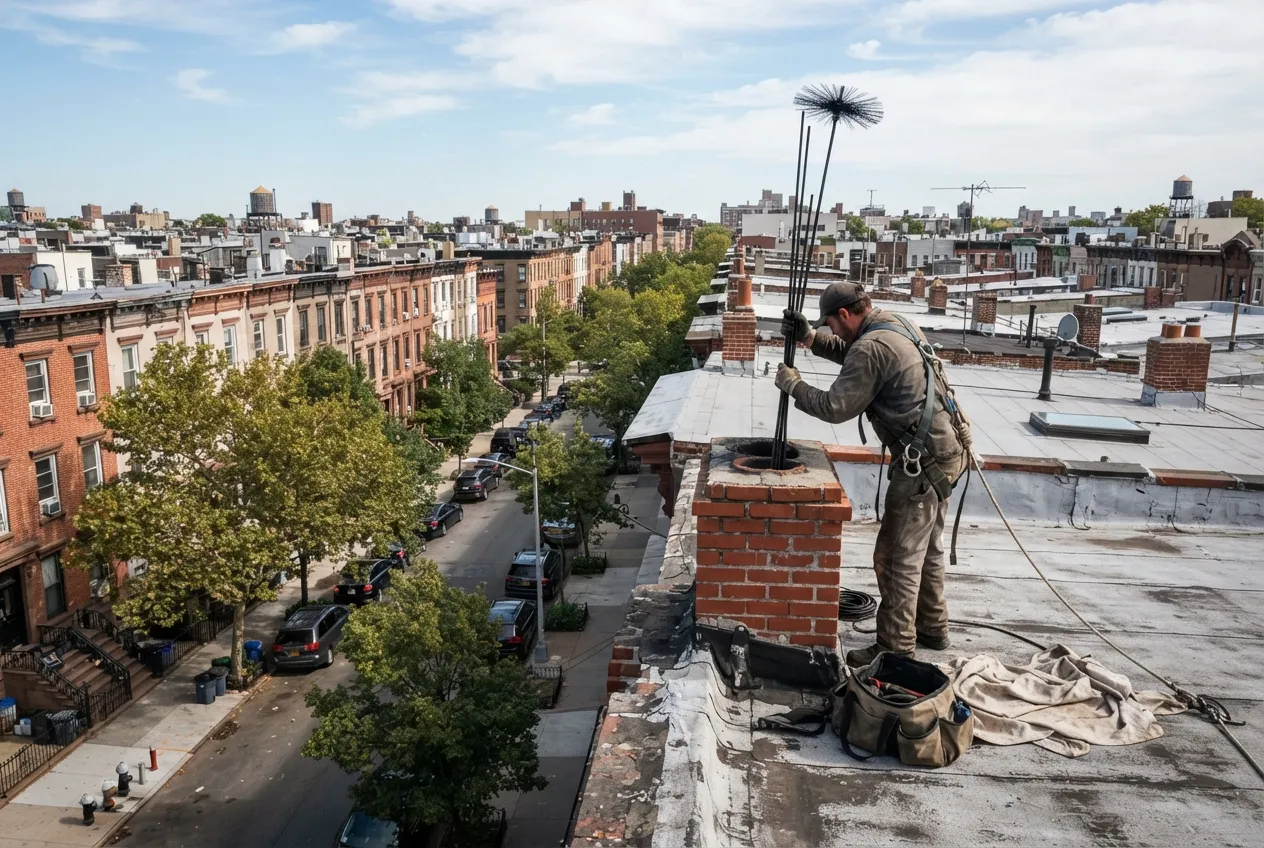
Chimney repair in Downtown Brooklyn usually means fixing worn masonry, cracked crowns, failed flashing, or flue liners damaged by gas exhaust. We inspect first so the repair matches the real problem, then fix what's needed so the chimney vents safely through the heating season.
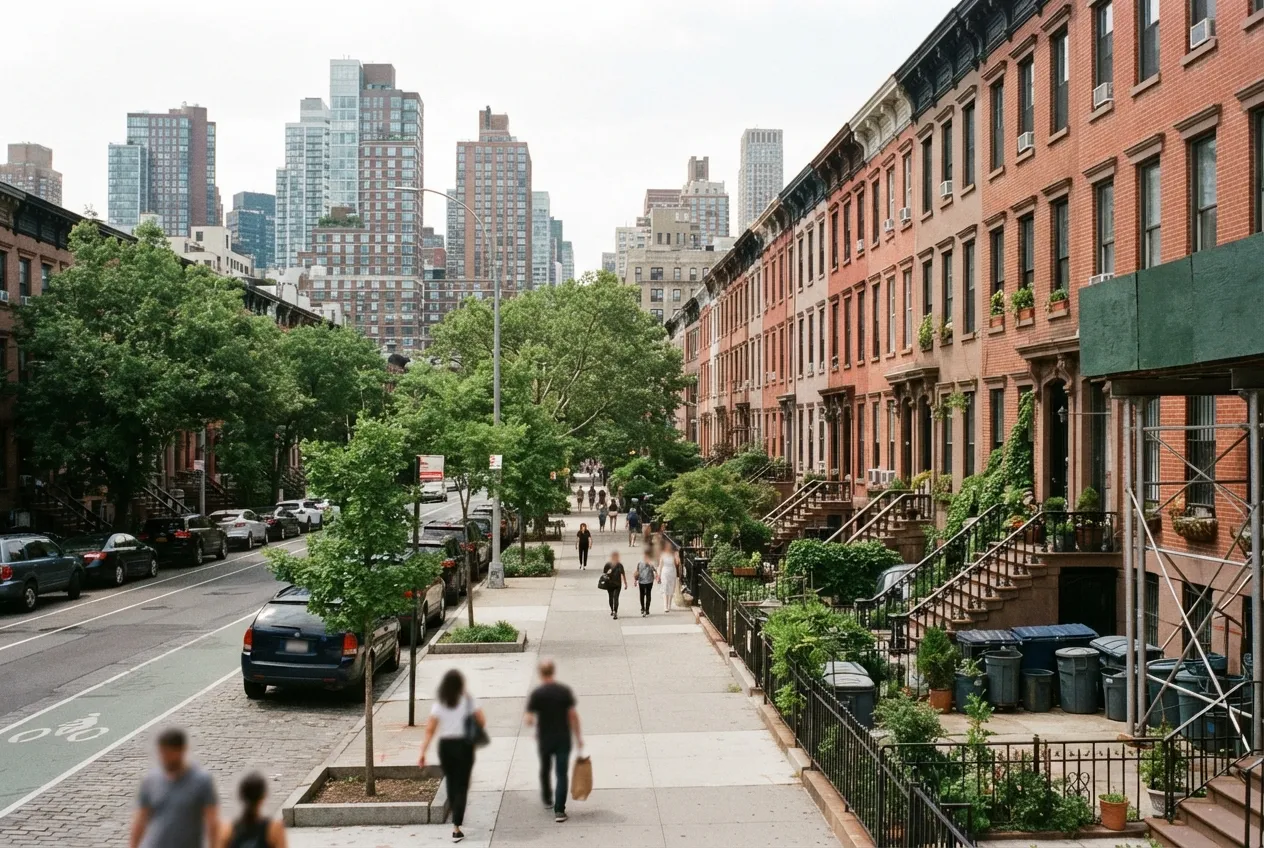
Downtown Brooklyn packs a lot of building types into a small area. There are brownstones and rowhouses along the side streets, pre-war apartment buildings with shared boiler chimneys, and newer residential towers. Most of the chimney problems we see here come from age, weather, and changes to the heating system. All Star Chimney Sweep is about a mile from the neighborhood, so our certified technicians can reach homes in the 11201 ZIP code easily. We repair the chimney you actually have, whether that means damaged brick on a rowhouse fireplace stack or a flue that needs relining after a boiler conversion.
What Breaks Down on Chimneys in This Neighborhood
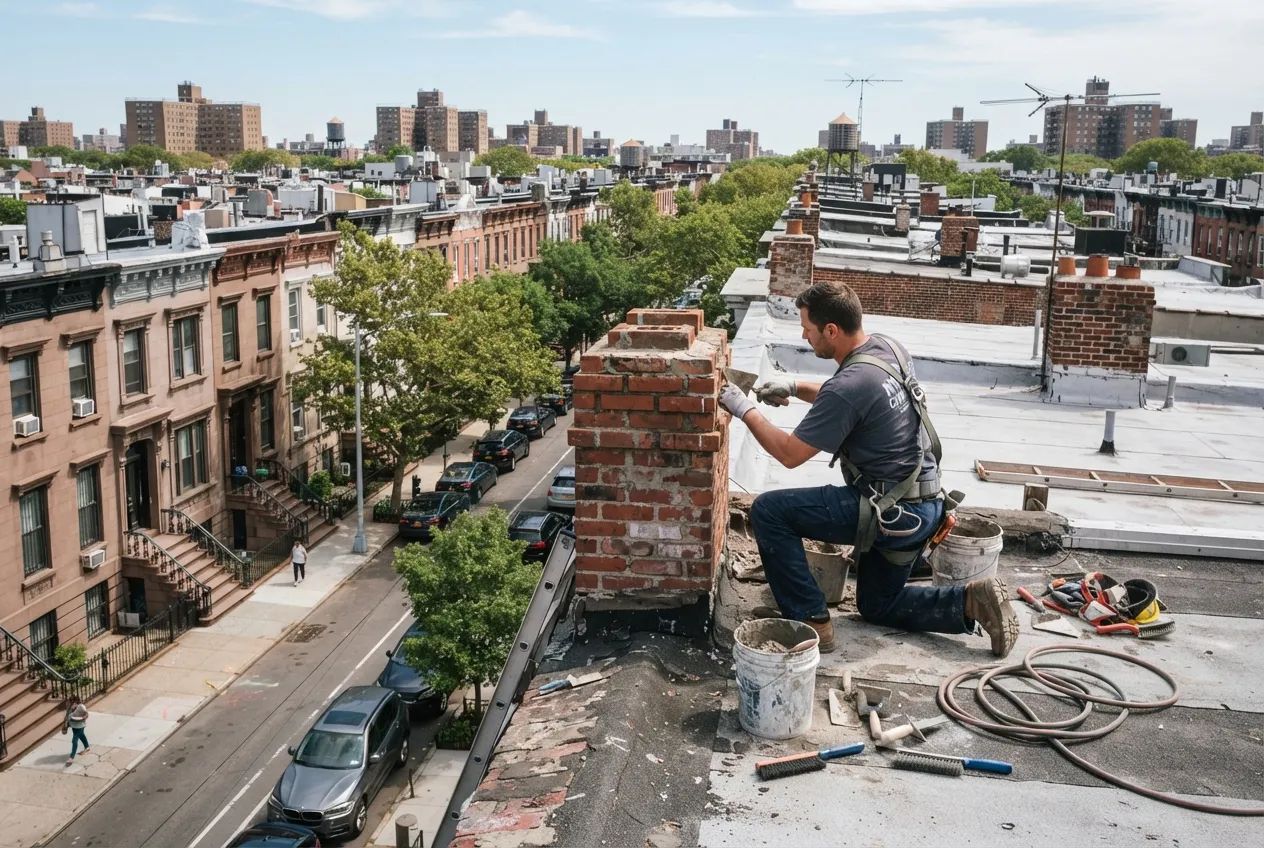
Brownstones and older rowhouses often have tall masonry chimneys that have taken decades of freeze-thaw cycles. Water gets into mortar joints and crowns, freezes, and pushes the masonry apart a little more each winter. Over time that leads to loose brick, spalling faces, and gaps where rain can run straight down into the flue or into the wall beside it.
Pre-war apartment buildings face different stresses. A single chimney may serve a large boiler that runs hard from fall through spring. Heavy use and changes in fuel are hard on clay tile liners and on the mortar between them.
- Repointing deteriorated mortar joints
- Rebuilding or resurfacing cracked chimney crowns
- Replacing loose or spalled brick above the roofline
- Resealing or replacing flashing where the chimney meets the roof
- Installing or replacing chimney caps to keep out rain and animals
- Repairing or relining damaged flues
Oil-to-Gas Conversions and Flue Liners
Many older Brooklyn buildings have switched or are planning to switch their boilers from oil to gas. When a New York City building converts its boiler from oil to gas, the chimney has to be evaluated as part of the work. A new liner is often needed because gas exhaust produces acidic condensate that can corrode a masonry flue.
If your building has already converted and you see crumbling tile, debris at the base of the chimney, or staining on interior walls near the flue, the liner may already be failing. We can inspect the flue and tell you whether it can be repaired or needs a new liner sized for the appliance it serves.
Inspection Comes Before Repair
The NFPA 211 standard calls for chimneys, fireplaces and vents to be inspected once a year. Chimney professionals use three inspection levels. Level 1 applies when nothing has changed. Level 2 applies when the system changes, such as a new appliance or a switch of fuel, or when the home is sold. Level 3 applies when a hidden hazard has to be reached by opening part of the chimney or building.
In practice, a boiler conversion or a brownstone sale calls for at least a Level 2 inspection. We'll explain which level fits your situation and show you what we found before recommending any repair, so you can decide with the full picture.
Time for your annual chimney check?
Timing Repairs Around the Heat Season
New York City's heat season runs from October 1 through May 31. During that period, building owners must keep apartments heated to the city's minimum temperatures. A chimney problem that takes a boiler offline in January is a serious headache for owners and tenants alike.
Late spring and summer are the best times for masonry work, crown repairs and relining. Mortar cures well in mild weather, and the heating system can be shut down without leaving anyone cold. If you're seeing early warning signs, getting the chimney looked at before fall gives you room to plan the work.
Signs Your Chimney Needs Attention
Some problems are easy to spot from the street or the roof. Others only show up inside the home. Call us if you notice any of the following.
- Water stains on ceilings or walls next to the chimney
- Bits of brick, mortar or tile in the fireplace or at the cleanout
- A chimney that leans or has visible gaps in the mortar
- White staining on the exterior brick
- Smoke or fumes backing up into the room
- A rusted, missing or damaged chimney cap
More services in Downtown Brooklyn
- Chimney Sweep in Downtown BrooklynLocal service & repairs
- Chimney Inspection in Downtown BrooklynLocal service & repairs
- Air Duct Cleaning in Downtown BrooklynLocal service & repairs
- Chimney Liner Installation in Downtown BrooklynLocal service & repairs