The short answer
All Star Chimney Sweep repairs stuck or leaking dampers, smoky fireplaces and damaged fireboxes for homeowners in Brooklyn and nearby cities. Every job starts with an inspection based on the NFPA 211 standard, and you get a written estimate before any repair begins.
A fireplace that smokes into the room, a damper that won't close, or a firebox with crumbling joints is more than an annoyance. These problems let heat escape in winter and let smoke and odors into the house. They can also expose the wood framing around the chimney to heat it was never meant to handle. All Star Chimney Sweep repairs fireplaces and dampers for homeowners in Brooklyn and nearby cities, from older masonry fireplaces in rowhouses and brownstones to newer installations. Our certified technicians find the cause first, then fix what actually needs fixing.
Signs you need fireplace or damper repair
Most fireplace and damper problems show up gradually. Homeowners usually notice one of these first:
Any one of these is worth a look before your next fire. Several together often point to a damper that no longer seals, a damaged smoke chamber, or water getting in at the top of the chimney.
- A smoky or sour creosote smell in the room, especially on humid days or when the fireplace isn't in use
- Poor draft, with smoke rolling out of the opening instead of rising up the flue
- Cold air coming from the fireplace even with the damper closed
- A damper handle that sticks, won't stay open, or doesn't move at all
- Loose brick flakes, crumbling mortar or cracked panels in the firebox
- White, chalky staining on the brick, a sign that moisture is moving through the masonry
- Water or rust in the firebox after rain
- Scratching or chirping above the damper, which usually means an animal got in through an open or damaged chimney top
What's included
Every repair visit starts with an inspection so we know what we're working on. Depending on what we find, the work can include:
If we find something outside the scope of fireplace and damper repair, such as a liner problem, we explain it and give you options. We don't add work without asking.
- Inspection of the firebox, damper, smoke shelf and smoke chamber, plus a visual check of the flue
- Removal of soot, creosote and debris from the damper area so the moving parts can be checked and repaired
- Repair or replacement of a cast-iron throat damper, including frames, handles and plates
- Installation of a top-sealing damper at the top of the flue when the original damper can't be saved
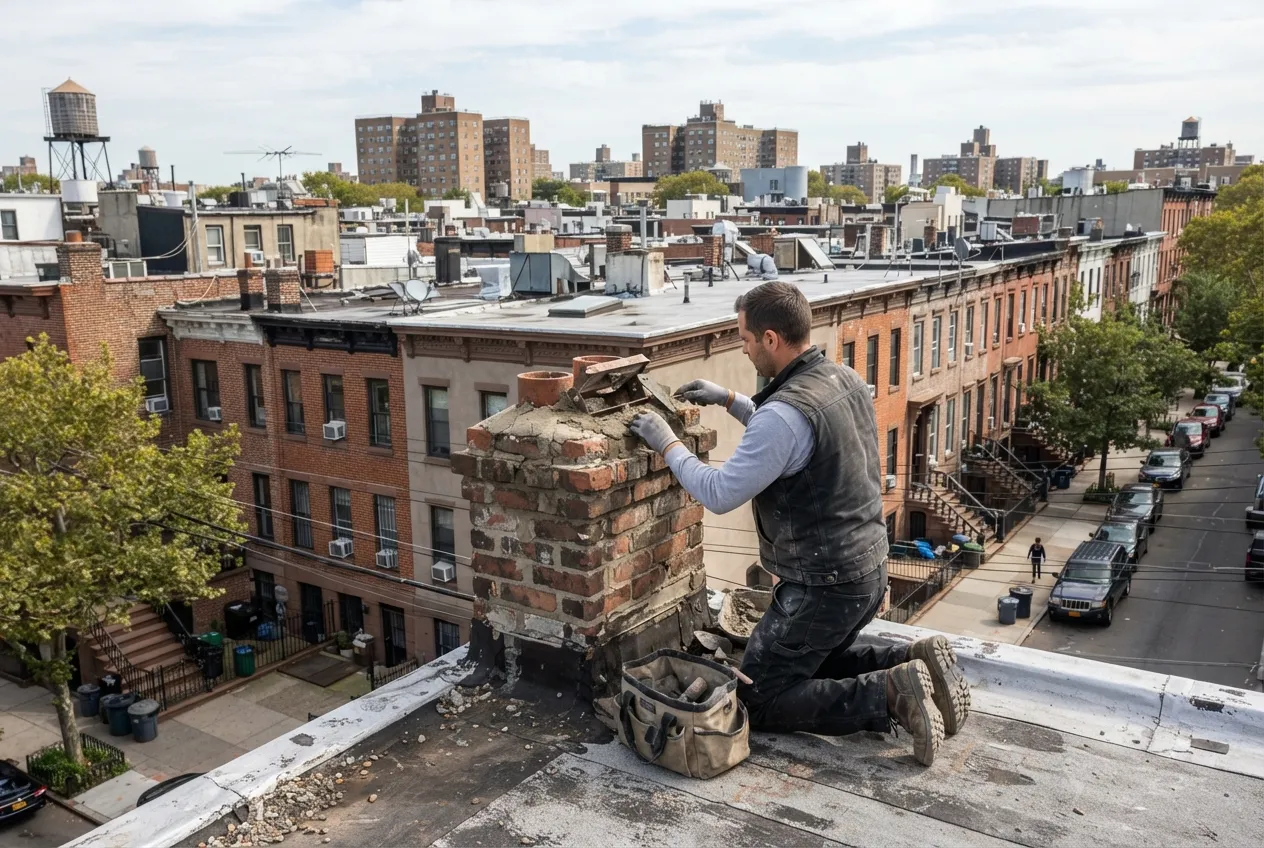
- Repointing firebox joints and replacing cracked or spalled firebrick with materials rated for fireplace heat
- Assessment of the smoke chamber for gaps or rough surfaces that hurt draft
- A check of the chimney cap, crown and flashing when water or animals are part of the problem
- A camera inspection of the flue liner when the damage may extend higher
- Photos and written notes on what we found and what we did
How we work inside your home and on the roof
Fireplace work is dusty by nature, so we set up before we touch anything. The crew lays drop cloths from the entry to the hearth and seals off the fireplace opening. HEPA vacuums run during cleaning and demolition, so soot and mortar dust are captured instead of drifting through the room. Rotary brushes clear the damper area and the lower flue so we can see the metal and masonry clearly.
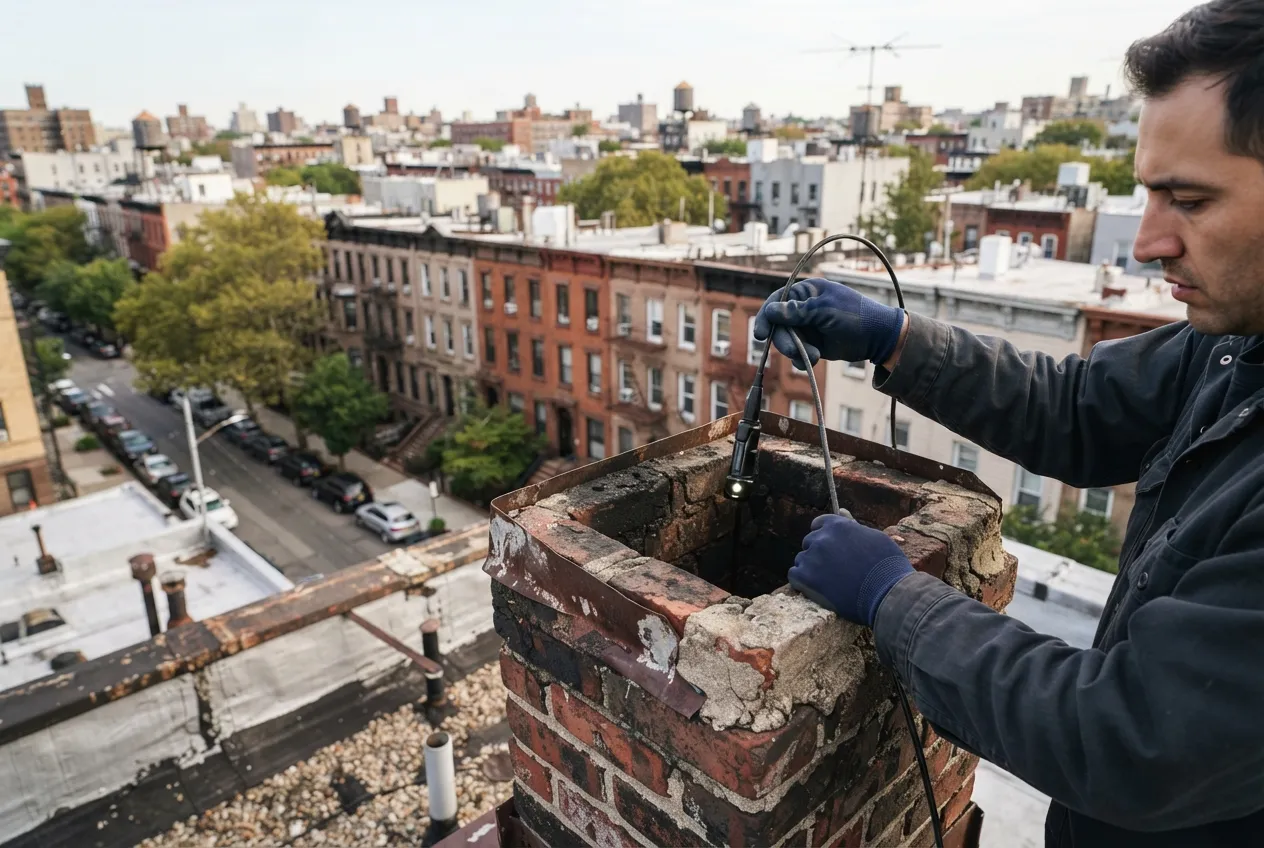
When the problem may continue above the damper, we run a camera up the flue to look at the liner and its joints. You can watch the footage with us, which makes it much easier to decide on next steps.
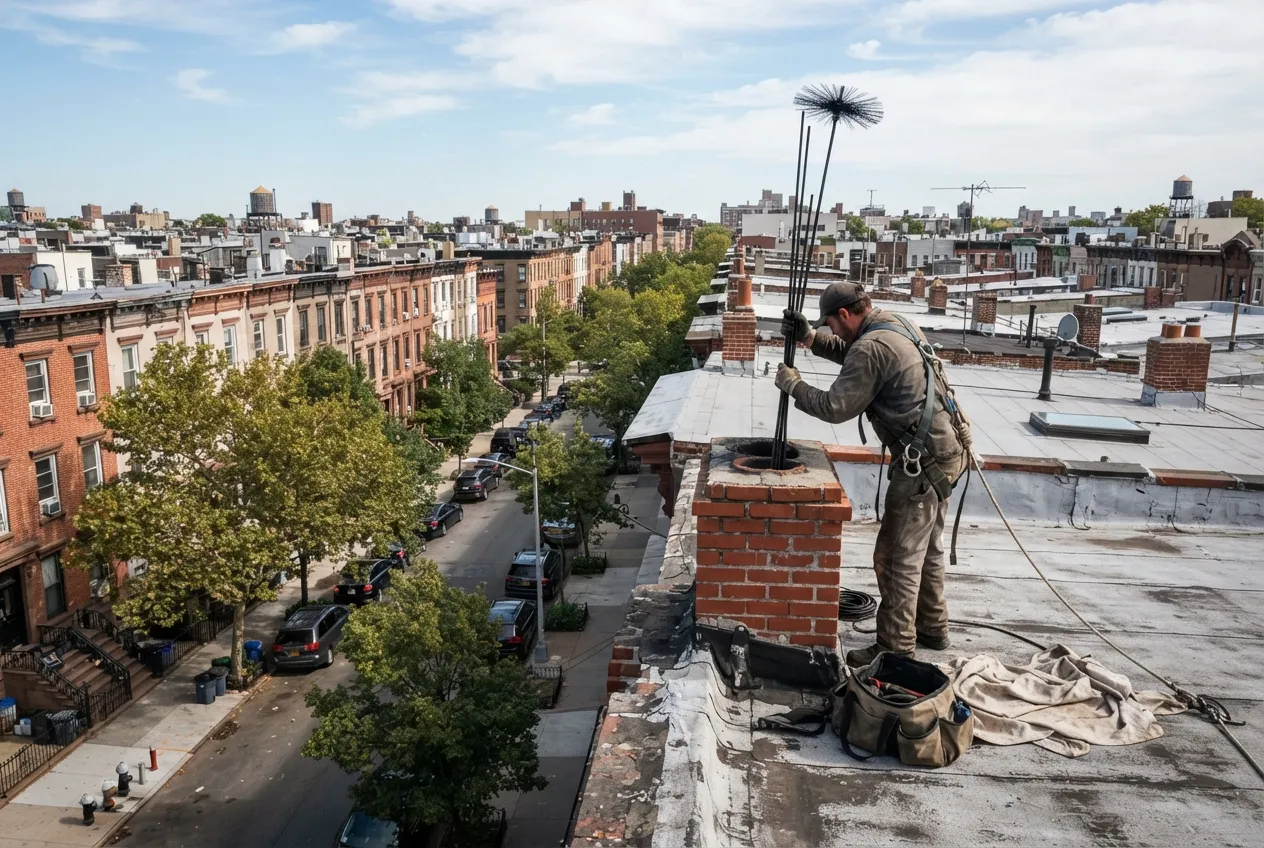
On the roof, we check the chimney top: the cap, the crown, the flashing and any signs of animal entry. A top-sealing damper is installed and adjusted from up there, with its cable run down to a handle inside the firebox. We use roof access suited to the building and keep tools and debris contained, so nothing ends up in gutters, yards or on a neighbor's roof.
Time for your annual chimney check?
The standard we follow
Our inspections follow NFPA 211, the national standard for chimneys, fireplaces and vents. It calls for them to be inspected once a year. Chimney professionals use three inspection levels:
Most damper and firebox repairs start with a Level 1 inspection. If you're converting a wood fireplace to gas logs, adding an insert, or buying or selling the home, a Level 2 inspection is the right starting point. We'll tell you which level fits before any work begins.
- Level 1: when nothing about the system has changed
- Level 2: when the system changes, such as a new appliance or a switch of fuel, or when the home is sold
- Level 3: when a hidden hazard has to be reached by opening part of the chimney or building
What affects the price
We price each job after we see it. Two fireplaces that look alike from the living room can need very different work. The main factors are:
You get a clear written estimate before any repair starts.
- Chimney height and how easy the roof is to reach
- Fuel type: wood, gas logs or an insert
- Flue size and the condition of the liner
- How much soot and creosote has built up around the damper
- Whether a camera inspection is needed
- The extent of the repair, from a damper adjustment to a firebox rebuild or a new top-sealing damper
How a visit works
You choose a time that works for you. We confirm the appointment and ask a few questions about what you've noticed. When the technicians arrive, they protect the work area and inspect the fireplace and damper. Then they walk you through what they found, using photos or camera footage.
Small repairs, such as freeing or adjusting a damper, can often be handled the same day. Larger jobs, like firebox rebuilding or a top-sealing damper, are scheduled once you approve the estimate. Some masonry repairs also need curing time before the next fire. Before we leave, we vacuum the area, remove all debris and tell you when the fireplace is ready to use.