The short answer
Yes. Downtown Brooklyn homes should have their chimneys inspected once a year, as the NFPA 211 standard recommends, and again whenever you change a heating appliance, switch fuels or buy or sell the property. We provide Level 1, 2 and 3 inspections throughout the 11201 area and nearby neighborhoods.
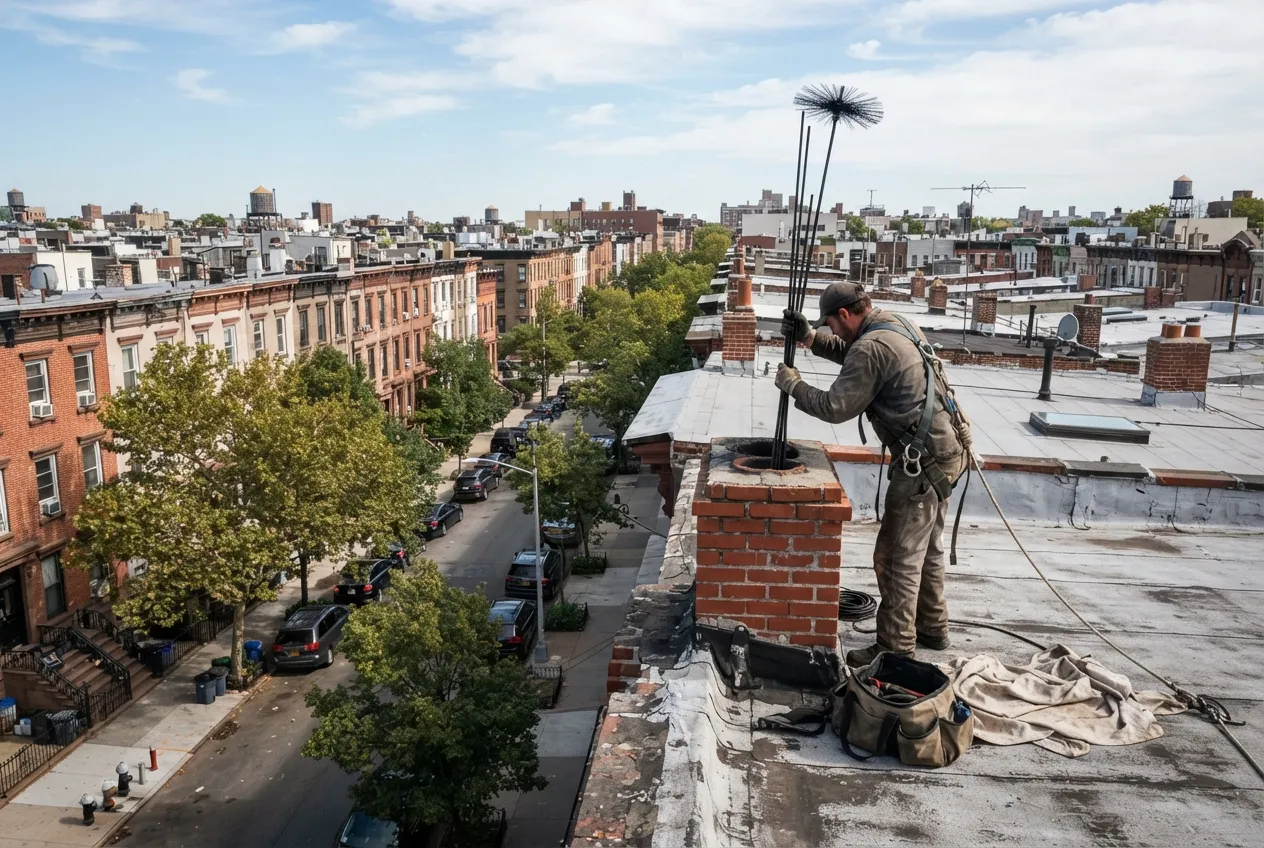
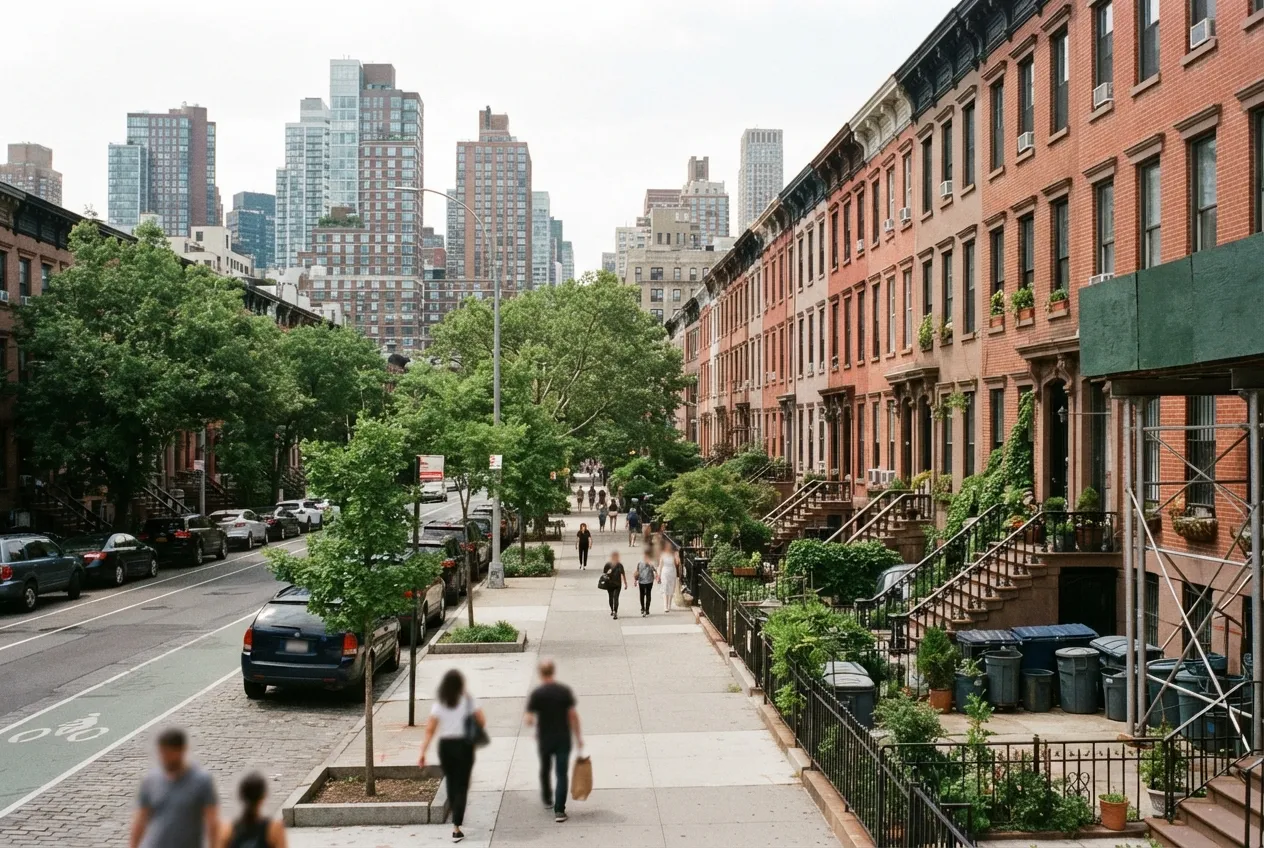
All Star Chimney Sweep inspects chimneys, fireplaces and heating vents in Downtown Brooklyn and the 11201 ZIP code, about a mile northeast of our Brooklyn office. The neighborhood mixes newer apartment towers with pre-war buildings, brownstones and rowhouses. Many of those older homes have chimneys that have been patched, relined or repurposed several times. An inspection tells you what condition your flue is in now, whether it is safe for the appliance or fireplace connected to it, and what, if anything, needs attention before you use it. Our certified technicians explain what they find in plain terms and show you photos, so you can make decisions based on your actual chimney.
Which Inspection Level Your Chimney Needs
The NFPA 211 standard calls for chimneys, fireplaces and vents to be inspected once a year. Chimney professionals use three levels of inspection, and the right one depends on what has happened since the last time someone looked at your system.
Most Downtown Brooklyn homeowners who use a fireplace or have a boiler or furnace venting through a masonry chimney only need the yearly Level 1 check. If you are buying a brownstone, renovating, or replacing your heating equipment, a Level 2 inspection is the appropriate step.
- Level 1: For chimneys in continued use where nothing has changed. We check the accessible parts of the chimney, the flue, the firebox or appliance connection, and look for blockages and combustible deposits.
- Level 2: Required when the system changes, such as a new appliance or a switch of fuel, or when the home is sold. It adds a video scan of the flue interior and a closer look at accessible attics, basements and the roof.
- Level 3: Used when a hidden hazard has to be reached by opening part of the chimney or the building, such as a wall or chase. We only recommend this level when the earlier inspections point to a concealed problem.
What We Look For in Downtown Brooklyn Homes
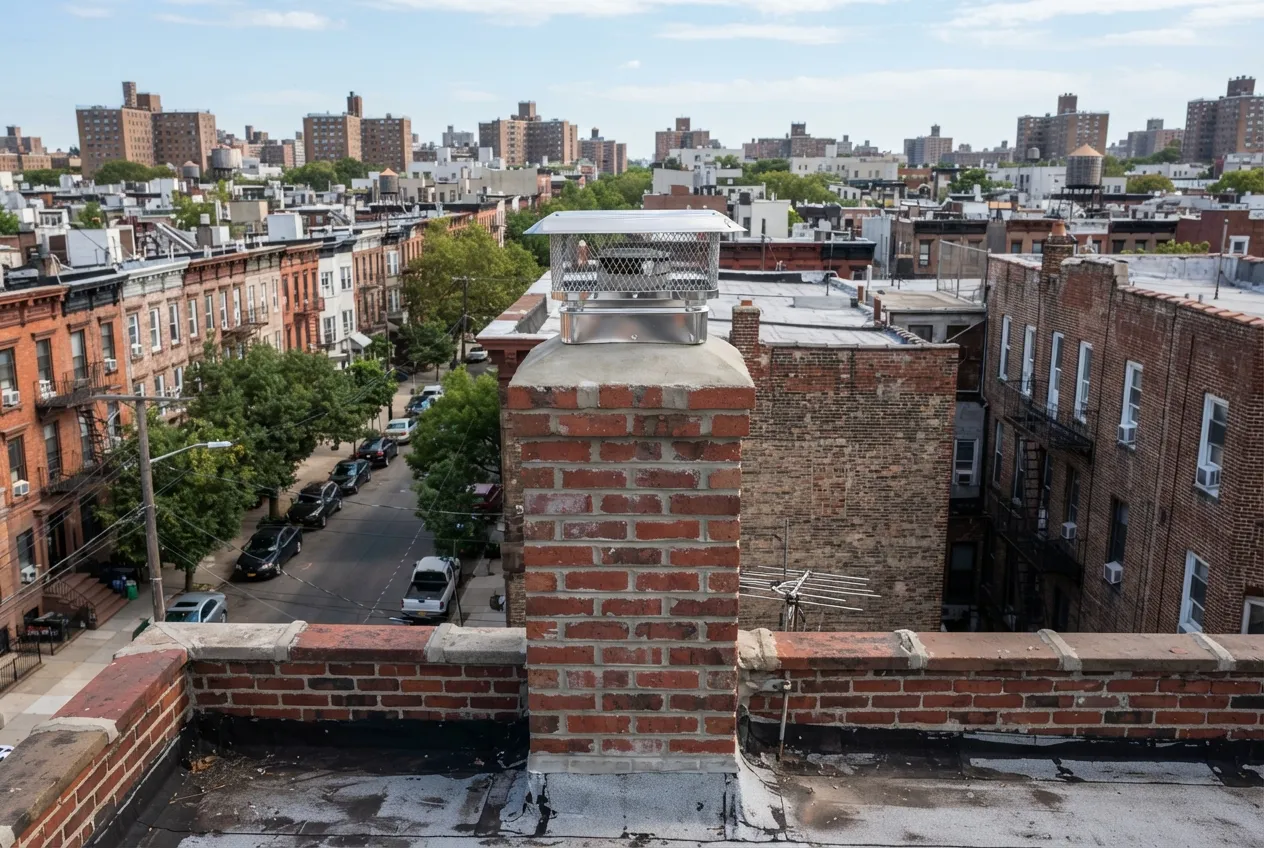
Older rowhouses and brownstones in and around Downtown Brooklyn often have several flues sharing one chimney stack. Some serve fireplaces on different floors, some were sealed off decades ago, and one may vent the boiler in the basement. We identify which flue serves what, because a crack or missing liner in one flue can let smoke or exhaust pass into another.
In pre-war apartment buildings and converted multi-family homes, we pay close attention to the boiler flue, the connector pipe, and the base of the chimney, where debris and fallen masonry tend to collect. On the roof, we check the crown, cap, flashing and mortar joints, since water getting into the chimney is one of the most common causes of deterioration we see in older masonry.
Oil-to-Gas Conversions and Liners
Many buildings in the area have switched or are planning to switch their boilers from oil to gas. When a New York City building converts from oil to gas, the chimney has to be evaluated as part of the work. A new liner is often needed because gas exhaust produces acidic condensate that can corrode an unlined or poorly lined masonry flue over time.
If you are planning a conversion, we can perform a Level 2 inspection before the new boiler goes in. That way you, your heating contractor and your building manager know whether the existing flue is suitable or whether a liner sized for the new equipment is needed.
Time for your annual chimney check?
Scheduling Around Heat Season
New York City's heat season runs from October 1 through May 31. During that period, building owners must keep apartments heated to the city's minimum temperatures. For owners of multi-family buildings, a chimney problem found in January can mean shutting down the boiler while units still need heat.
Booking your inspection in late spring or summer gives you time to schedule any repairs before the boiler is back in steady use. Fireplace owners benefit from the same timing, since animal nests, debris and water damage are easier to address before the first cold night.
What You Get After the Inspection
After we finish, we walk you through what we found and give you a written summary with photos. That includes video stills from inside the flue when we run a camera. If the chimney is in good shape, we tell you so. If there are problems, we explain which ones affect safety now and which can be planned for later.
We also serve nearby DUMBO, Boerum Hill, Brooklyn Heights, Fort Greene and Carroll Gardens, so neighbors with similar homes can book with the same crew.
More services in Downtown Brooklyn
- Chimney Sweep in Downtown BrooklynLocal service & repairs
- Chimney Repair in Downtown BrooklynLocal service & repairs
- Air Duct Cleaning in Downtown BrooklynLocal service & repairs
- Chimney Liner Installation in Downtown BrooklynLocal service & repairs