The short answer
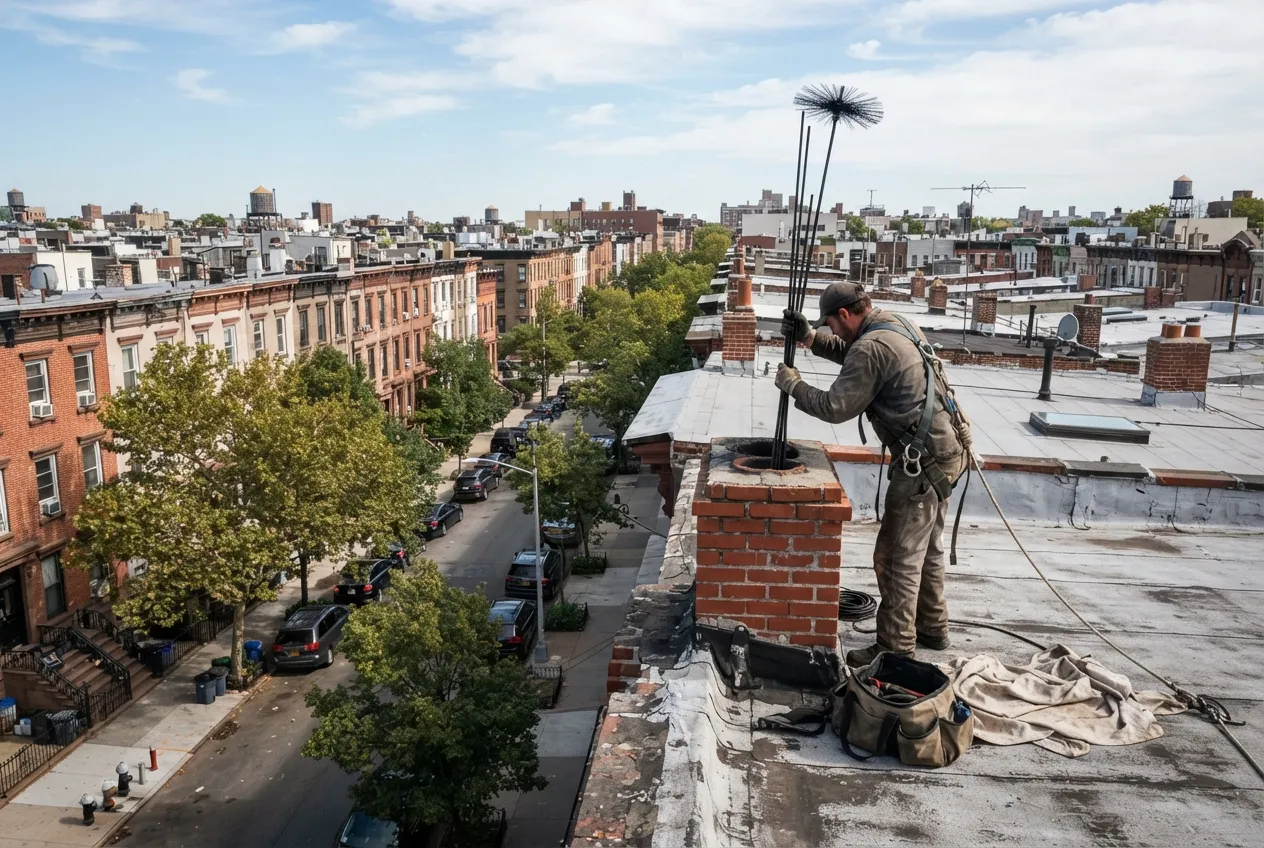
Fort Greene chimneys usually need repair because of aging mortar, cracked crowns, failed roof flashing, or flue liners damaged by gas-appliance condensate. All Star Chimney Sweep inspects the chimney, identifies the cause, and repairs the masonry, flashing or liner so the system vents safely.
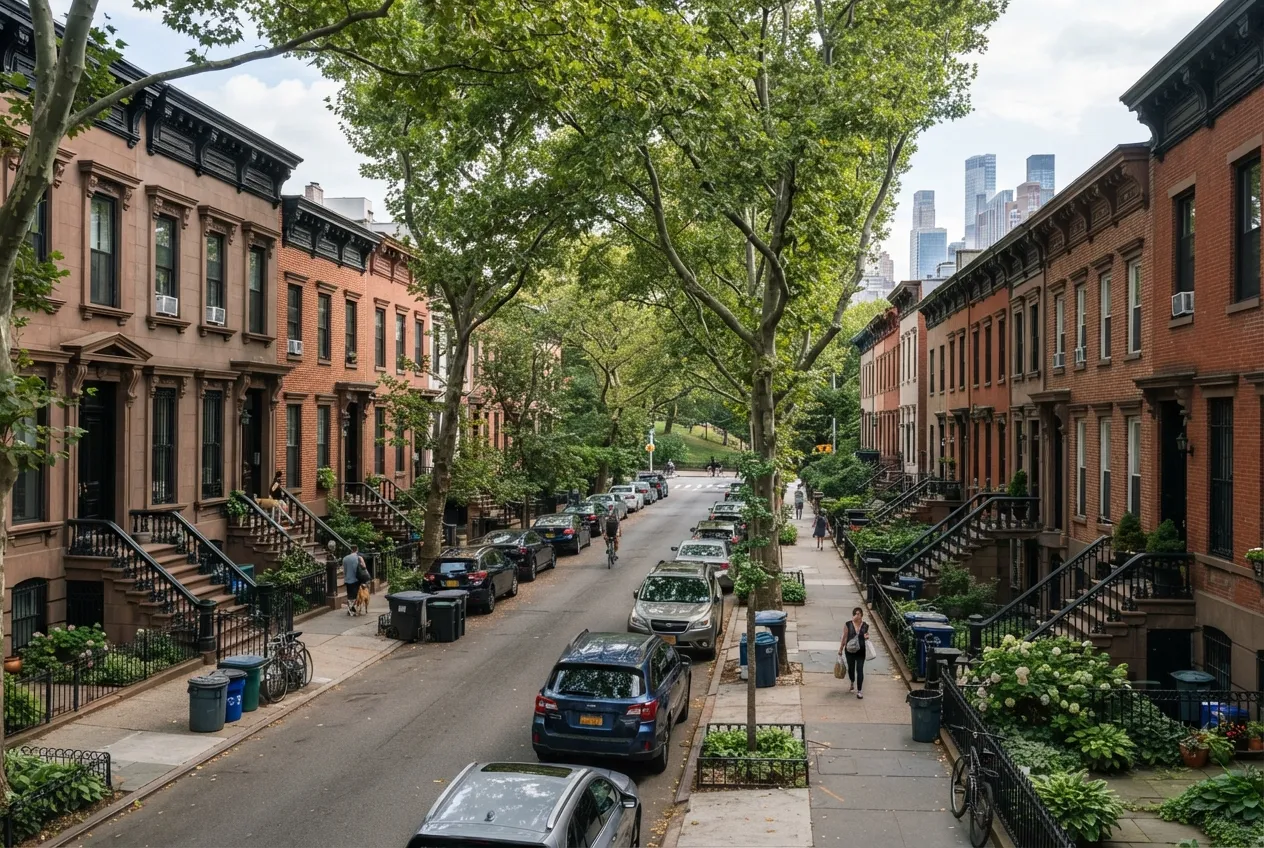
Most chimneys in Fort Greene's brownstones, rowhouses and pre-war apartment buildings are older masonry stacks that have seen many winters, many boilers and, often, more than one kind of fuel. Over time that wears on brick, mortar, crowns, flashing and flue liners. All Star Chimney Sweep repairs chimneys throughout Fort Greene and ZIP code 11205 from our Brooklyn office, about a mile away. Our certified technicians start by finding the cause of the problem. They show you what they see and explain the repair in plain terms before any work begins.
Why Fort Greene Chimneys Wear Out
Fort Greene's brownstones and rowhouses often have chimneys that run through shared or party walls and exit onto flat roofs. Water is the main enemy. Rain and melting snow soak into worn mortar joints and cracked crowns. When that moisture freezes and thaws through a New York winter, it pushes brick and mortar apart a little more each year. The first signs are often inside: stains on a top-floor ceiling, flaking plaster near the chimney breast, or a damp smell in the fireplace.
Many chimneys in older buildings were also built for coal or oil and later connected to gas boilers and water heaters. Those changes can leave a flue that is the wrong size or poorly protected for the exhaust it now carries. That is why we check the whole system, not just the brick you can see from the street.
Chimney Repairs We Handle in Fort Greene
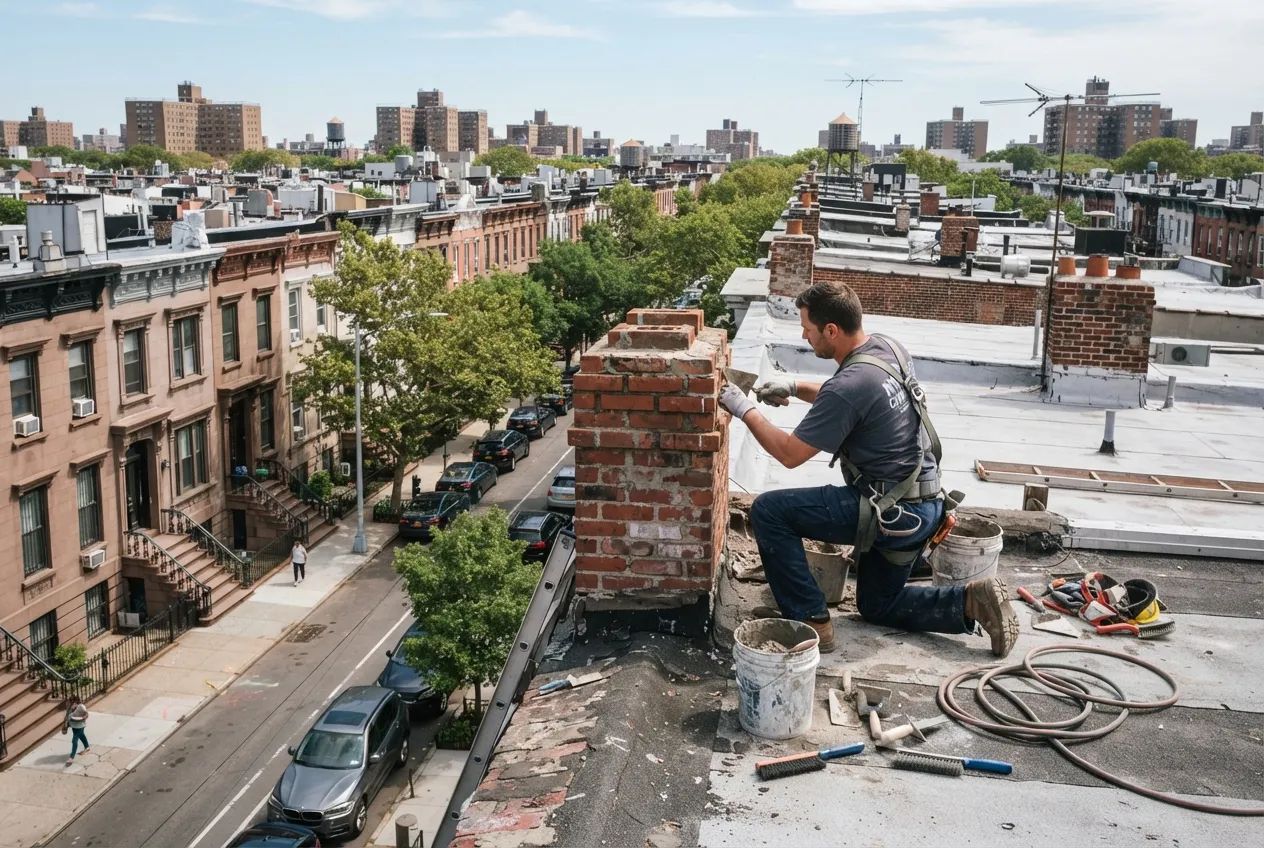
Every repair starts with a look at the chimney from the roof, the firebox or appliance connection, and inside the flue. The repair is then matched to the cause. Common work in Fort Greene homes includes:
- Repointing: grinding out and replacing deteriorated mortar joints
- Rebuilding loose or spalling brick near the top of the stack
- Repairing or replacing cracked chimney crowns
- Resealing or replacing flashing where the chimney meets a flat or pitched roof
- Installing or replacing chimney caps to keep out rain, debris and animals
- Repairing damaged firebox brick and smoke chambers in working fireplaces
- Relining flues for gas, oil or wood-burning appliances
Oil-to-Gas Conversions and Flue Liners
Many Fort Greene buildings have switched their boilers from oil to gas or are planning to. When a New York City building makes that conversion, the chimney has to be evaluated as part of the work. A new liner is often needed. Gas exhaust produces acidic condensate, and over time it can eat away at an unlined or clay-lined masonry flue.
If you are planning a conversion, we can inspect the chimney early so the liner work fits into your schedule. If your building already converted and you notice crumbling mortar at the base of the chimney, white staining, or debris collecting at the cleanout, those can be signs of condensate damage. They are worth checking soon.
Time for your annual chimney check?
How a Repair Visit Works
The NFPA 211 standard calls for chimneys, fireplaces and vents to be inspected once a year. It also describes three levels of inspection. A Level 1 inspection covers a system that has not changed. A Level 2 inspection applies when something changes, such as a new boiler, a switch in fuel, or the sale of the home. A Level 3 inspection is used when a hidden hazard can only be reached by opening part of the chimney or the building.
For most repair calls, we inspect, photograph what we find, and walk you through your options. Once you approve the plan, we schedule the work. In attached homes and apartment buildings, we also coordinate roof access and let you know if the issue may affect a neighboring flue.
Planning Repairs Around Heat Season
New York City's heat season runs from October 1 through May 31. During that time, building owners must keep apartments heated to the city's minimum temperatures. A chimney problem that takes a boiler offline in January is far harder to deal with than one fixed in summer. Masonry work is also easier to do in mild, dry weather.
If you own a brownstone or a small apartment building in Fort Greene, late spring through early fall is the best time for inspections and repairs. That way your heating system is ready before October.
More services in Fort Greene
- Chimney Sweep in Fort GreeneLocal service & repairs
- Chimney Inspection in Fort GreeneLocal service & repairs
- Air Duct Cleaning in Fort GreeneLocal service & repairs
- Chimney Liner Installation in Fort GreeneLocal service & repairs