The short answer
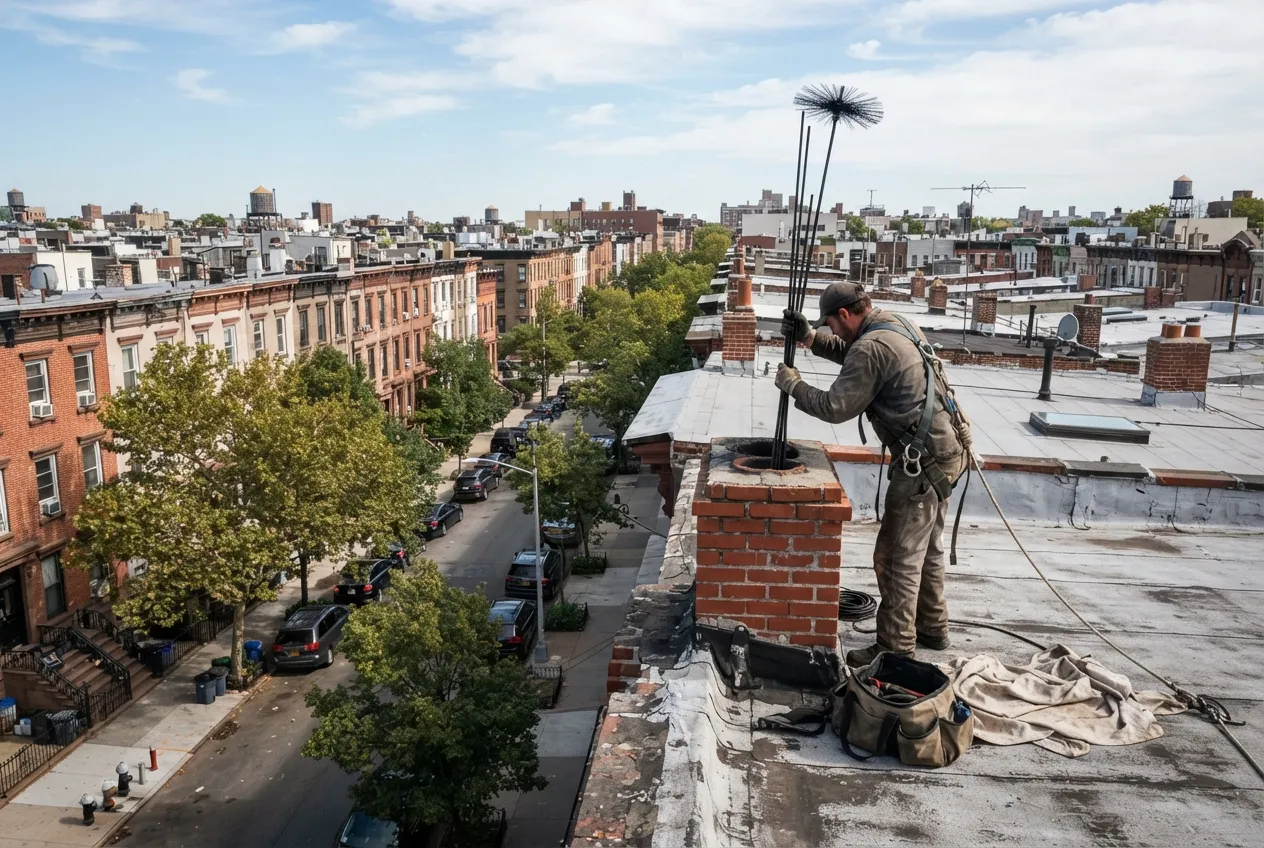
A chimney sweep in Fort Greene removes soot, creosote and debris from fireplace and heating flues and checks the chimney for damage or blockages. Most homes should have the chimney inspected once a year, ideally before New York City's heat season starts on October 1. Brownstones with several flues and buildings that have switched from oil to gas often need closer attention.
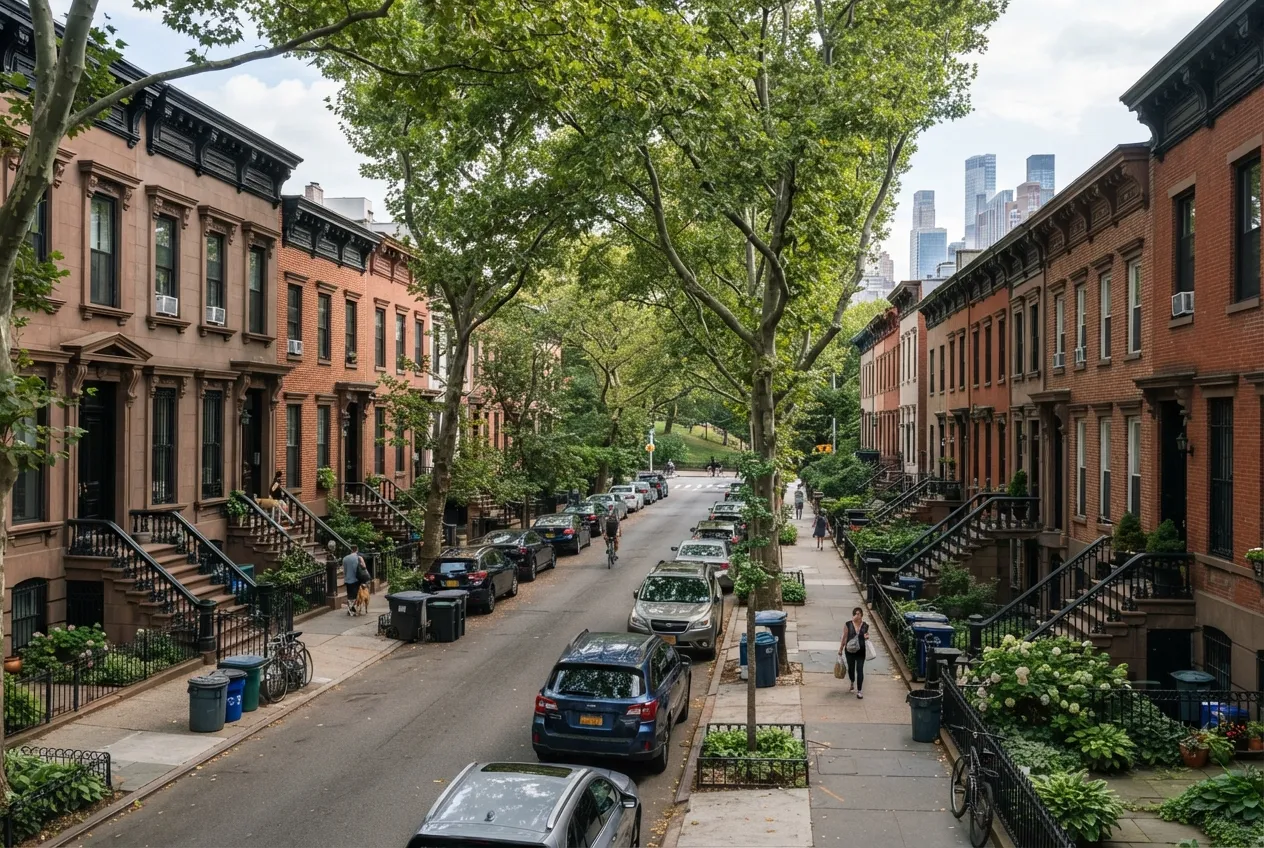
Many Fort Greene homes were built when every room was heated by a fireplace. Brownstones and rowhouses often have several flues running through one shared stack, and pre-war apartment buildings vent boilers through tall masonry chimneys that see heavy use every winter. Our crew works out of an office about a mile southwest of the neighborhood, so homes in the 11205 ZIP code are a short trip for us. We sweep wood-burning fireplaces, clean and check flues serving boilers and furnaces, and tell you plainly what we find. Our technicians are certified, and they explain what they find in plain terms.
Chimney sweeping for Fort Greene brownstones and rowhouses
Older Brooklyn rowhouses usually have more than one flue inside a single chimney stack. One flue may serve a parlor-floor fireplace, another a bedroom fireplace that hasn't been used in decades, and another the boiler in the cellar. Over time, some of these get sealed off, some get reopened, and the owner may not know which flue serves which opening.
When we sweep a brownstone chimney, we identify each flue, clean the ones that are in use, and look for problems that are common in older masonry: loose or missing bricks inside the flue, deteriorated mortar joints, bird and squirrel nests, and debris that has fallen from the top of the stack. In buildings where a neighbor's chimney is attached to yours, we also watch for cracks or gaps that could let smoke move between flues.
When to schedule a chimney sweep in Fort Greene
The NFPA 211 standard calls for chimneys, fireplaces and vents to be inspected once a year. A sweep is done when the inspection shows buildup or blockage, which is common in any flue that gets regular use.
Timing matters in New York City. The city's heat season runs from October 1 through May 31, and building owners must keep apartments heated to the city's minimum temperatures during those months. If you own a multi-family brownstone or a small apartment building, an inspection and sweep in late summer or early fall gives you time to handle repairs before tenants need heat. For a fireplace you only use on winter weekends, late summer or early fall is still the easiest time to book.
Oil-to-gas conversions and chimney liners
Many Brooklyn buildings have switched their boilers from heating oil to natural gas. When a New York City building converts its boiler from oil to gas, the chimney has to be evaluated as part of the work, and a new liner is often needed. Gas exhaust produces acidic condensate that can corrode an unlined or poorly lined masonry flue, wearing down mortar and brick from the inside.
If your building has converted, or you are planning a conversion, we can sweep out old oil soot and inspect the flue so you know what condition it's in before the new equipment goes on line. A change of fuel or a new appliance is the kind of situation that calls for a Level 2 inspection, which is more thorough than a routine yearly check.
Time for your annual chimney check?
What happens during a chimney sweep visit
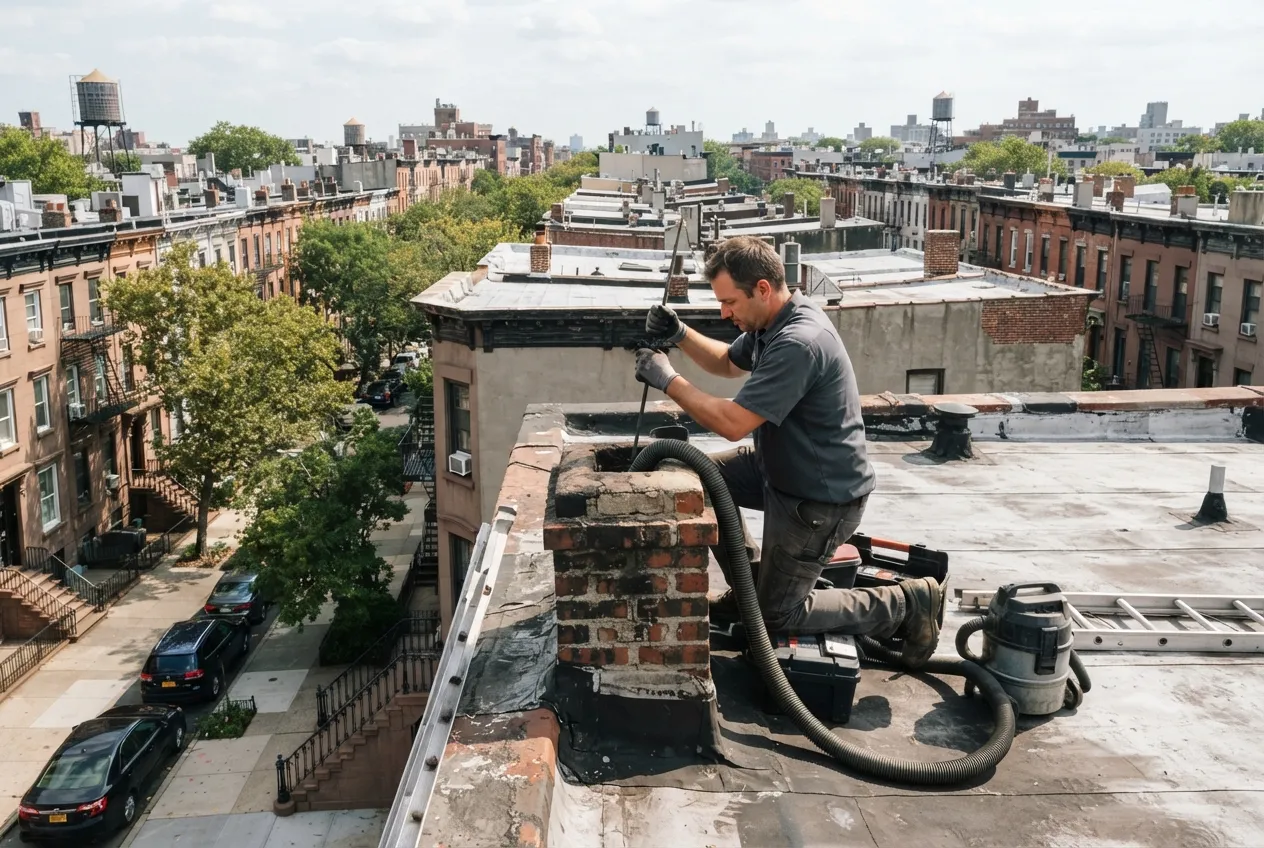
We protect your floors and furniture before we start, and we keep the work contained so soot stays out of your living space.
- Lay down drop cloths and seal off the fireplace opening
- Brush the flue and smoke chamber to remove soot and creosote
- Vacuum loose debris using equipment built to catch fine dust
- Check the firebox, damper, smoke shelf and flue walls for damage
- Look at the chimney cap and crown when they can be reached safely
- Explain what we found and recommend next steps, if any
Signs your Fort Greene chimney needs attention
Even if it's been less than a year since your last sweep, call us if you notice any of the following.
- A strong smoky or tar-like smell, especially in humid weather
- Smoke drifting into the room when the fireplace is lit
- Black, flaky deposits inside the firebox or on the damper
- Pieces of brick or mortar falling into the fireplace
- Animal noises or nesting material near the flue
- Water stains on walls or ceilings next to the chimney
More services in Fort Greene
- Chimney Inspection in Fort GreeneLocal service & repairs
- Chimney Repair in Fort GreeneLocal service & repairs
- Air Duct Cleaning in Fort GreeneLocal service & repairs
- Chimney Liner Installation in Fort GreeneLocal service & repairs