The short answer
Chimney repair in Red Hook usually means fixing worn mortar, cracked crowns, failed flashing, missing caps, or damaged flue liners on older rowhouses, brownstones, and apartment buildings. We inspect first to find the real cause, then repair it, ideally before New York City's heat season begins October 1.
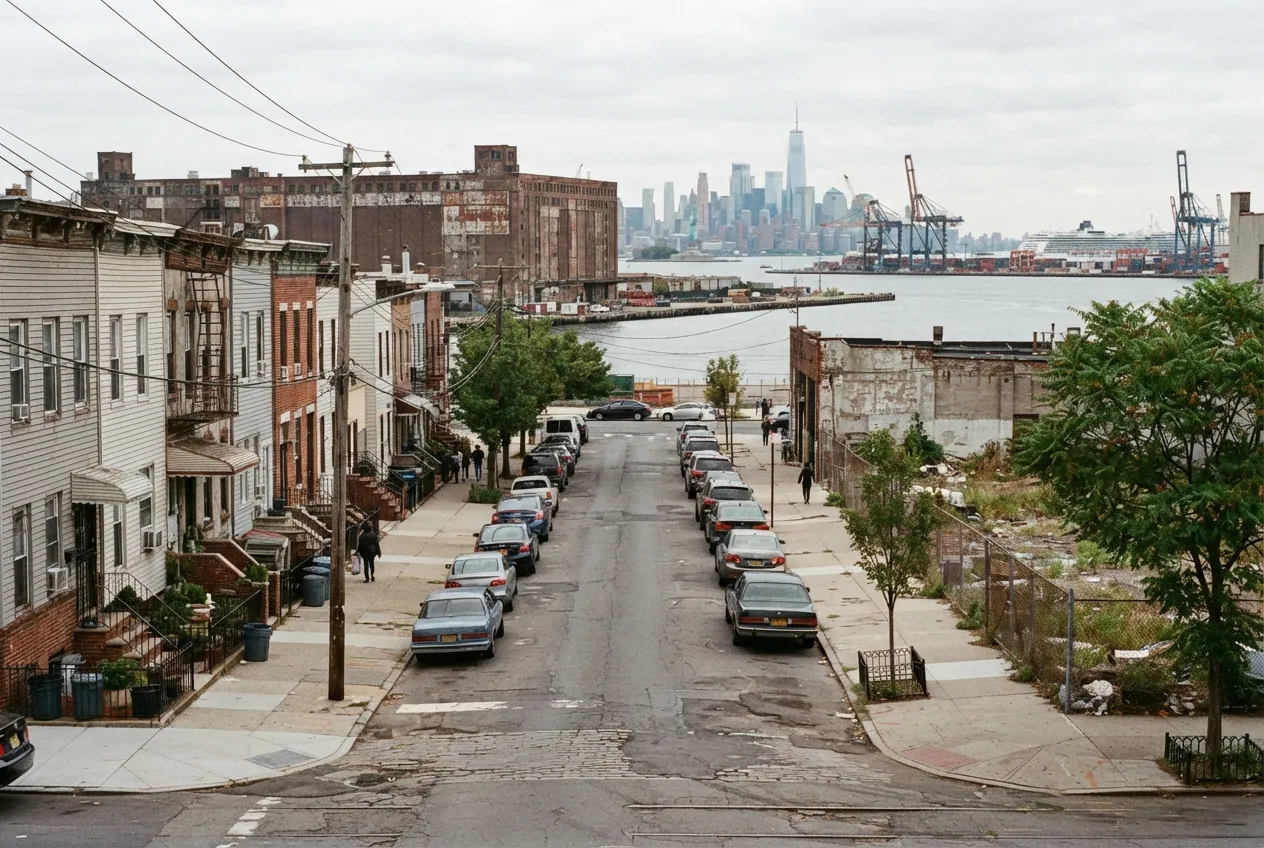
Red Hook's housing mixes brick rowhouses, older frame homes, and pre-war apartment buildings, and many of their chimneys have stood through decades of freeze-thaw cycles and wind off the harbor. When a chimney starts leaking, shedding brick, or venting poorly, the cause is usually one of a few problems that get worse each season they are left alone. All Star Chimney Sweep works out of our office at 543 Henry St, so homes in 11231 are close by. Our certified technicians find what is actually wrong, explain it in plain terms, and repair it so the chimney vents safely and keeps water out of your walls.
What Chimney Repair Looks Like on Red Hook Homes
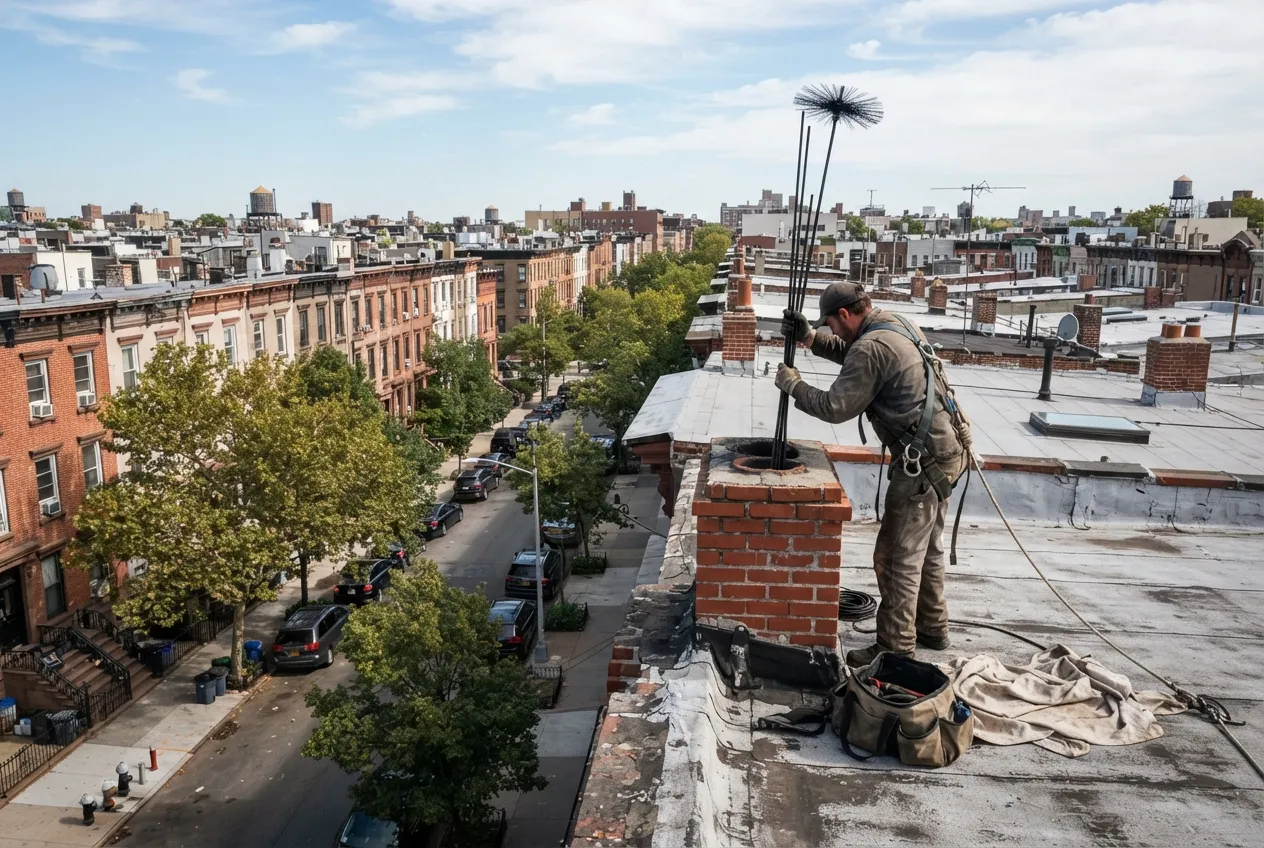
Most chimneys here are masonry and were built long before modern gas boilers and high-efficiency appliances. Brick and mortar exposed above the roofline take the worst of the weather. Water gets into small cracks, freezes, expands, and loosens the masonry a little more each winter. On attached rowhouses, a damaged chimney can also send water into a shared wall, so a leak may show up in your neighbor's home or in a different room than you expect.
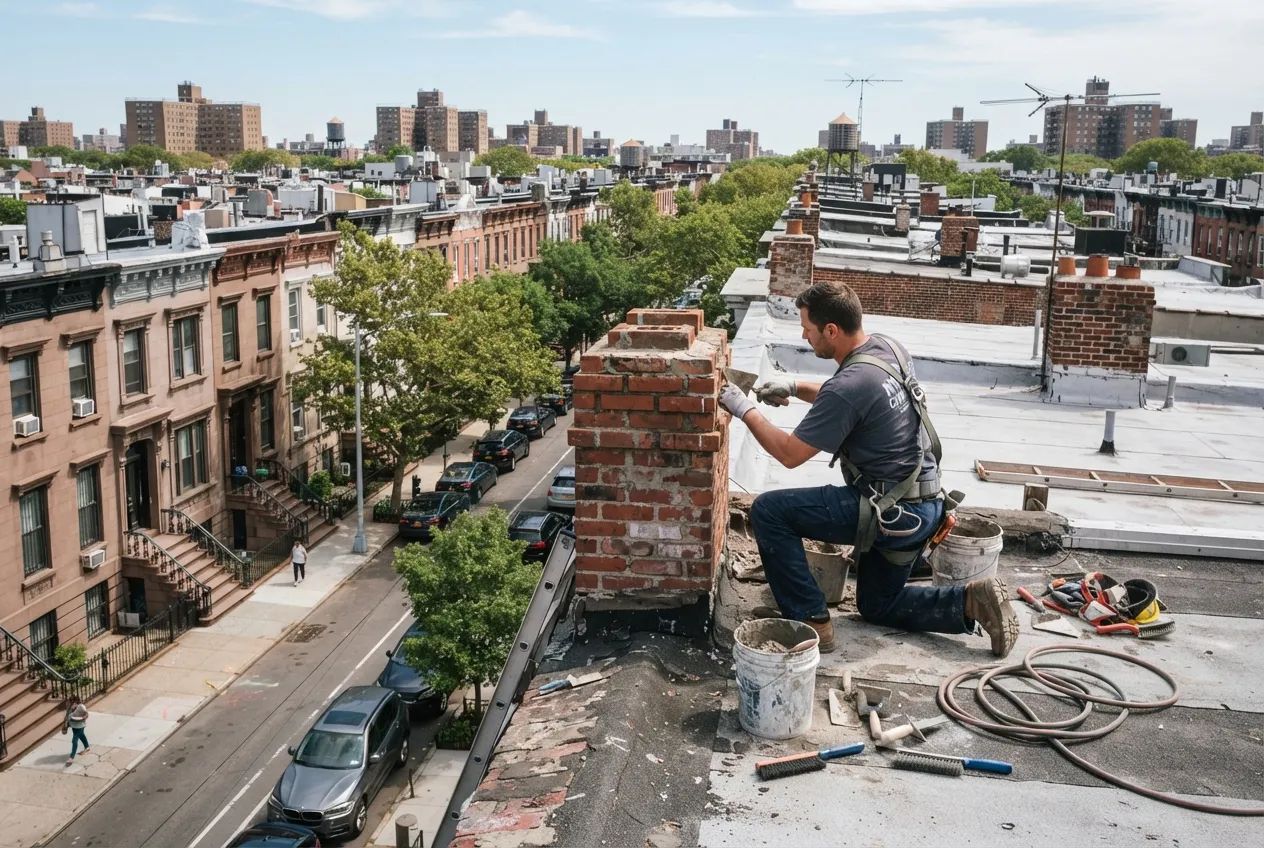
Repair is not one job. It covers everything from repointing a few courses of brick to rebuilding the top of a stack, resealing flashing, or relining a flue. The right fix depends on what failed and why, which is why we look before we quote any work.
Common Problems We Repair
These are the issues we see most often on chimneys in older Brooklyn housing:
- Eroded or missing mortar joints that need repointing
- Cracked or crumbling chimney crowns that let water into the stack
- Spalling brick, where the face of the brick flakes or pops off
- Failed flashing where the chimney meets the roof, a frequent source of ceiling and wall leaks
- Missing or rusted chimney caps that let in rain, debris, and animals
- Cracked clay tile liners or deteriorated flues that no longer contain exhaust safely
- Damaged smoke chambers and dampers on wood-burning fireplaces
- Leaning or loose stacks that need partial rebuilding
We Inspect Before We Repair
The NFPA 211 standard calls for chimneys, fireplaces, and vents to be inspected once a year. Inspections come in three levels. A Level 1 inspection fits when nothing about the system has changed. A Level 2 inspection is called for when the system changes, such as a new appliance or a switch of fuel, or when the home is sold. A Level 3 inspection is used when a hidden hazard has to be reached by opening part of the chimney or building.
For repair work, the inspection tells us whether a visible symptom, like a water stain or loose brick, points to a surface problem or something deeper inside the flue. We show you what we found and explain your options before any repair begins.
Time for your annual chimney check?
Oil-to-Gas Conversions and Chimney Liners
Many Brooklyn buildings have converted, or are planning to convert, their boilers from oil to gas. In New York City, the chimney has to be evaluated as part of that work. A new liner is often needed because gas exhaust produces acidic condensate that can corrode a masonry flue from the inside.
If your building has already converted and the old flue was never relined, look for signs like crumbling material at the base of the chimney, staining on interior walls, or debris in the cleanout. We can assess the existing flue and install a liner sized for the appliance it serves.
Plan Repairs Around Heat Season
New York City's heat season runs from October 1 through May 31. During those months, building owners must keep apartments heated to the city's minimum temperatures, so a boiler chimney that can't be used is a serious problem. Late spring and summer are the easiest times to schedule repairs, since the heating system can be shut down without affecting tenants or family.
Masonry repairs also cure best in milder weather. If you noticed a leak or a damper problem last winter, now is a good time to have it looked at.
Serving Red Hook and Nearby Neighborhoods
Our office is in Red Hook, and we also handle chimney repair in Carroll Gardens, Cobble Hill, Gowanus, Park Slope, and Brooklyn Heights. Whether you own a single brownstone, a detached home, or manage a multi-unit building, we'll walk you through what your chimney needs and why.
More services in Red Hook
- Chimney Sweep in Red HookLocal service & repairs
- Chimney Inspection in Red HookLocal service & repairs
- Air Duct Cleaning in Red HookLocal service & repairs
- Chimney Liner Installation in Red HookLocal service & repairs