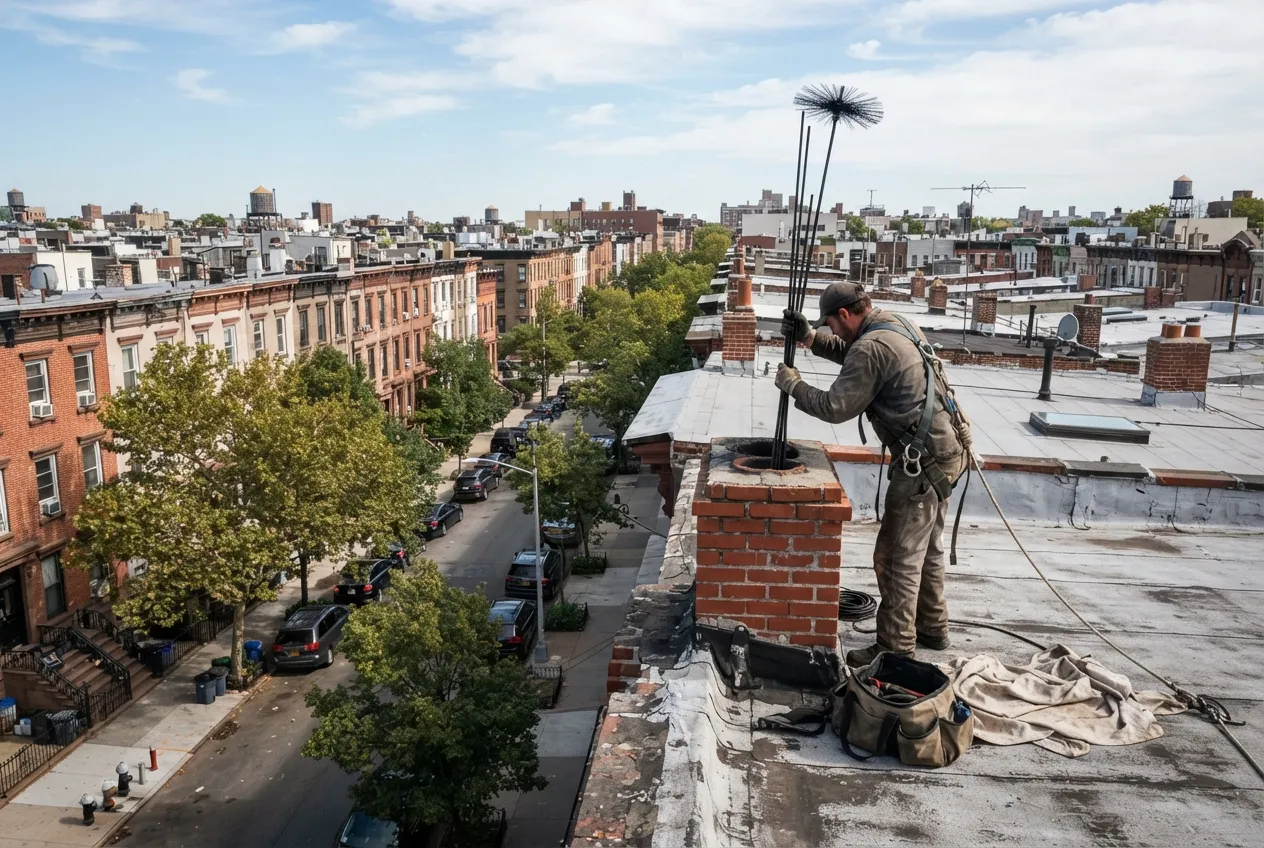
The short answer
Most chimney repairs in Gowanus involve water damage to older masonry or flues that need relining, especially after an oil-to-gas boiler conversion. We inspect first, explain what's wrong in plain terms, and repair crowns, flashing, mortar, caps, dampers and liners.
Gowanus has a mix of brick rowhouses, brownstones, pre-war apartment buildings and newer construction. Many of the older chimneys here have been through decades of freeze-thaw cycles, roof work and heating system changes. All Star Chimney Sweep is based in Gowanus, with our office at 543 Henry St, so repair calls in the neighborhood are close to home. Our certified technicians find out why a chimney is failing, whether that's water, worn mortar, a damaged liner or a loose cap. Then we fix the cause, not just the symptom you can see from the sidewalk or the top-floor ceiling.
Common Chimney Problems in Gowanus Homes
Most chimney repairs on older Brooklyn masonry come down to water. Brick and mortar absorb moisture, and when that water freezes and thaws through a New York winter, joints crumble and brick faces flake off. Once water gets past the crown or flashing, it shows up as stains on ceilings, peeling paint near the fireplace, or a damp smell on the top floor.
The repairs we handle most often include:
- Cracked or crumbling crowns. The cap on top of the chimney is meant to shed water, and cracks let water straight into the masonry.
- Failed flashing. This is the seal where the chimney meets the roof. It often separates after roof work, especially on flat rowhouse roofs.
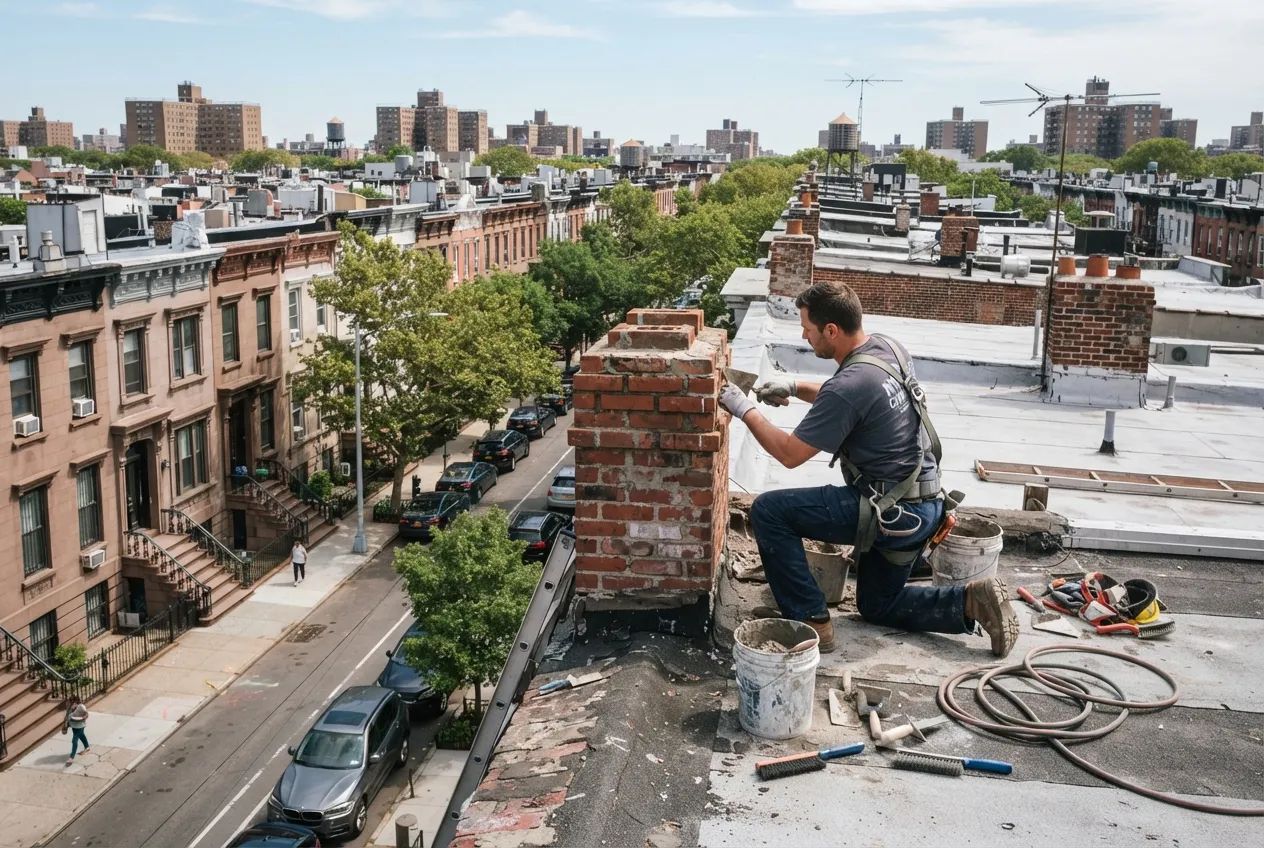
- Open mortar joints. Repointing replaces deteriorated mortar so the brick can keep doing its job.
- Spalling brick. Damaged brick faces should be replaced before the problem spreads.
- Missing or rusted chimney caps. A cap keeps out rain, debris, birds and animals.
- Damaged dampers. A damper that won't seal wastes heat and lets in cold drafts.
Liners and Oil-to-Gas Conversions
Many Gowanus buildings were heated with oil for decades. When a New York City building converts its boiler from oil to gas, the chimney has to be evaluated as part of the work, and a new liner is often needed. Gas exhaust produces acidic condensate that can corrode a masonry flue over time.
We inspect the existing flue and confirm whether it can safely vent the new appliance. If a liner is required, we install one sized for that appliance. Liners matter for fireplaces too. Cracked clay tiles or gaps between them can let heat and gases reach the surrounding brick and framing. Warning signs include tile fragments in the firebox, heavy staining, or a flue that was never lined at all.
How a Repair Visit Works
Every repair starts with understanding the whole system. The NFPA 211 standard calls for chimneys, fireplaces and vents to be inspected once a year, and chimney professionals use three inspection levels:
A Level 1 inspection is used when nothing has changed. A Level 2 inspection is used when the system changes, such as a new boiler or a switch from oil to gas, or when the home is sold. A Level 3 inspection is used when a hidden hazard has to be reached by opening part of the chimney or building.
After the inspection, we explain what we found, show photos where they help, and give you a written scope of the repair. We protect floors and furniture inside and keep debris contained on rooftop work. Some repairs, like a new cap or damper, can be finished in one visit. Masonry rebuilding or a liner installation may take longer.
On attached houses, one chimney stack may hold several flues or sit right against a neighbor's. We look at the whole stack and tell you plainly what belongs to your building and what may need a conversation with next door.
Time for your annual chimney check?
Timing Repairs Around Heat Season
New York City's heat season runs from October 1 through May 31. During that time, building owners must keep apartments heated to the city's minimum temperatures. If you own a multifamily building or rent out a unit, a boiler chimney problem in January is more than an inconvenience.
Late spring and summer are the easiest times for masonry and liner work. Mortar cures well in mild weather, and the heating system can be offline without leaving anyone cold. If you've noticed leaks, a smoky smell or crumbling brick, schedule an inspection before fall.
Chimney Repair Around Gowanus
Besides Gowanus (11231), we handle chimney repair in Carroll Gardens, Cobble Hill, Red Hook, Park Slope and Brooklyn Heights. Housing across these neighborhoods is similar, with plenty of brownstones, rowhouses and pre-war buildings. The same problems with crowns, flashing, mortar and liners come up again and again.
More services in Gowanus
- Chimney Sweep in GowanusLocal service & repairs
- Chimney Inspection in GowanusLocal service & repairs
- Air Duct Cleaning in GowanusLocal service & repairs
- Chimney Liner Installation in GowanusLocal service & repairs