The short answer
Most chimney repairs in the Financial District involve worn masonry, damaged crowns and caps, or flue liners that no longer protect the chimney, especially after a boiler is converted from oil to gas. We inspect first, show you the problem and repair only what the chimney needs.
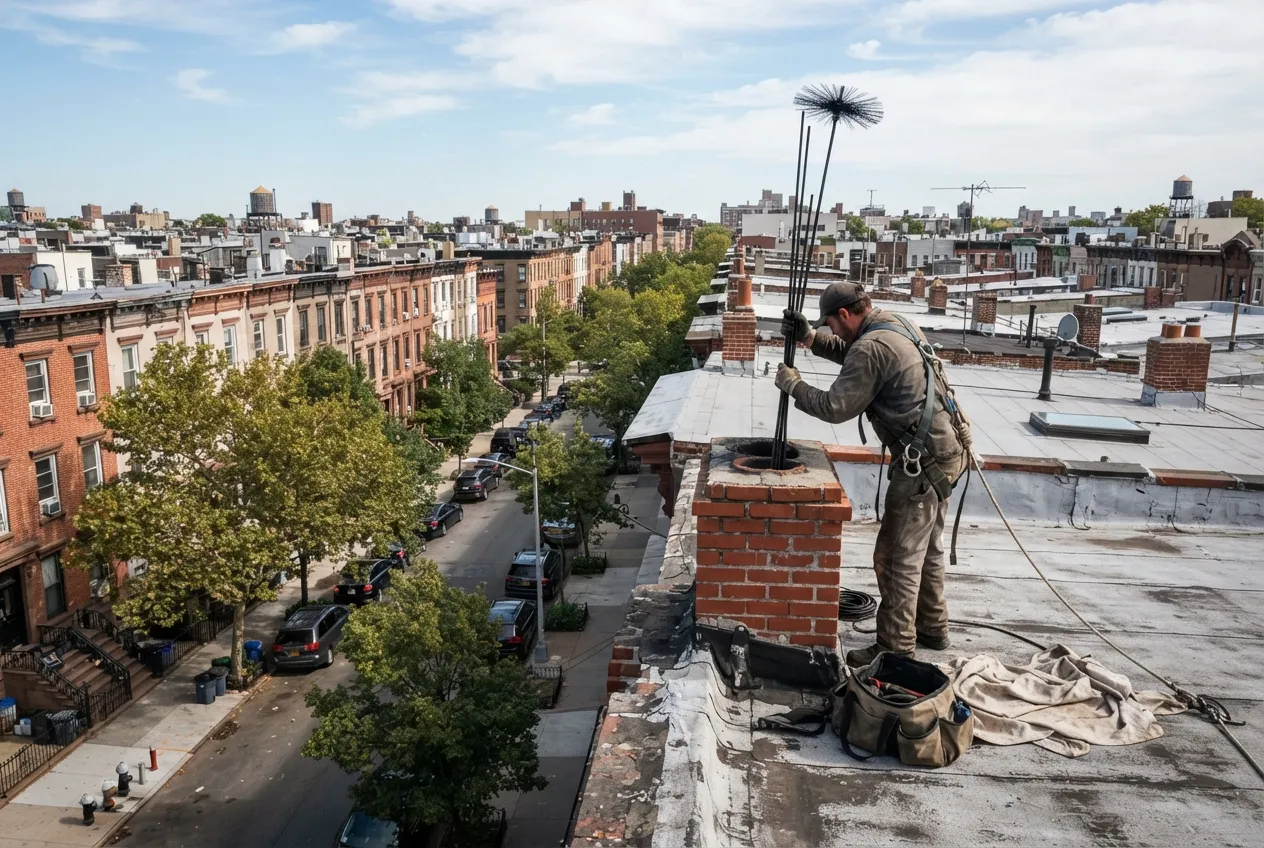
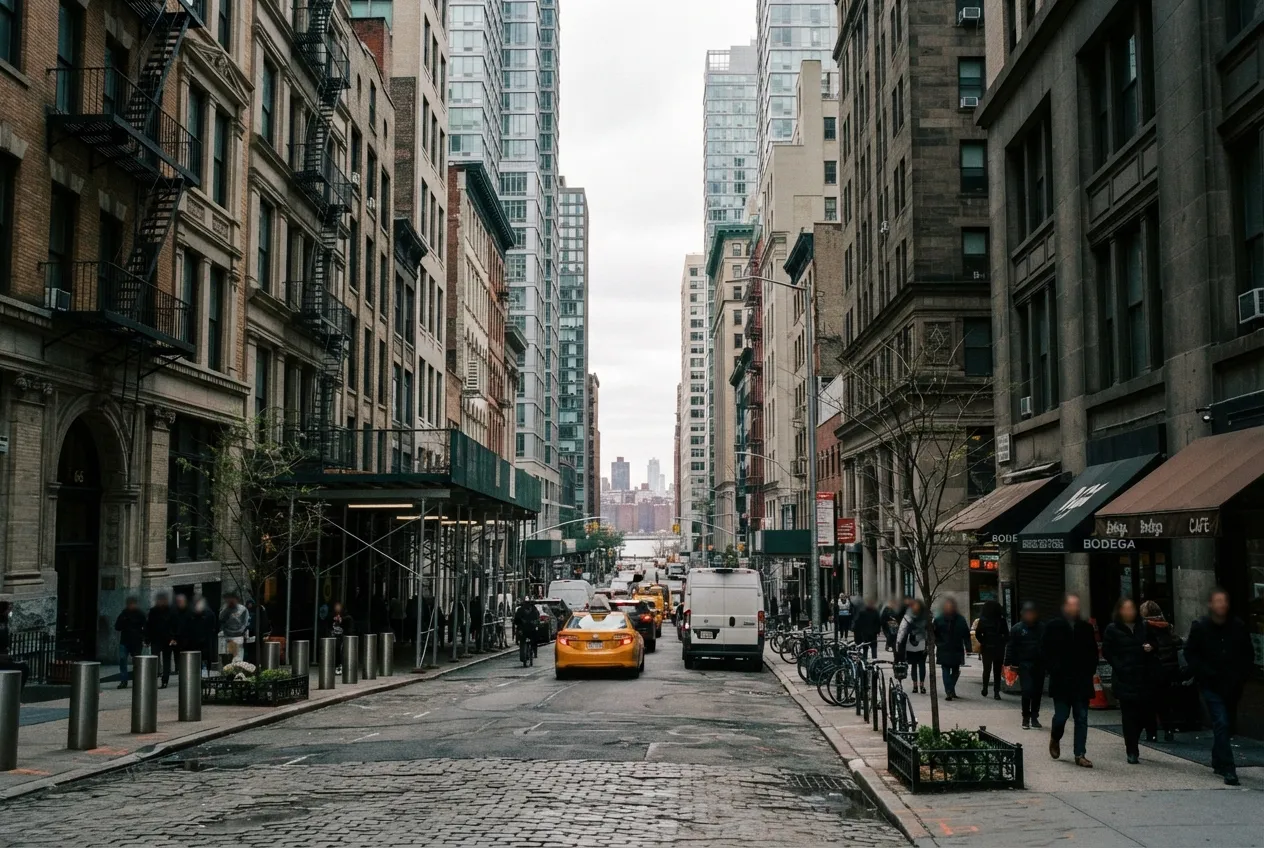
Chimneys in the Financial District work hard and are hard to reach. Many serve pre-war apartment buildings, older low-rise buildings and office buildings converted to residences, where a single flue may vent a boiler for dozens of units. All Star Chimney Sweep sends certified technicians from our Brooklyn office, about two miles south, to repair chimneys in ZIP codes 10005, 10006, 10038, 10271, 10280 and 10282. We find what is actually wrong, explain it in plain terms and fix it so the system vents safely through the heating season.
What Wears Out Chimneys in This Neighborhood
Tall masonry chimneys on older buildings take constant wind, rain and freeze-thaw cycles at roof level. Water is usually the root cause of damage. It soaks into worn mortar joints and cracked crowns, freezes, expands and pushes brick apart. Over time that shows up as loose or spalling brick, staining on the building face, or moisture inside walls near the chimney.
Inside the flue, the problem is often heat and exhaust. Boilers and water heaters run hard from fall through spring, and their exhaust can break down an old clay or unlined masonry flue. Gaps in a liner let heat and gases reach parts of the building they should never touch.
Chimney Repairs We Handle
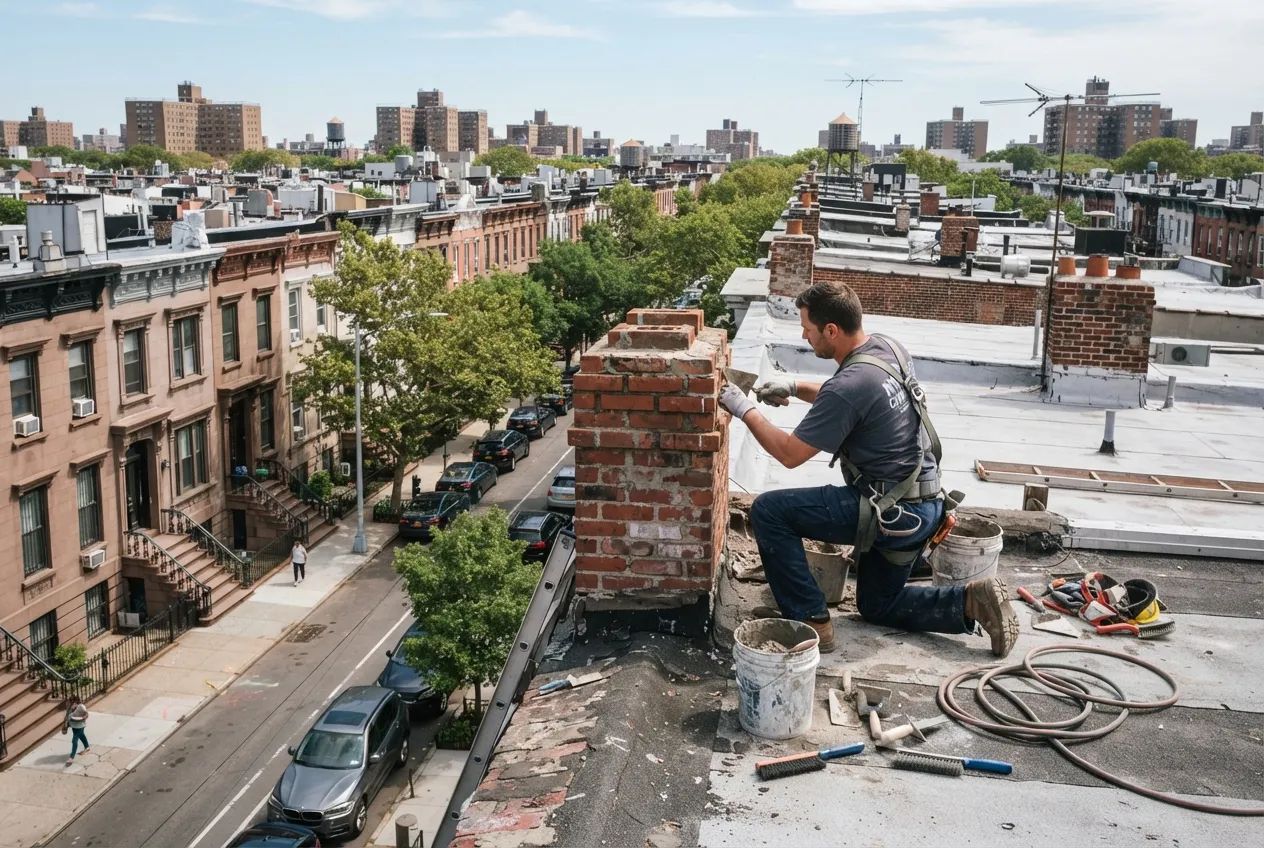
We work on chimneys serving fireplaces, boilers, furnaces and water heaters in apartments, condominiums and smaller residential buildings. Common repairs include:
- Repointing worn or missing mortar joints
- Rebuilding loose or damaged brick above the roofline
- Repairing or replacing cracked chimney crowns
- Installing or replacing chimney caps to keep out rain and animals
- Resealing flashing where the chimney meets the roof
- Relining flues with stainless steel liners sized for the appliance
- Repairing fireplace fireboxes and smoke chambers
- Fixing or replacing damaged dampers
Oil-to-Gas Conversions and New Liners
Many buildings in Lower Manhattan have switched or are switching their boilers from oil to gas. When a New York City building makes that conversion, the chimney has to be evaluated as part of the work. A new liner is often needed because gas exhaust produces acidic condensate that can corrode a masonry flue from the inside.
We inspect the existing flue, check whether it is the right size and condition for the new equipment, and install a liner when one is required. Coordinating this with your heating contractor early helps keep a conversion on schedule.
Time for your annual chimney check?
How a Repair Visit Works
Every repair starts with an inspection. The NFPA 211 standard calls for chimneys, fireplaces and vents to be inspected once a year, and it describes three levels. A Level 1 inspection fits when nothing has changed. A Level 2 inspection applies when the system changes, such as a new appliance or a fuel switch, or when the home is sold. A Level 3 inspection is used when a hidden hazard has to be reached by opening part of the chimney or building.
After the inspection, we walk you or your building manager through what we found, with photos when possible. We describe which repairs are urgent and which can be planned, then schedule the work. In buildings with roof access rules, we coordinate with management ahead of time so the visit goes smoothly.
Plan Repairs Before Heat Season
New York City's heat season runs from October 1 through May 31, when building owners must keep apartments heated to the city's minimum temperatures. A chimney problem found in January can leave a boiler offline when tenants need it most. Scheduling inspection and repair in late spring or summer gives time for masonry to cure and liners to be installed before the heat comes on.
We also serve nearby Brooklyn Heights, Downtown Brooklyn, DUMBO, Boerum Hill and Carroll Gardens, so we know the older masonry common on both sides of the river.
More services in Financial District
- Chimney Sweep in Financial DistrictLocal service & repairs
- Chimney Inspection in Financial DistrictLocal service & repairs
- Air Duct Cleaning in Financial DistrictLocal service & repairs
- Chimney Liner Installation in Financial DistrictLocal service & repairs