The short answer
Park Slope homeowners should have their chimneys swept as needed and inspected once a year, as the NFPA 211 standard recommends. All Star Chimney Sweep cleans and inspects fireplace and appliance flues in brownstones, rowhouses and pre-war buildings, and flags issues like worn liners after an oil-to-gas conversion.
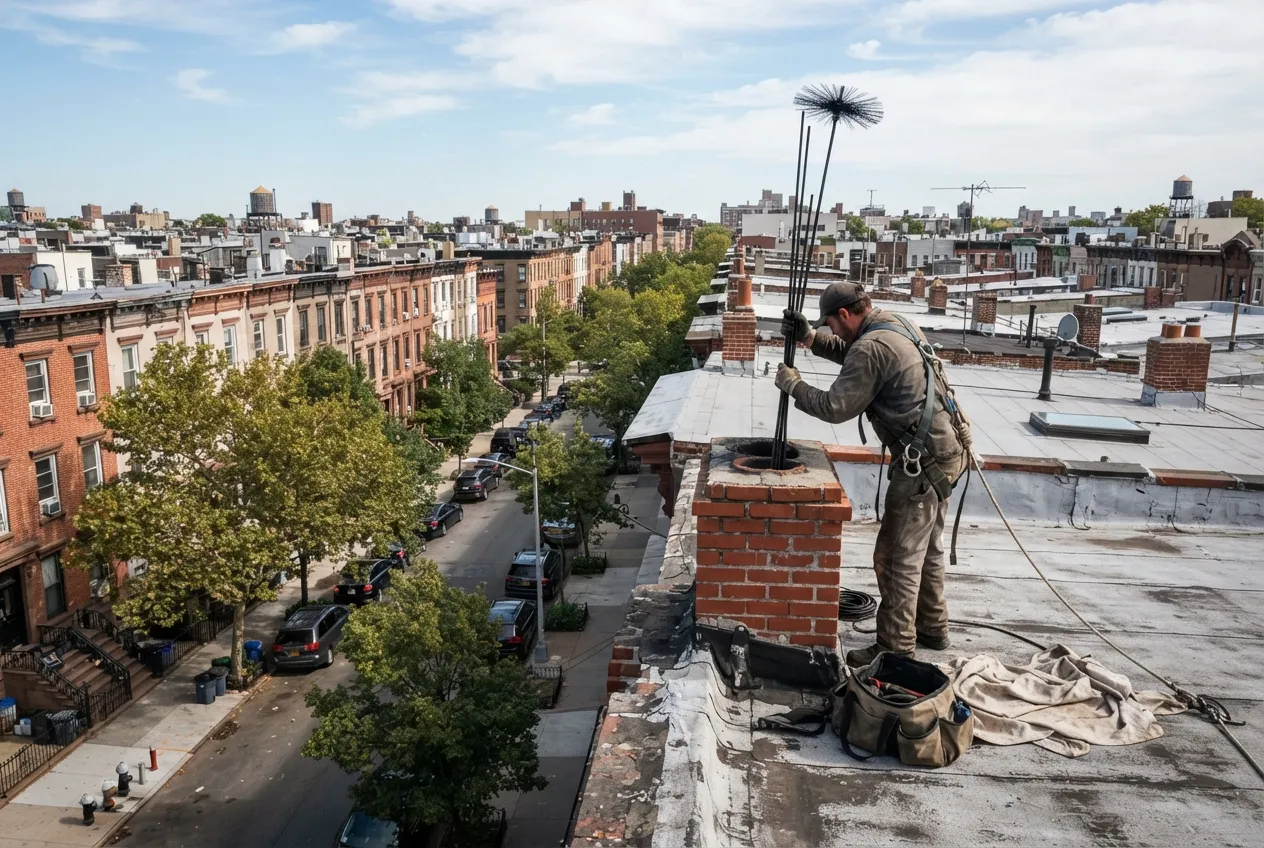
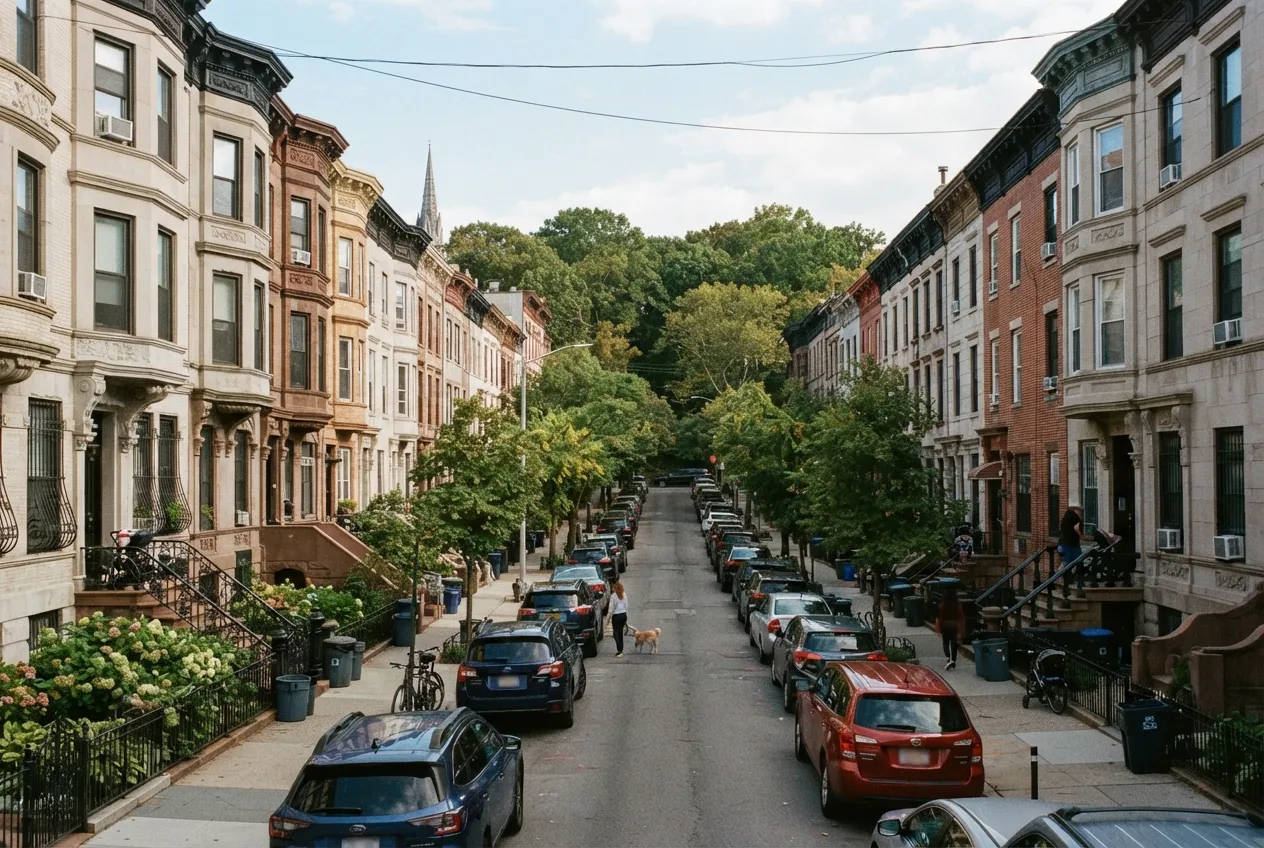
Park Slope's brownstones, rowhouses and pre-war apartment buildings were built with chimneys at the center of how they were heated. Many of those flues are still in use today, venting wood-burning fireplaces, gas inserts, boilers and water heaters. All Star Chimney Sweep is based about a mile from Park Slope, and we sweep and inspect chimneys throughout the 11217 ZIP code. Our certified technicians clean the flue, check its condition, and tell you plainly what we found. Whether you light a fire a few times each winter or rely on a boiler that runs through the cold months, a clean, sound chimney helps keep smoke and exhaust moving up and out of your home.
Chimneys in Older Park Slope Homes
Many Park Slope homes have more than one flue running through a shared masonry chimney stack. A single brownstone might have several fireplace flues, some sealed off over the years and some still active, plus a separate flue for the boiler or water heater. Knowing which flue serves which appliance is the first step in a proper sweep.
Older masonry flues tend to develop problems slowly. Mortar joints wear, clay tiles crack, and debris settles at the bottom of the flue or on the smoke shelf. Unlined or poorly lined flues are common in older buildings. Because the chimney is tucked inside walls and party walls, these issues often go unnoticed until smoke backs up or a heating contractor raises a concern.
What a Chimney Sweep Includes
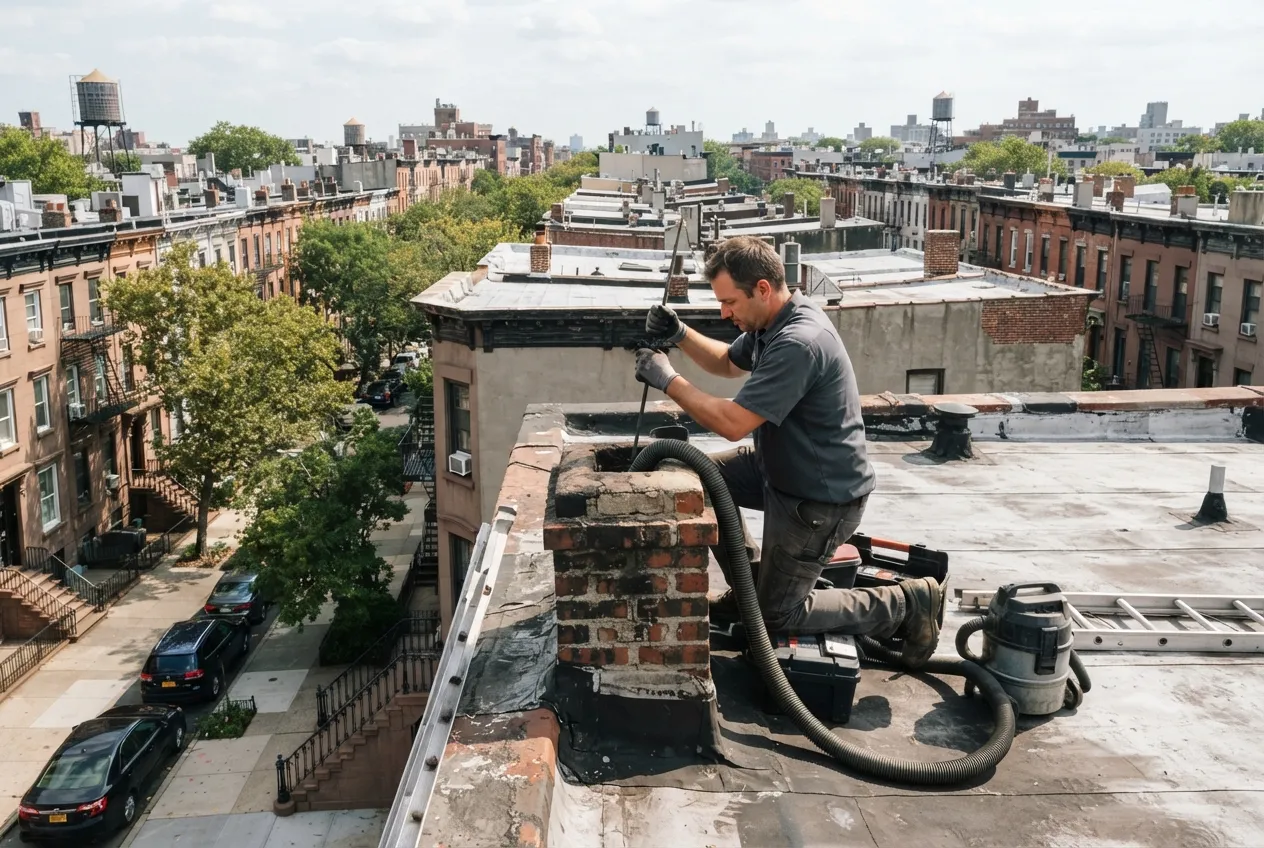
A sweep is more than running a brush up the flue. We protect the room around your fireplace or appliance, clean the flue, and look at the parts of the system we can reach so you know where things stand.
- Laying down drop cloths and using containment to keep soot out of your living space
- Brushing creosote and soot from the flue, smoke chamber and firebox
- Clearing debris, nesting material and fallen masonry from the base of the flue
- Checking the damper for proper opening and closing
- Looking for visible cracks, gaps or deterioration in the liner and masonry
- Noting the condition of the cap and crown where they can be safely viewed
- Explaining what we saw and recommending next steps, if any
Yearly Inspections and the Three Inspection Levels
The NFPA 211 standard calls for chimneys, fireplaces and vents to be inspected once a year. That applies whether you burn wood often or only run a gas appliance. Sweeping is done as needed based on what the inspection shows, while the inspection itself should be yearly.
Chimney professionals use three inspection levels. A Level 1 inspection fits when nothing about your system has changed. A Level 2 inspection is called for when the system changes, such as a new appliance or a switch of fuel, or when the home is being sold, which is worth keeping in mind if you are buying or selling a brownstone or rowhouse. A Level 3 inspection is used when a hidden hazard has to be reached by opening part of the chimney or building. We will tell you which level fits your situation and why.
Time for your annual chimney check?
Oil-to-Gas Conversions and Chimney Liners
Many Park Slope buildings have switched their boilers from oil to gas. When a New York City building converts from oil to gas, the chimney has to be evaluated as part of the work. A new liner is often needed, because gas exhaust produces acidic condensate that can corrode a masonry flue over time.
If your building has converted, or a conversion is in the plans, we can inspect the flue serving the boiler and let you know whether the existing liner is suited to the new fuel. Catching corrosion early is easier than dealing with crumbling flue tiles or exhaust problems later.
Timing Your Sweep Around Heat Season
New York City's heat season runs from October 1 through May 31, when building owners must keep apartments heated to the city's minimum temperatures. For owners of multi-unit rowhouses and pre-war buildings, that makes the boiler flue especially important. A blocked or damaged flue in the middle of winter can mean an urgent repair when you can least afford downtime.
Late spring and summer are practical times to schedule a sweep and inspection. That leaves room to plan any repairs before the heat comes on. Wood-burning fireplace owners benefit from the same timing, since creosote from last season is cleared before the first fire of fall.
Serving Park Slope and Nearby Neighborhoods
We are close by, which makes it simple to schedule visits in Park Slope and in nearby Prospect Heights, Carroll Gardens, Cobble Hill, Gowanus and Red Hook. If you are not sure whether your fireplace is safe to use, or you just moved into an older home and don't know when the chimney was last cleaned, a sweep and inspection is a sensible place to start.
More services in Park Slope
- Chimney Inspection in Park SlopeLocal service & repairs
- Chimney Repair in Park SlopeLocal service & repairs
- Air Duct Cleaning in Park SlopeLocal service & repairs
- Chimney Liner Installation in Park SlopeLocal service & repairs