The short answer
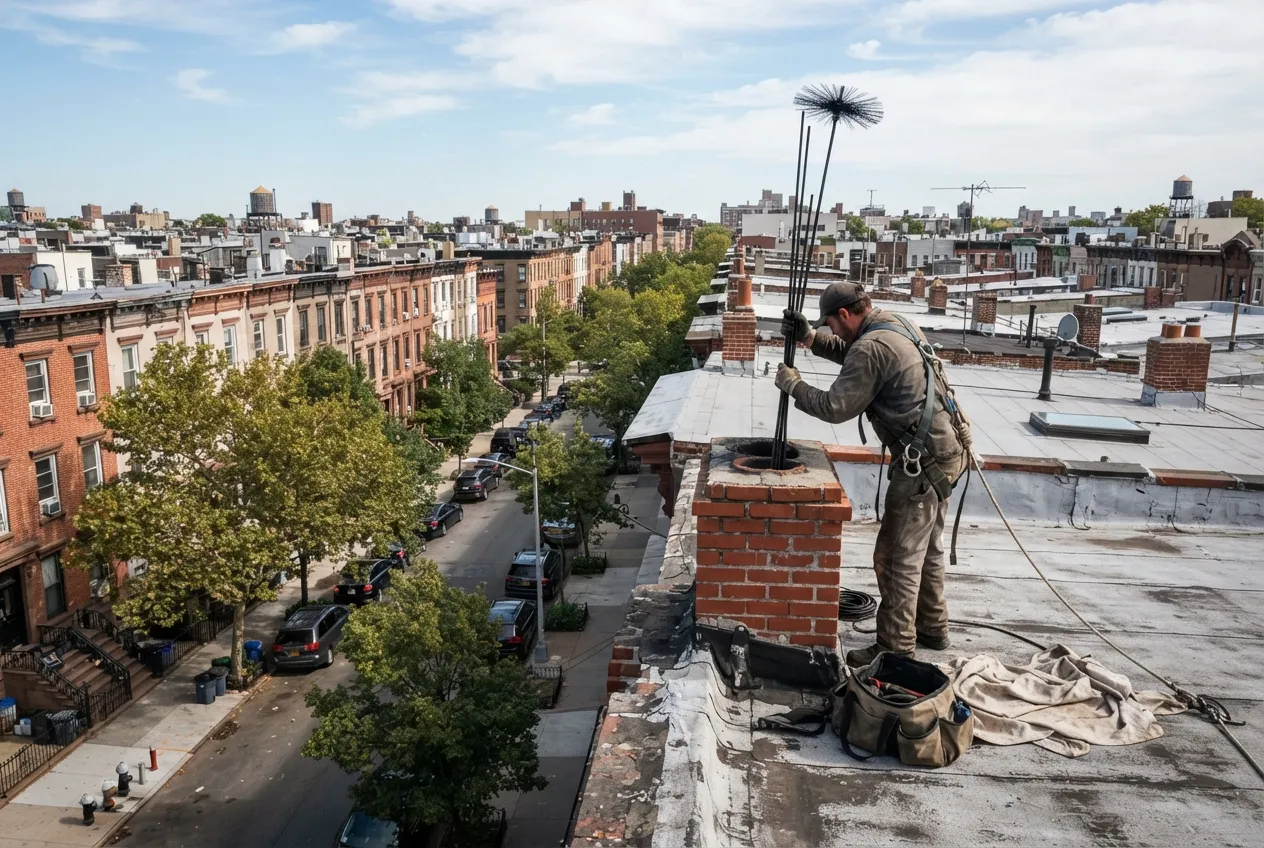
Boerum Hill chimneys should be inspected once a year, as the NFPA 211 standard recommends, and swept whenever that inspection finds creosote, soot or debris. Our certified technicians clean fireplace and boiler flues in brownstones, rowhouses and pre-war buildings throughout 11201.
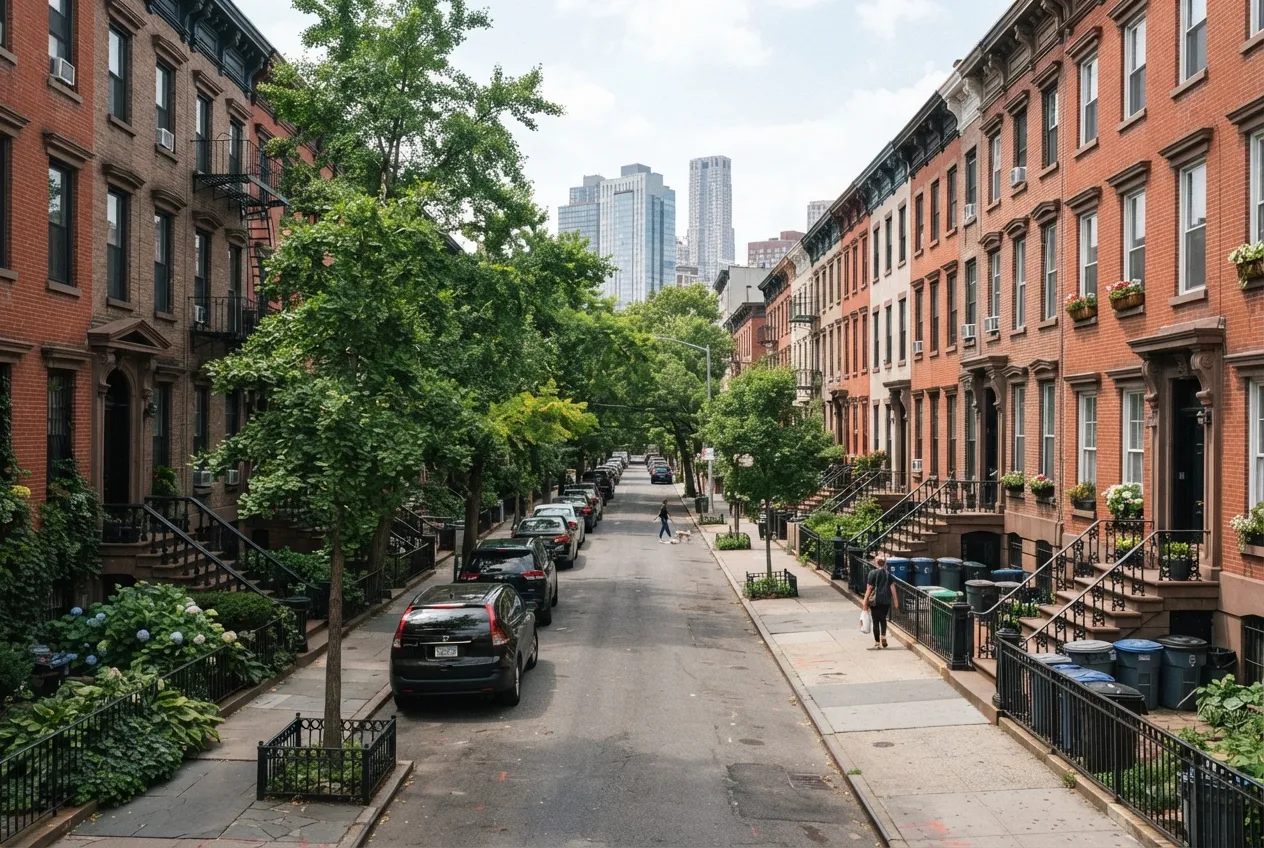
Boerum Hill's brownstones and rowhouses often still have working fireplaces, and many of its pre-war apartment buildings vent boilers and water heaters through masonry chimneys. All Star Chimney Sweep cleans and inspects these chimneys for homeowners and building owners in ZIP code 11201. Our office is about a mile away in Brooklyn, so getting a certified technician to your home is easy. Below is what a chimney sweep visit covers, why older Brooklyn chimneys need regular attention, and how to time the work around the heating season.
Why Boerum Hill Chimneys Need Regular Sweeping
Most homes in Boerum Hill were built long before modern venting practices. Attached rowhouses often share chimney stacks or sit wall to wall with a neighbor's flue. Fireplaces that went unused for decades are sometimes reopened by later owners without a full cleaning. Brick and mortar in an older flue can crack or shed material, and loose debris collects at the smoke shelf and damper.
When wood burns, it leaves creosote on the flue walls. Thin, sooty deposits are easy to brush out. Left alone, they can harden into a glazed layer that is harder to remove and can catch fire. Birds, squirrels and blown-in leaves add to the problem, especially in chimneys without a cap. A regular sweep keeps the flue open so smoke and combustion gases leave the house instead of drifting back into your living space.
What a Chimney Sweep Visit Includes
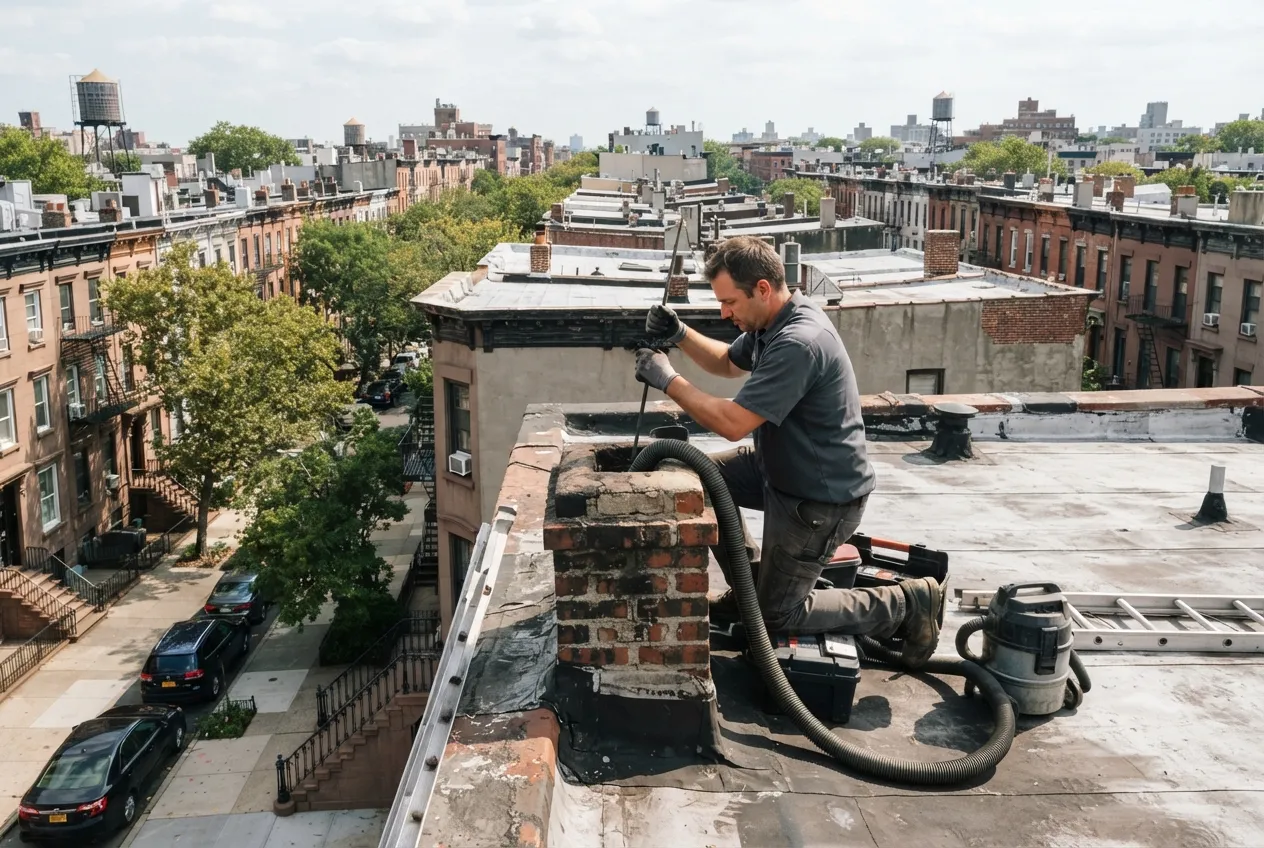
We protect your floors and furnishings before starting, then work through the system from the firebox up.
If we find something that needs repair, such as a cracked flue tile or a missing cap, we explain the problem and your options before doing any further work.
- Laying drop cloths and running a vacuum to keep soot contained inside the home
- Brushing the firebox, smoke chamber and full length of the flue
- Removing creosote, nests and fallen masonry from the smoke shelf
- Checking that the damper opens, closes and seals
- Looking over the chimney cap, crown and visible brick for damage
- Walking you through what we found, with photos when they help
Annual Inspections and the NFPA 211 Standard
The NFPA 211 standard calls for chimneys, fireplaces and vents to be inspected once a year, and a sweep is a natural time to do it. Chimney professionals use three inspection levels. A Level 1 inspection fits most visits, when nothing about the system has changed. A Level 2 inspection is called for when the system changes, such as a new appliance or a switch of fuel, or when the home is sold. Both situations come up often in a neighborhood where brownstones change hands and get renovated. A Level 3 inspection is reserved for cases where a hidden hazard can only be reached by opening part of the chimney or building.
If you are buying or selling in Boerum Hill, or you have just finished a renovation, ask about a Level 2 inspection when you book your sweep.
Time for your annual chimney check?
Boiler Chimneys and Oil-to-Gas Conversions
Not every chimney in the neighborhood serves a fireplace. Many pre-war apartment buildings and converted rowhouses vent a boiler or water heater through a masonry chimney. When a New York City building converts its boiler from oil to gas, the chimney has to be evaluated as part of the work. A new liner is often needed, because gas exhaust produces acidic condensate that can corrode a masonry flue.
Oil-fired systems also leave soot behind that should be cleaned out. If your building is planning a conversion, or already converted without a liner check, we can sweep and inspect the flue so you know its condition.
Timing Your Sweep Around Heat Season
New York City's heat season runs from October 1 through May 31. During that period, building owners must keep apartments heated to the city's minimum temperatures. For buildings that rely on a boiler, late spring and summer are the practical window for sweeping and liner work, because the heating system can be shut down without leaving tenants cold.
The same timing works for homeowners with wood-burning fireplaces. Scheduling before fall means any repairs are finished before the first fire, and you avoid the rush when everyone starts using their fireplaces at once.
Serving Boerum Hill and Nearby Neighborhoods
Along with Boerum Hill, we sweep chimneys in Downtown Brooklyn, DUMBO, Brooklyn Heights, Fort Greene and Carroll Gardens. These neighborhoods have much of the same housing, including brownstones, rowhouses and pre-war apartment buildings, so the chimney problems we see are similar from one to the next. When you schedule, tell us whether the chimney serves a fireplace, a boiler or a water heater so we arrive prepared.
More services in Boerum Hill
- Chimney Inspection in Boerum HillLocal service & repairs
- Chimney Repair in Boerum HillLocal service & repairs
- Air Duct Cleaning in Boerum HillLocal service & repairs
- Chimney Liner Installation in Boerum HillLocal service & repairs