The short answer
Boerum Hill homes should have their chimneys inspected once a year under the NFPA 211 standard. A more detailed Level 2 inspection is called for when you switch fuels, add an appliance or sell the home. All Star Chimney Sweep's certified technicians inspect brownstones, rowhouses and pre-war buildings throughout 11201.
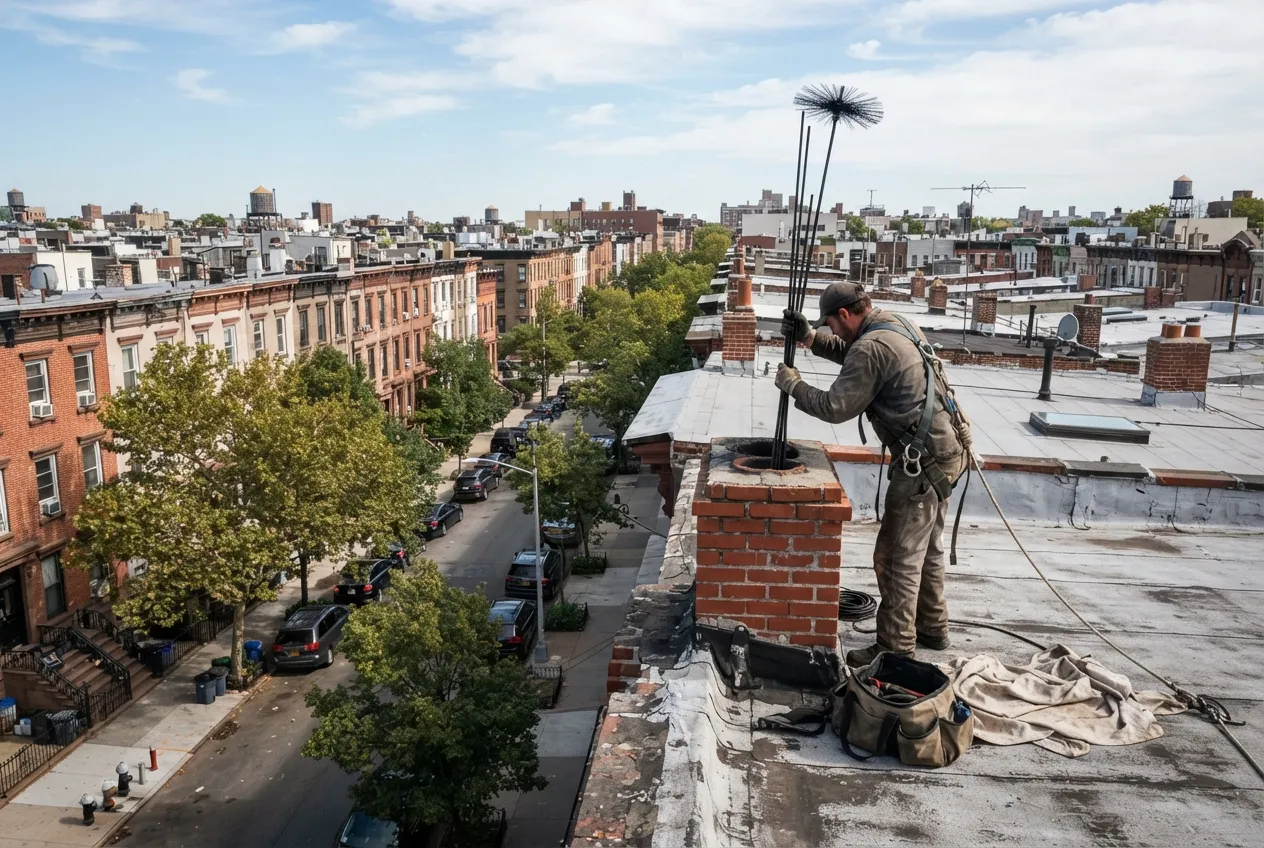
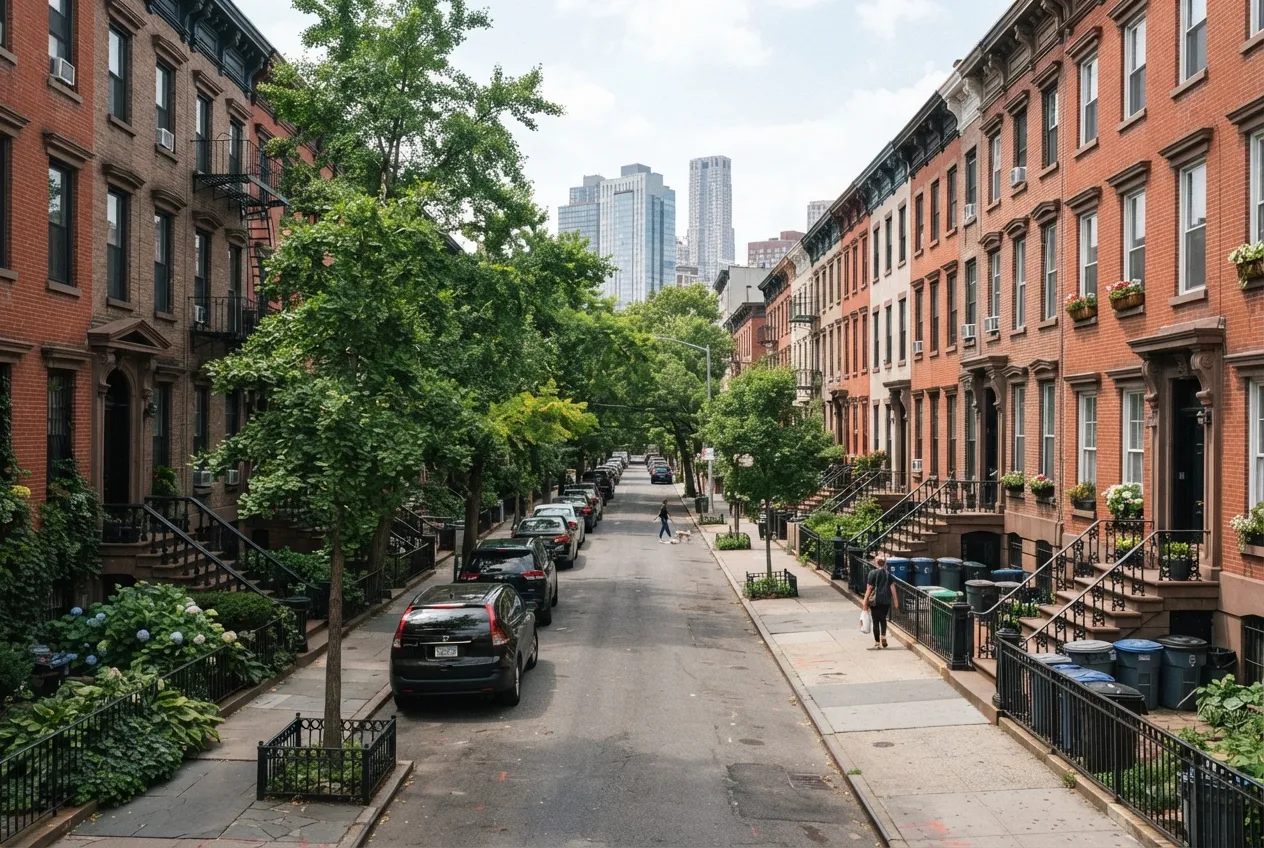
Many Boerum Hill brownstones and rowhouses have chimneys that have served several kinds of heating equipment over the years. Some have also had fireplaces sealed off and later reopened. A chimney inspection tells you what condition those flues are in today and whether they are safe for how you use them now. All Star Chimney Sweep's office is about a mile from Boerum Hill. Our certified technicians inspect chimneys in single-family homes, multi-family brownstones and pre-war apartment buildings throughout the 11201 ZIP code.
Why Boerum Hill Chimneys Need a Yearly Inspection
The NFPA 211 standard calls for chimneys, fireplaces and vents to be inspected once a year. That applies if you burn wood in a parlor-floor fireplace a few times each winter. It also applies if you never light a fire and only vent a gas boiler or water heater through the chimney.
Older masonry tends to wear in predictable ways. Mortar joints erode, and clay tile liners crack or shift. Crowns split from freeze-and-thaw cycles, and unused flues collect debris or animal nests. In attached rowhouses, chimneys often run along shared walls, so a problem in one flue can affect more than one household. Most of this can't be seen from the street or from inside the room. That's why a structured inspection is worth doing even when nothing seems wrong.
Choosing the Right Inspection Level
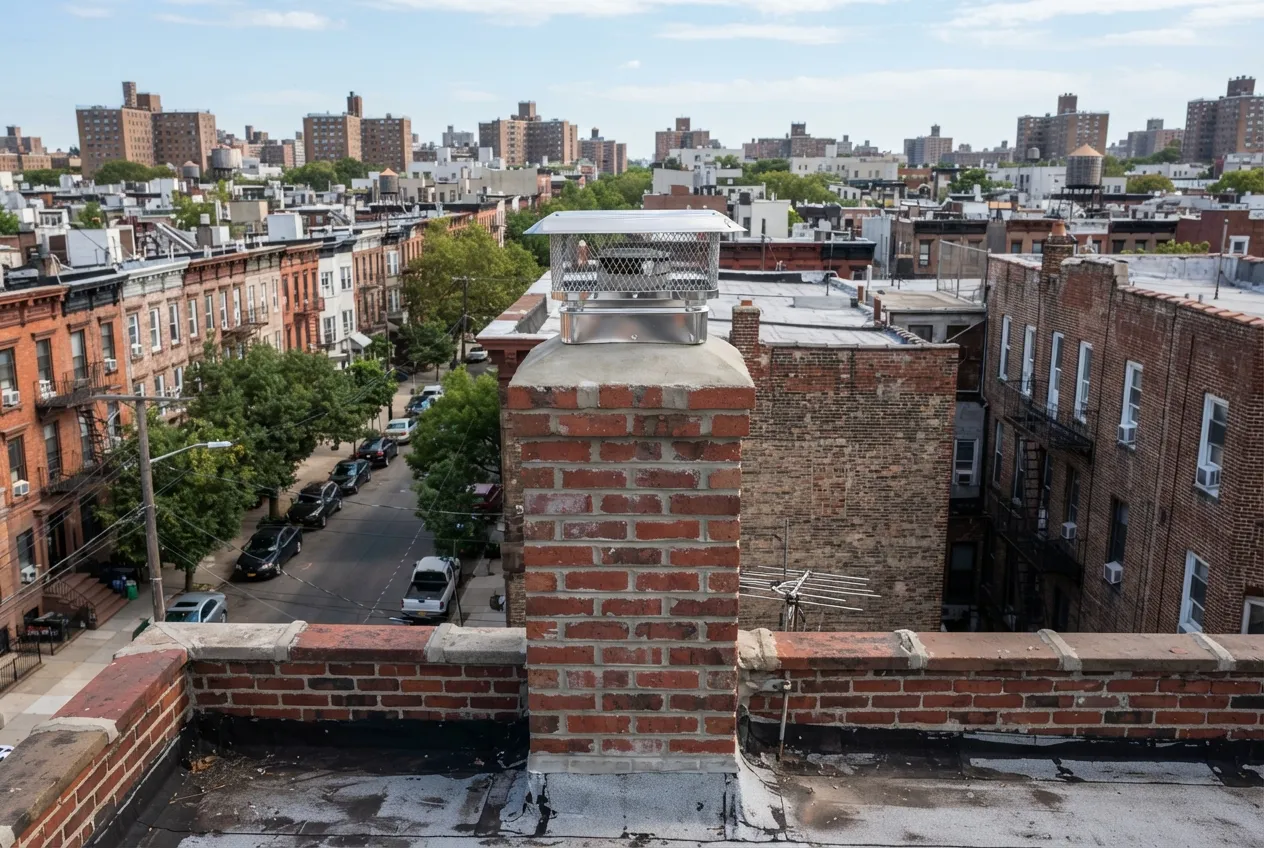
Chimney professionals use three inspection levels. The right one depends on what has changed in your home since the last inspection.
If you're buying or selling a brownstone in the neighborhood, a Level 2 inspection gives both sides a clear picture of the flues before closing.
- Level 1: For a chimney in regular use with no changes to the system. We check the readily accessible parts of the chimney, the fireplace or appliance connection, and any blockages or deposits.
- Level 2: For when the system changes, such as a new boiler, furnace or insert, a switch from oil to gas, or a fireplace being brought back into use. It also applies when a home is sold. This level includes a video scan of the flue interior and a look at accessible areas such as the attic, roof and basement.
- Level 3: For when a hidden hazard is suspected and has to be reached by opening part of the chimney or building, such as removing a section of chimney wall or interior finish.
Inspections for Oil-to-Gas Conversions
Many rowhouses and pre-war apartment buildings in Boerum Hill have moved from oil heat to gas. When a New York City building converts its boiler from oil to gas, the chimney has to be evaluated as part of the work. A new liner is often needed, because gas exhaust produces acidic condensate that can corrode a masonry flue.
We inspect the existing flue and check its size against the new equipment. Then we tell you plainly whether the current liner can stay or should be replaced. If you're planning a conversion, get the inspection done early. That way the chimney work can be scheduled alongside the boiler installation instead of holding it up.
Time for your annual chimney check?
Timing Your Inspection Around Heat Season
New York City's heat season runs from October 1 through May 31. During that period, building owners must keep apartments heated to the city's minimum temperatures. If you own a multi-family brownstone or a small apartment building, a chimney problem found in January can put you in a difficult position.
Scheduling your inspection in late summer or early fall leaves time for repairs or a liner installation before the boiler has to run full time. The same timing helps homeowners with wood-burning fireplaces, because you'll know the flue is clear before the first cold night.
What We Check During an Inspection
Every home is different, but a typical inspection includes:
Afterward, we explain what we found in plain terms and show you photos or video where it helps. We also separate urgent safety concerns from items that can wait.
- The chimney crown, cap, flashing and exterior brickwork, viewed from the roof where access allows
- The flue liner, checked for cracks, gaps, missing tiles and corrosion
- Creosote and soot buildup in wood-burning fireplaces
- The smoke chamber, damper and firebox
- Connections from the boiler, furnace or water heater to the chimney
- Signs of water entry, nesting animals or debris blockages
Serving Boerum Hill and Nearby Neighborhoods
Our office is about a mile from Boerum Hill, so homes in the 11201 ZIP code are a short trip for us. We also inspect chimneys in Downtown Brooklyn, DUMBO, Brooklyn Heights, Fort Greene and Carroll Gardens. Many homes there have the same mix of brownstones, rowhouses and pre-war buildings.
More services in Boerum Hill
- Chimney Sweep in Boerum HillLocal service & repairs
- Chimney Repair in Boerum HillLocal service & repairs
- Air Duct Cleaning in Boerum HillLocal service & repairs
- Chimney Liner Installation in Boerum HillLocal service & repairs