The short answer
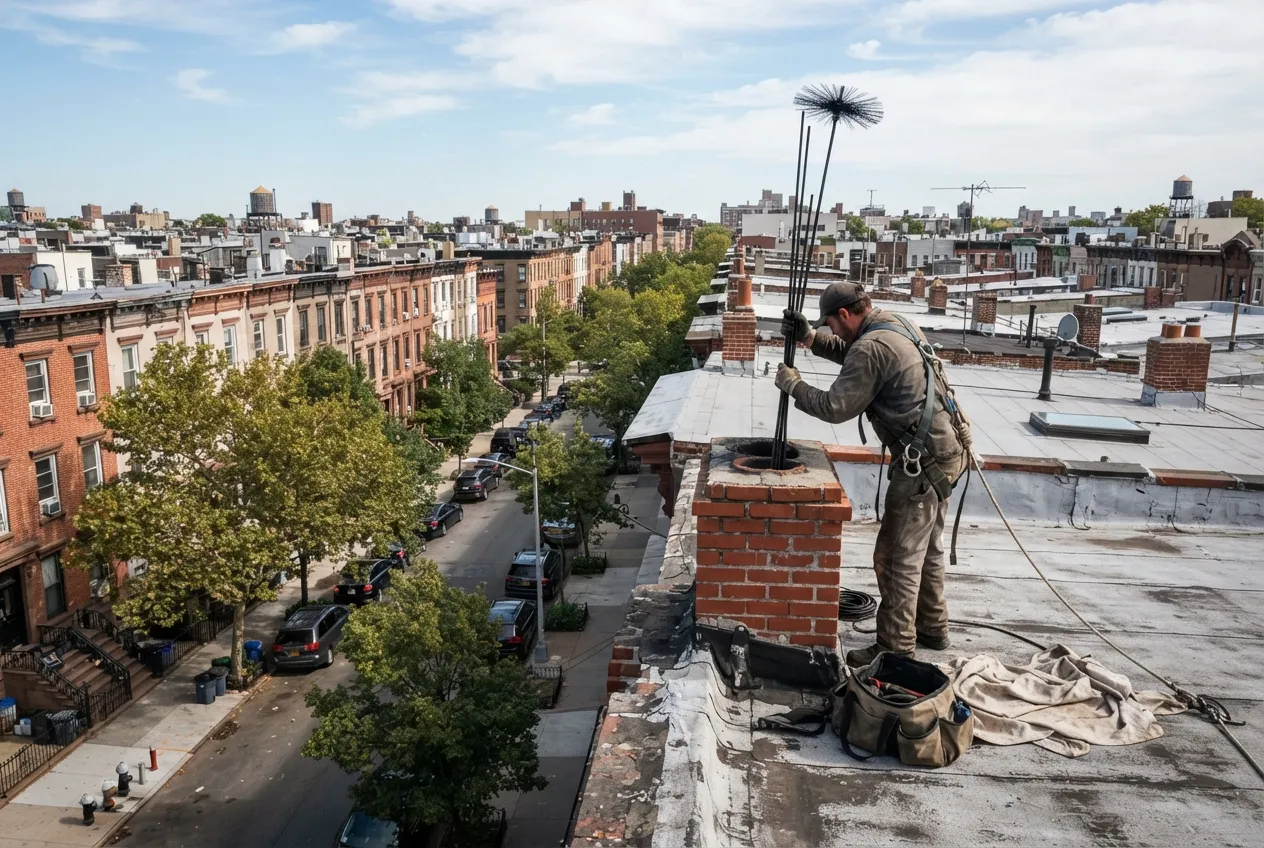
A chimney sweep in Brooklyn Heights removes soot, creosote and debris from fireplace and boiler flues and checks the chimney's condition. The NFPA 211 standard calls for a yearly inspection, and most owners schedule it before the city's heat season begins on October 1.
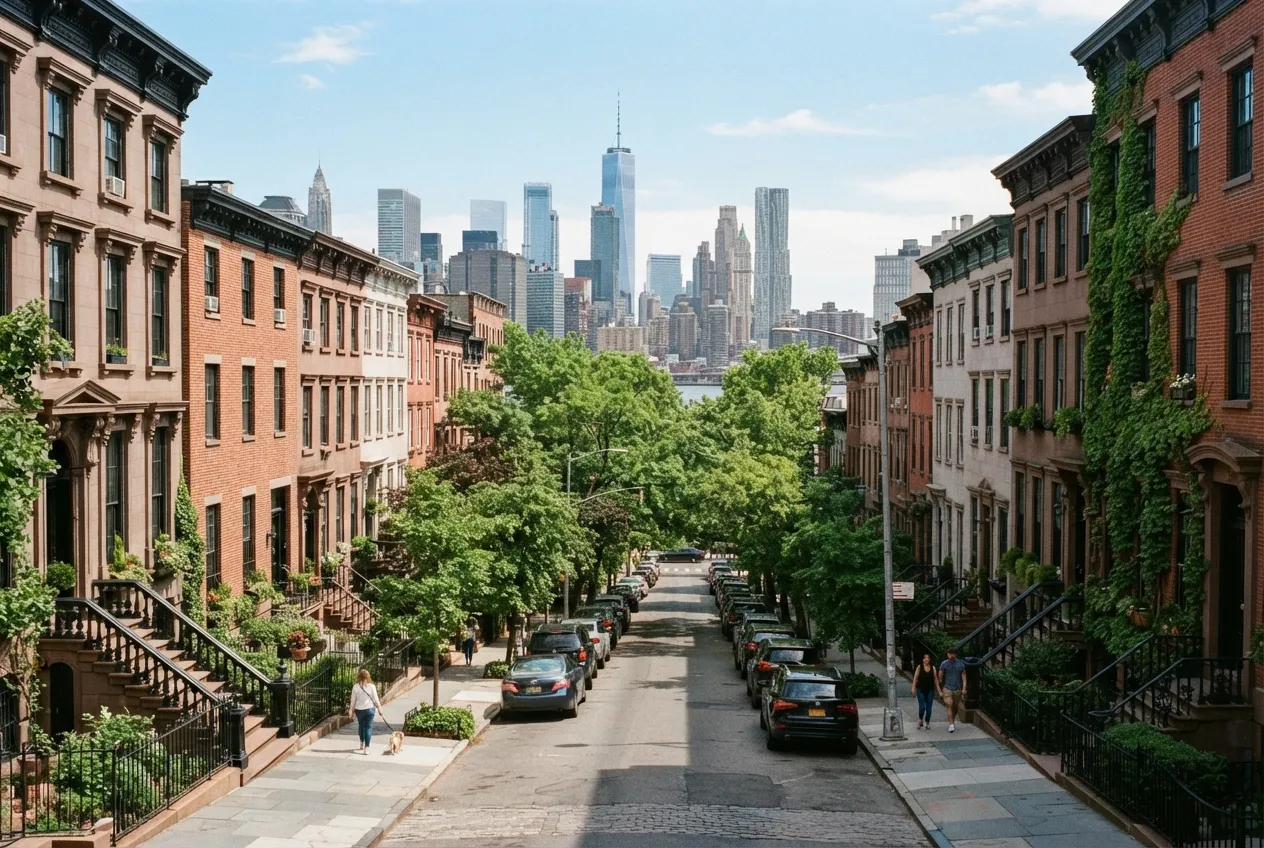
Brooklyn Heights has some of the oldest housing in the borough, including brownstones, rowhouses and pre-war apartment buildings. Many still rely on original masonry chimneys that serve a fireplace, a boiler, or both. All Star Chimney Sweep works in the neighborhood from our Brooklyn office, about a mile to the south. Our certified technicians clean and inspect those flues so they vent the way they should. This page covers what a sweep involves for homes like these, how often to schedule one, and what to watch for when a building's heating system changes.
What a Chimney Sweep Covers
A sweep is more than running a brush up the flue. On a visit, we clean the parts of the system that collect buildup and look at the condition of each one. Then we tell you what we found in plain terms.
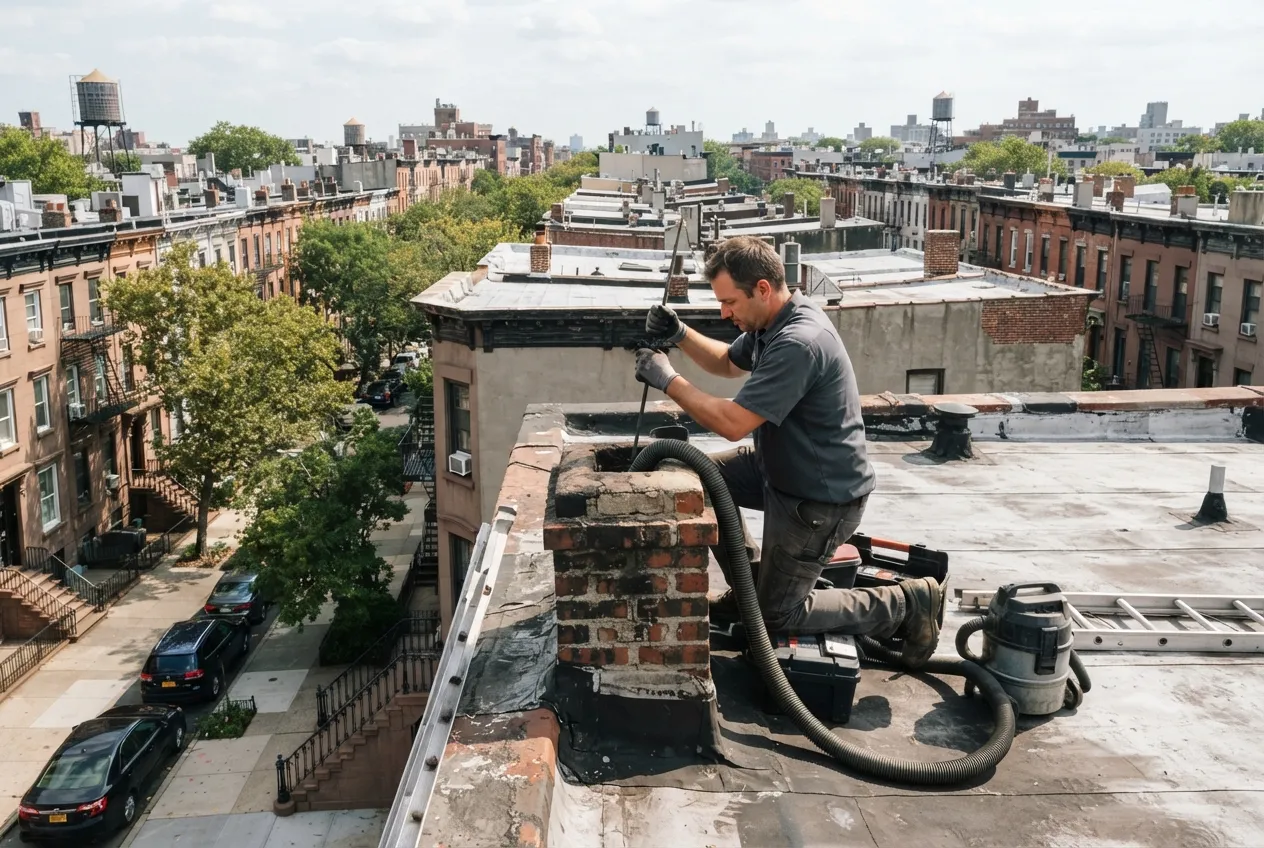
We protect floors and furniture with drop cloths and contain dust with vacuums before any brushing starts. In finished parlor floors and apartments, that step matters as much as the cleaning itself.
- Brushing the flue to remove soot and creosote
- Cleaning the firebox, smoke chamber and smoke shelf
- Checking the damper for rust, warping or a poor seal
- Looking for nests, fallen masonry or other blockages
- Noting cracked flue tiles, missing mortar or a damaged crown or cap where they can be seen
Fireplaces in Brownstones and Rowhouses
Many brownstones and rowhouses have several fireplaces stacked floor by floor. Each one has its own flue, and the flues often run side by side in one chimney shared along a party wall. Some of those fireplaces have sat unused for years, while one or two get regular fires. Before you light a fireplace that has been dormant, it should be swept and checked. Old flues can hold debris, animal nests or deteriorated liners that you can't see from the room.
Older masonry flues may be unlined or lined with clay tile that has cracked over time. A sweep lets us see the interior surface. When there is damage, we explain your options rather than leaving you to guess why the room smells of smoke or the fire won't draw.
Boiler Flues and the Heat Season
In pre-war apartment buildings and many converted houses, the chimney's hardest job is venting the boiler. New York City's heat season runs from October 1 through May 31. During those months, building owners must keep apartments heated to the city's minimum temperatures. A blocked or deteriorated boiler flue in the middle of winter is a serious problem. Late summer and early fall are the practical time to have it swept and inspected.
Oil-fired systems leave soot in the flue that should be cleaned out regularly. When a New York City building converts its boiler from oil to gas, the chimney has to be evaluated as part of the work. A new liner is often needed, because gas exhaust produces acidic condensate that can corrode a masonry flue. If your building is planning a conversion, we can look at the chimney early so the liner question doesn't stall the project.
Time for your annual chimney check?
How Often to Schedule a Sweep and Inspection
The NFPA 211 standard calls for chimneys, fireplaces and vents to be inspected once a year. Whether the flue needs a full cleaning depends on how much it's used and what it burns. The inspection should happen every year either way.
Chimney professionals use three inspection levels, and the one you need depends on your situation:
- Level 1: nothing about the system has changed and you're planning routine use
- Level 2: the system has changed, such as a new appliance or a switch of fuel, or the home is being sold
- Level 3: a hidden hazard has to be reached by opening part of the chimney or building
Serving Brooklyn Heights and Nearby Neighborhoods
Because Brooklyn Heights is close to our office, scheduling a visit is straightforward. Let us know ahead of time about anything that affects access, such as roof hatches, shared stairwells or a building super who needs to be present, so we can plan for it. We also work in Downtown Brooklyn, DUMBO, Boerum Hill, Fort Greene and the Financial District, where similar rowhouses and older apartment buildings are common.
More services in Brooklyn Heights
- Chimney Inspection in Brooklyn HeightsLocal service & repairs
- Chimney Repair in Brooklyn HeightsLocal service & repairs
- Air Duct Cleaning in Brooklyn HeightsLocal service & repairs
- Chimney Liner Installation in Brooklyn HeightsLocal service & repairs