The short answer
A chimney liner protects old masonry flues from heat and corrosive exhaust and helps appliances vent safely. Brooklyn Heights homes often need relining after decades of use or when a boiler switches from oil to gas, which produces acidic condensate. We inspect the flue, size the liner to your appliance, and install it to suit the building.
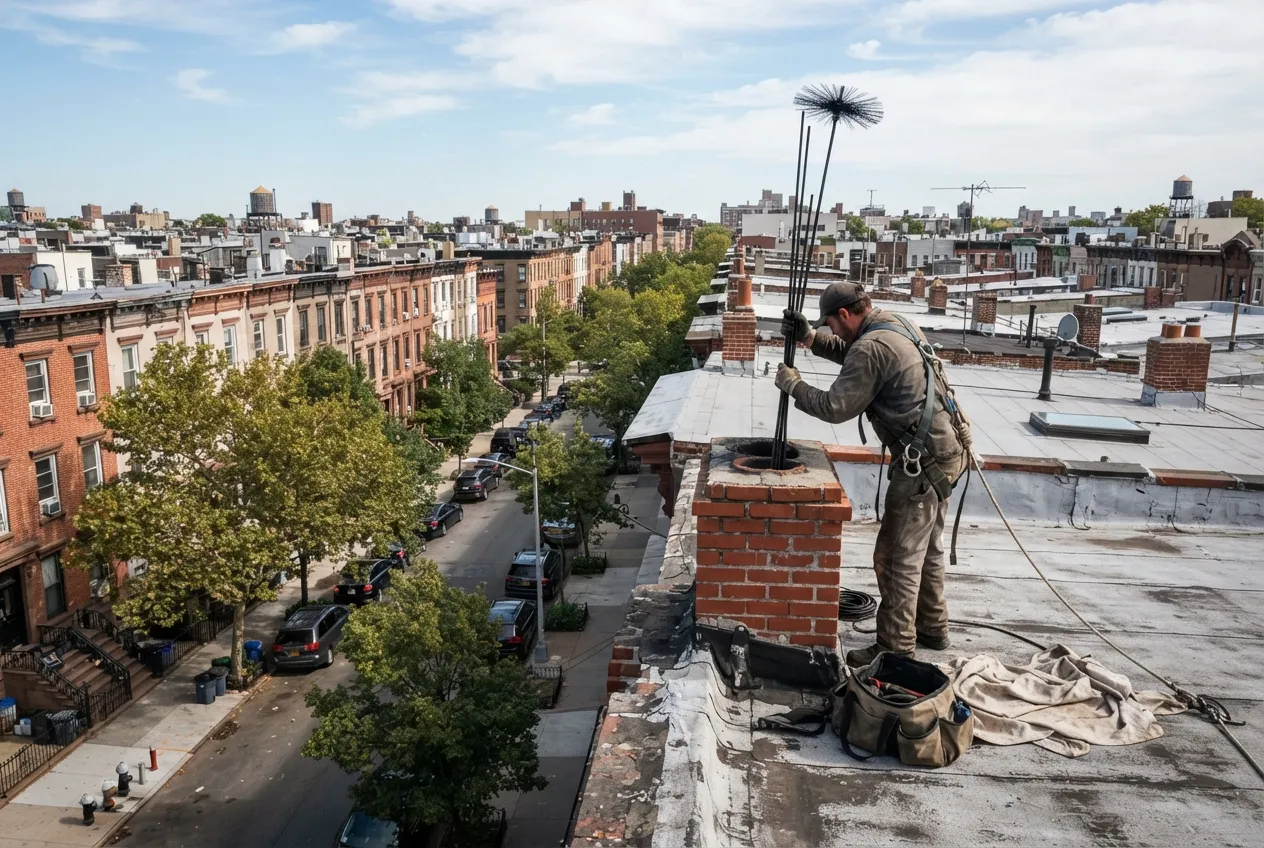
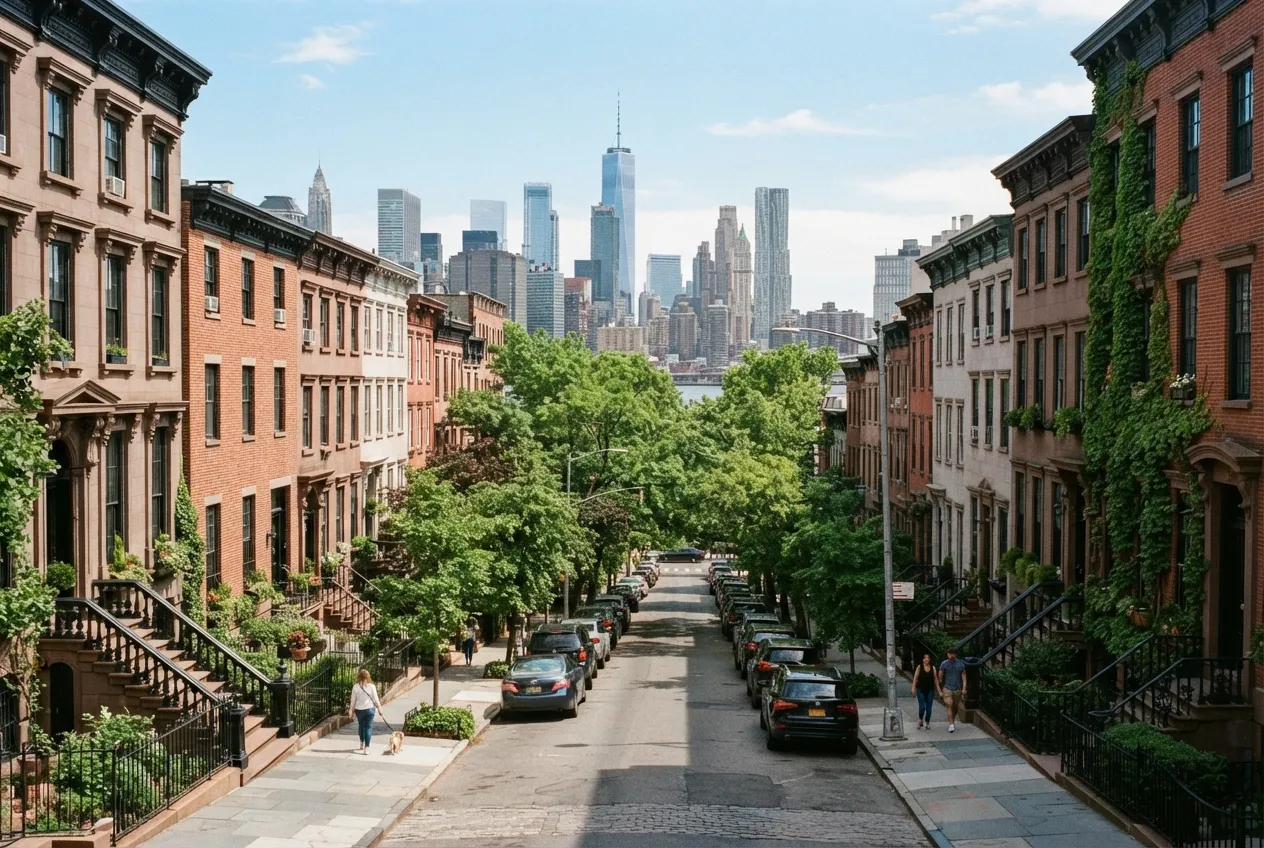
Many homes in Brooklyn Heights were built long before modern heating equipment existed. Brownstones, rowhouses and pre-war apartment buildings often have masonry flues that have spent decades carrying smoke and exhaust from coal, oil, wood and gas. A chimney liner is the protective channel inside that flue. It keeps heat and corrosive exhaust away from the brick and mortar and moves combustion gases safely out of the house. All Star Chimney Sweep installs chimney liners for homeowners and building owners in Brooklyn Heights, about a mile north of our Brooklyn office. Our certified technicians inspect the flue, size a liner to the appliance it serves, and install it so your fireplace, boiler or water heater vents the way it should.
Why Older Brooklyn Heights Chimneys Often Need Relining
Many brownstones and rowhouses in the neighborhood were built with clay tile liners, or with no liner at all, just a brick flue coated with parging. Over many decades, freeze-thaw cycles, settling and acidic exhaust crack tiles, wash out mortar joints and leave gaps where heat and gases can reach the wood framing or seep into neighboring rooms and units.
Shared party walls make this especially important. In attached homes and pre-war apartment buildings, flues often run side by side through the same masonry stack. A damaged flue can let exhaust or moisture move where it shouldn't. A properly sized liner gives each appliance its own sealed path to the top of the chimney.
- Cracked, shifted or missing clay flue tiles
- Crumbling mortar or flakes of masonry collecting at the base of the chimney
- Water stains, damp odors or efflorescence on walls next to the chimney
- Draft problems, such as smoke spilling into the room or appliance exhaust backing up
- A new boiler, furnace, water heater or fireplace insert that needs a different flue size
Oil-to-Gas Conversions and Chimney Liners
Many buildings in Brooklyn Heights once burned heating oil. When a New York City building converts its boiler from oil to gas, the chimney has to be evaluated as part of the work. A new liner is often needed. Gas exhaust is cooler and wetter than oil exhaust, and it produces acidic condensate that can eat away at a masonry flue from the inside.
If you are planning a conversion, bring us in early. We can inspect the existing flue, tell you whether it can be reused or needs relining, and size the liner for the new equipment so the installation stays on schedule.
Choosing the Right Liner for Your Appliance
No single liner suits every chimney. The right choice depends on what is venting through the flue, how large the appliance is, and the shape and condition of the masonry. A liner that is too large can let exhaust cool and condense. One that is too small can restrict draft.
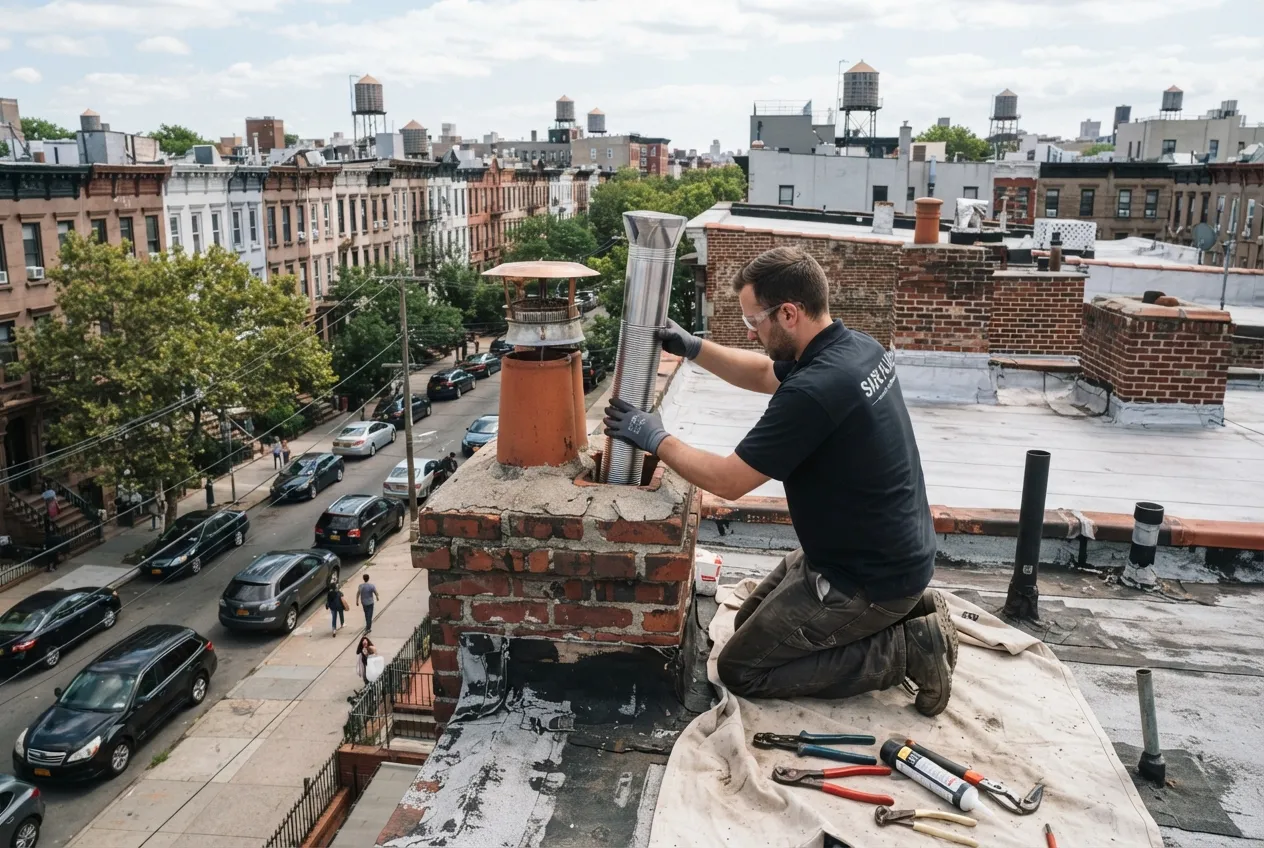
For gas boilers and water heaters, we commonly use stainless steel liners rated for the fuel. For wood-burning fireplaces and inserts, the liner has to handle higher temperatures, and insulation may be added to keep flue gases warm and reduce creosote buildup. Tight or offset flues, which are common in narrow rowhouses, often call for flexible stainless steel that can follow bends in the masonry. We explain the options for your chimney before any work begins.
Time for your annual chimney check?
How the Installation Works
The NFPA 211 standard calls for a Level 2 inspection when a venting system changes, such as when a new appliance is added or the fuel is switched. It also applies when a home is sold. Relining usually starts with this inspection, which includes a camera survey of the flue so we can see its condition and measure its size and offsets.
From there, we clean the flue, remove broken tile or debris that would block the new liner, and feed the liner down from the roof. We connect it to the appliance at the bottom, seal and cap it at the top, and check the draft once everything is in place. In attached homes, we plan roof access and protect interior finishes along the work path.
Planning Around the Heat Season
New York City's heat season runs from October 1 through May 31. During those months, building owners must keep apartments heated to the city's minimum temperatures. If a boiler flue needs relining, scheduling the work in late spring or summer avoids taking heat offline when tenants depend on it. Whatever the time of year, an inspection is the first step if you notice warning signs.
Serving Brooklyn Heights and Nearby Neighborhoods
Besides Brooklyn Heights, we install chimney liners for homes and buildings in Downtown Brooklyn, DUMBO, Boerum Hill and Fort Greene, as well as across the river in the Financial District. Whether you own a single brownstone or manage a multi-unit building, we can assess your flue and recommend a liner that fits how the building is heated.
More services in Brooklyn Heights
- Chimney Sweep in Brooklyn HeightsLocal service & repairs
- Chimney Inspection in Brooklyn HeightsLocal service & repairs
- Chimney Repair in Brooklyn HeightsLocal service & repairs
- Air Duct Cleaning in Brooklyn HeightsLocal service & repairs