The short answer
You likely need a new chimney liner in DUMBO if your flue is cracked, deteriorated, or no longer sized for your appliance, or if your building is converting a boiler from oil to gas. All Star Chimney Sweep inspects the chimney first, then installs a stainless steel or other suitable liner matched to the appliance it serves.
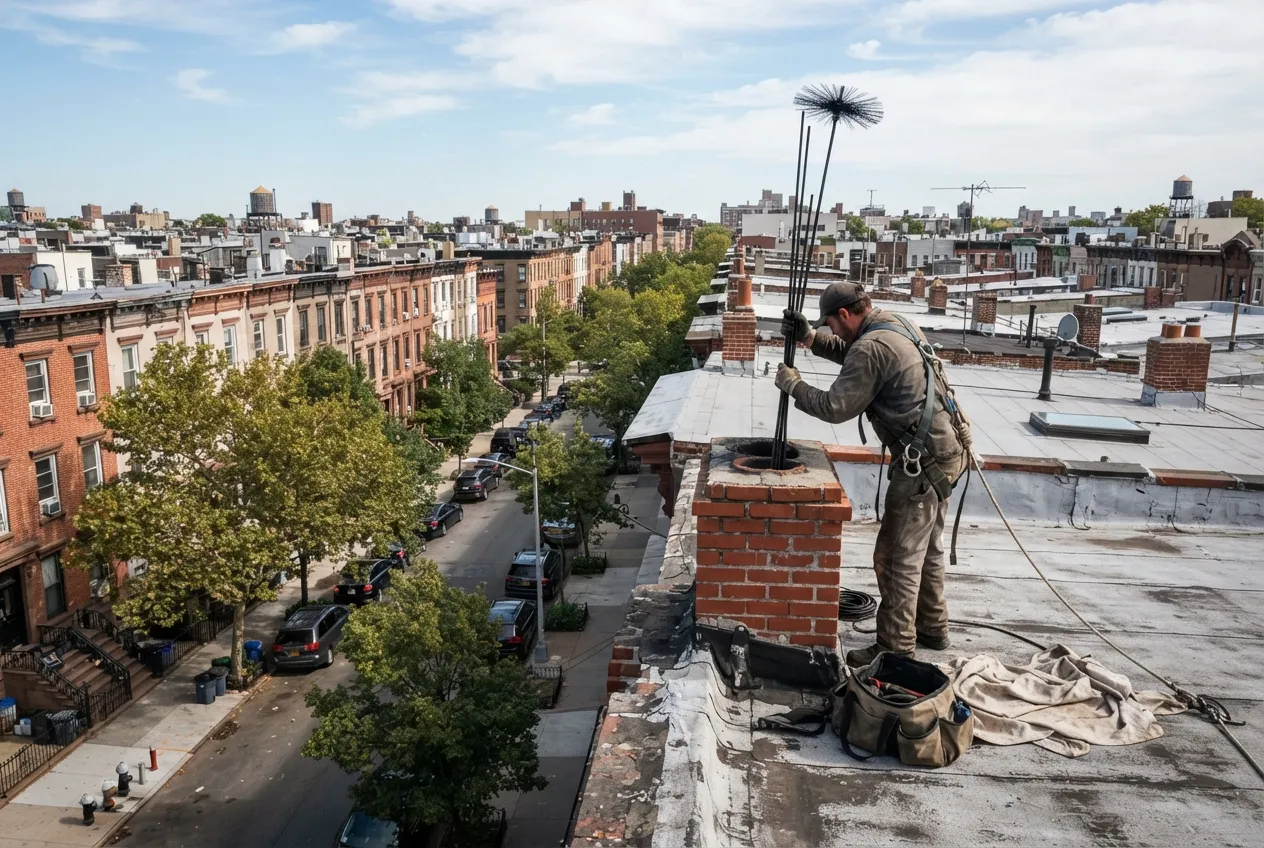
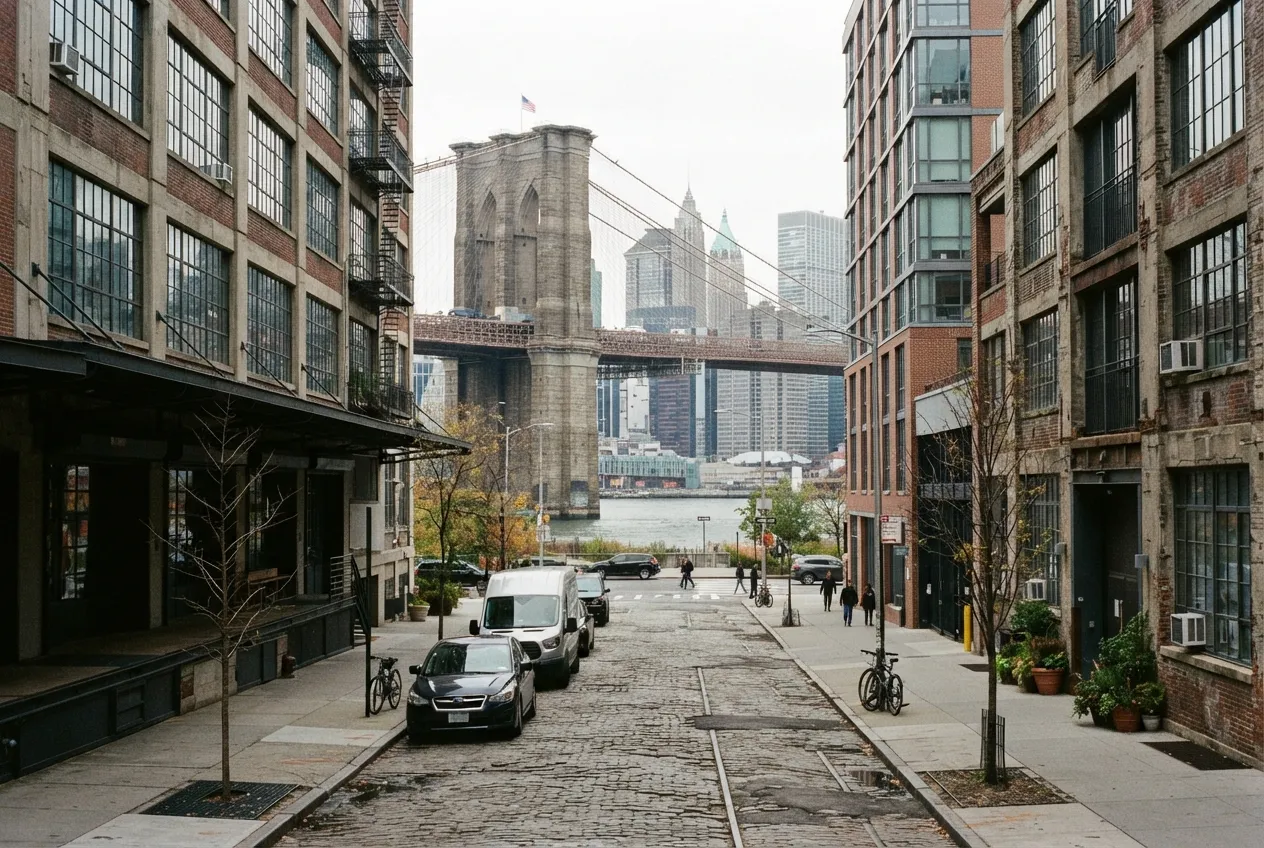
A chimney liner is the protective inner flue that carries smoke and exhaust safely out of your building. In DUMBO, many chimneys run through converted loft buildings, pre-war apartment and mixed-use buildings, and older rowhouses, and their original clay tile or bare masonry flues often no longer match the appliances they serve. All Star Chimney Sweep installs chimney liners for homes and buildings throughout DUMBO (11201), about a mile northeast of our Brooklyn office. Our certified technicians inspect the flue, explain what they found, and fit a liner sized to the boiler, water heater, furnace or fireplace it vents.
Why DUMBO chimneys often need relining
Much of DUMBO's housing was built long before today's heating equipment existed. Chimneys in converted industrial and pre-war buildings were often designed for coal or oil, then left in place as boilers, water heaters and fireplaces were swapped over the decades. A flue that worked for one appliance can be badly oversized or deteriorated for the next.
The most common reason we reline in this area is a fuel change. When a New York City building converts its boiler from oil to gas, the chimney has to be evaluated as part of the work. A new liner is often needed because gas exhaust produces acidic condensate that can corrode a masonry flue from the inside. In an unlined or poorly lined chimney, that damage can loosen mortar, crumble tile and let exhaust leak where it shouldn't.
Rowhouses and loft units with working wood-burning fireplaces have their own issues: cracked clay tiles, gaps between tile sections, and heat damage after a chimney fire. A sound liner keeps heat and combustion gases away from the surrounding masonry and framing.
How we decide whether you need a new liner
We don't recommend a liner without looking first. The NFPA 211 standard calls for chimneys, fireplaces and vents to be inspected once a year, and it describes three inspection levels. A Level 1 inspection fits when nothing has changed. A Level 2 inspection is called for when the system changes, such as a new appliance or a switch of fuel, or when the home is sold. A Level 3 inspection applies when a hidden hazard can only be reached by opening part of the chimney or building.
Most liner jobs in DUMBO start with a Level 2 inspection, which includes a camera scan of the flue. We look for the signs that point toward relining:
- Cracked, shifted or missing flue tiles
- Crumbling mortar joints or masonry debris at the base of the chimney
- Staining, dampness or corrosion from condensation
- A flue that is too large or too small for the connected appliance
- Damage after a chimney fire
- A planned or completed boiler conversion from oil to gas
Liner options we install
The right liner depends on the appliance, the fuel, and the shape and condition of the chimney. After the inspection, we explain which option fits and why.
- Stainless steel liners: the most common choice for gas and oil boilers, water heaters and many wood-burning fireplaces; available rigid or flexible to follow offsets in older chimneys
- Insulated stainless liners: used where extra protection is needed around the flue or to help exhaust draft properly
- Cast-in-place liners: a poured lining that can strengthen a deteriorated masonry flue
- Correct sizing: we match the liner diameter to the appliance so exhaust drafts properly and condensation is reduced
Time for your annual chimney check?
What installation looks like in a DUMBO building
Many DUMBO chimneys are tall and run through several floors, and roof access often goes through shared stairs or hatches. For condo and co-op buildings, we coordinate with the board, managing agent or superintendent on roof access, scheduling and any building requirements before work begins.
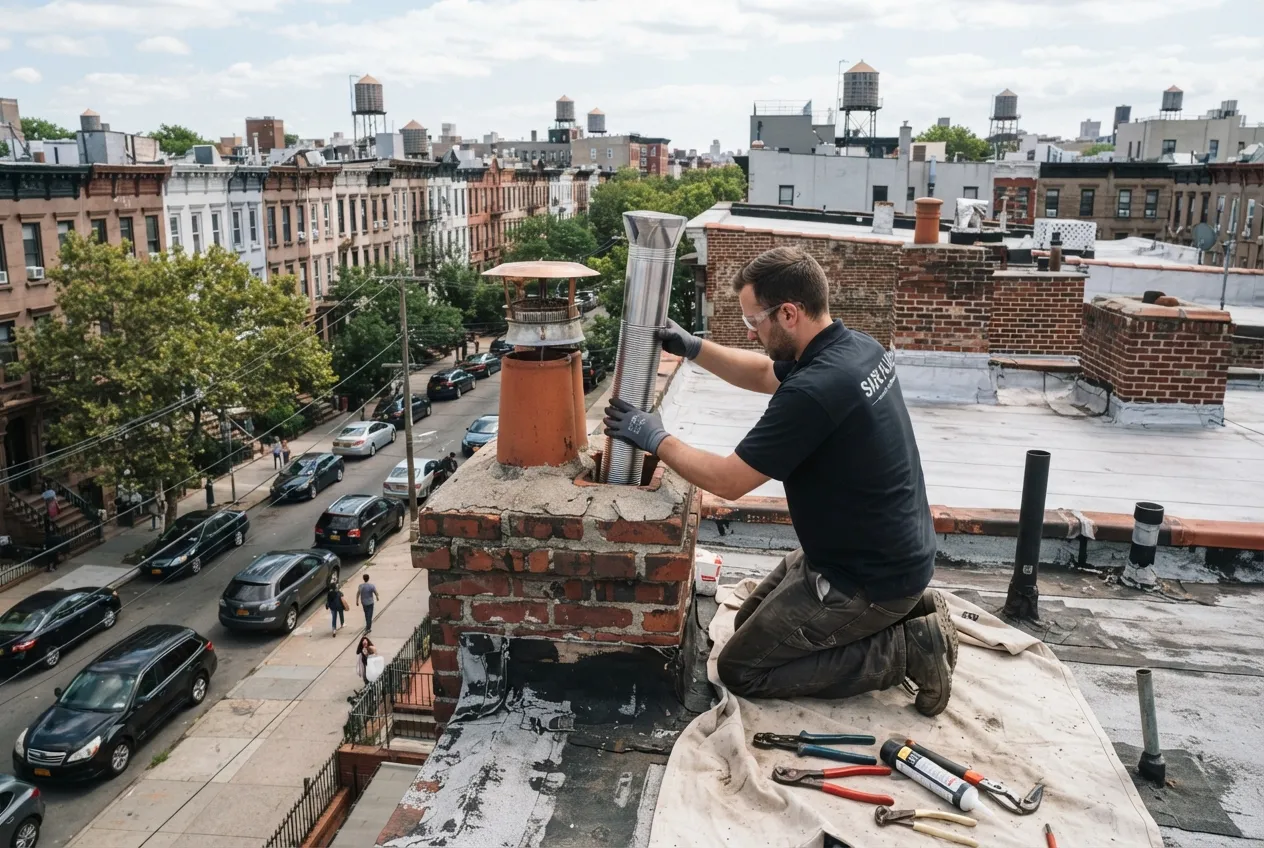
On installation day, we protect the work area, clean the flue, and lower the liner from the roof down to the appliance connection. We fit the top plate and cap, connect the liner at the base, and check that the system drafts properly. Before we leave, we review the work with you and leave the area clean.
Timing matters in buildings with central boilers. New York City's heat season runs from October 1 through May 31, when building owners must keep apartments heated to the city's minimum temperatures. If your building is planning an oil-to-gas conversion or expects a relining, scheduling the chimney work outside that window gives you more flexibility. If the work has to happen during heat season, we plan around keeping downtime as short as possible.
Keeping your new liner in good shape
A new liner still needs attention. Plan on a yearly inspection, in line with NFPA 211, and cleaning as needed based on how the appliance is used. We serve DUMBO along with nearby Downtown Brooklyn, Boerum Hill, Brooklyn Heights, Fort Greene and Carroll Gardens, so annual checkups are easy to schedule.
More services in DUMBO
- Chimney Sweep in DUMBOLocal service & repairs
- Chimney Inspection in DUMBOLocal service & repairs
- Chimney Repair in DUMBOLocal service & repairs
- Air Duct Cleaning in DUMBOLocal service & repairs