The short answer
Cobble Hill homeowners should have their chimneys inspected once a year, as the NFPA 211 standard calls for. A more detailed Level 2 inspection makes sense when you change fuel, add a new appliance or sell the home. We inspect brownstones, rowhouses and pre-war buildings throughout the neighborhood from our Henry St office.
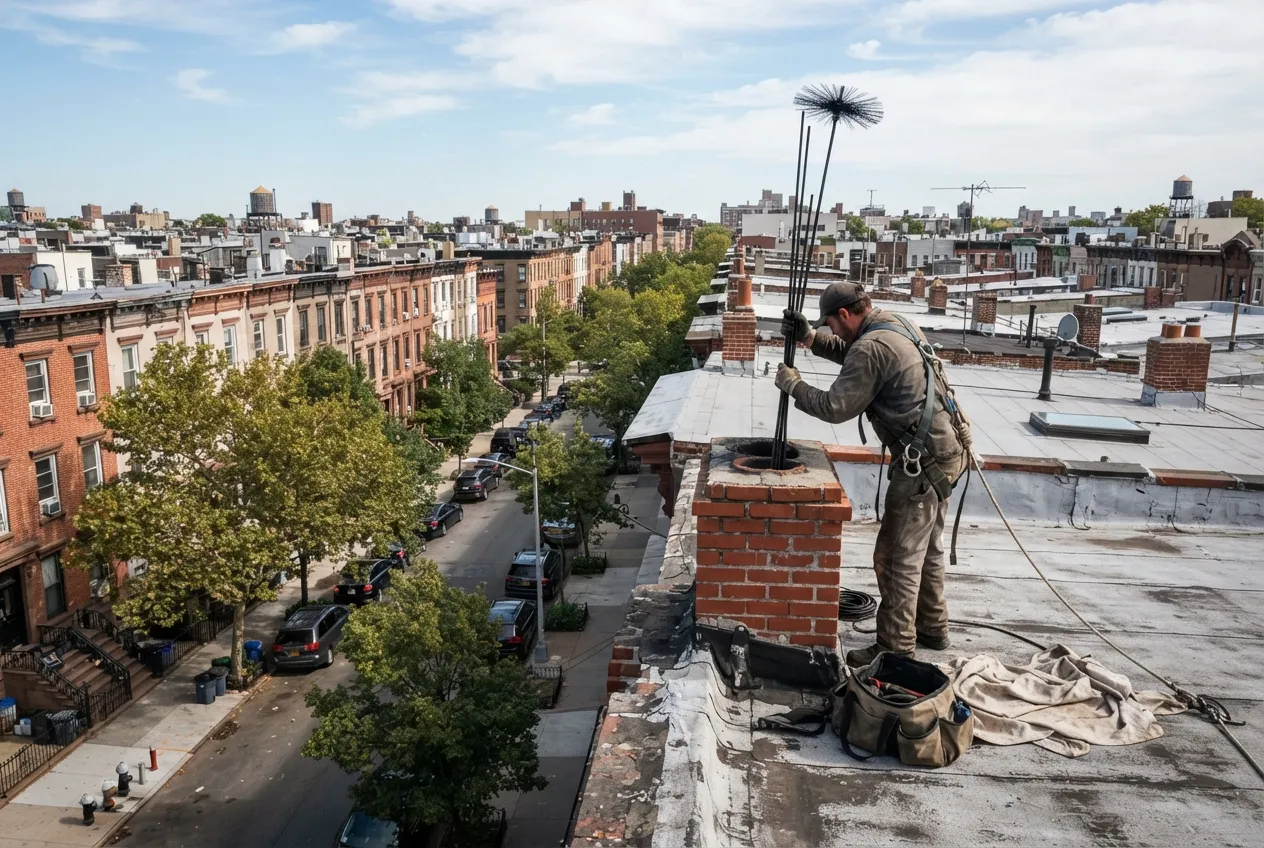
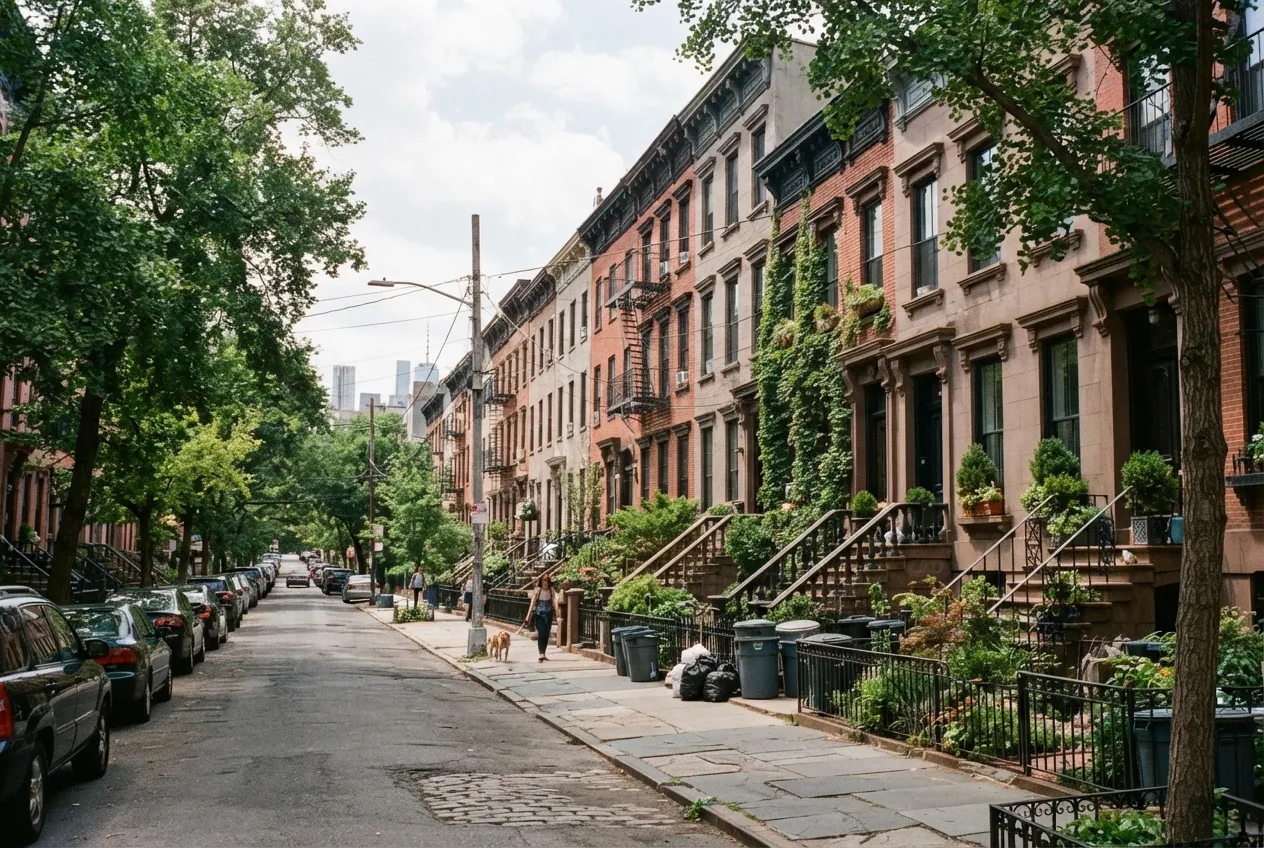
Our office is in Cobble Hill, at 543 Henry St, so chimney inspections here are close-to-home work for us. Much of the neighborhood's housing is older masonry: brownstones, brick rowhouses and pre-war apartment buildings. Over their lifetimes, many of these chimneys have vented coal, oil, gas and wood. An inspection tells you what condition the flue is in today, whether it suits the fireplace or appliance connected to it, and what needs attention before you rely on it.
Why Cobble Hill chimneys need a yearly look
The NFPA 211 standard calls for chimneys, fireplaces and vents to be inspected once a year. That applies whether you burn wood in a parlor-floor fireplace a few times a winter or your chimney only vents a gas boiler in the cellar. Venting a boiler or water heater is constant, quiet work. Problems in that kind of flue are easy to miss because there is no fire in the room to remind you the chimney is there.
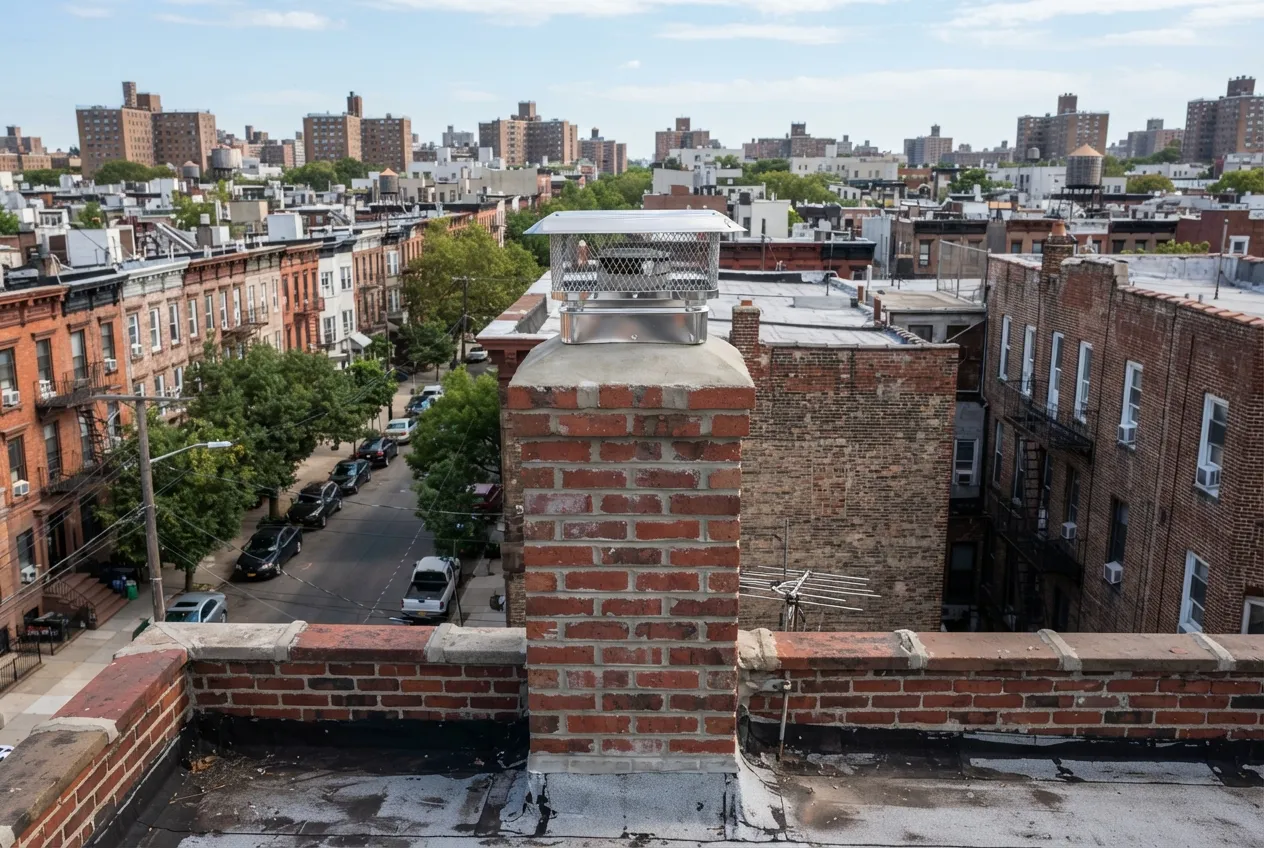
Older rowhouses and brownstones add a few things to watch. Chimneys are often tall, run through several floors and may share a stack or wall with the house next door. Mortar joints weather, clay tile liners crack, and caps and crowns take a beating on exposed roofs. Many of these issues can only be seen from the roof or from inside the flue, so we check both.
Which inspection level you need
Chimney professionals use three inspection levels. Before we start, we'll recommend the one that fits your situation and explain why.
If you're buying or selling a house in Cobble Hill, ask for a Level 2 inspection early in the process. That leaves time to plan for any repairs.
- Level 1: For a chimney where nothing has changed, meaning the same appliance, the same fuel and regular use. We check the accessible parts of the chimney, the firebox or appliance connection, and look for blockages and deposits.
- Level 2: For when the system changes, such as a new boiler or a switch of fuel, or when the home is being sold. This adds a closer look at the full length of the flue, typically with a camera, plus accessible areas such as the attic, basement and roof.
- Level 3: For when a hidden hazard can only be reached by opening part of the chimney or building. We recommend this only when a Level 2 inspection points to a problem that can't be assessed any other way.
Oil-to-gas conversions and flue liners
Many brownstones and apartment buildings in the area have switched from oil heat to gas, or are planning to. When a New York City building converts its boiler from oil to gas, the chimney has to be evaluated as part of the work. A new liner is often needed, because gas exhaust produces acidic condensate that can corrode a masonry flue.
If your conversion is still being planned, an inspection gives you and your heating contractor a clear picture of the flue's size, condition and lining before equipment is chosen. If the conversion is already done and no one looked at the chimney, it's worth scheduling an inspection now.
Time for your annual chimney check?
Timing your inspection around heat season
New York City's heat season runs from October 1 through May 31. During that time, building owners must keep apartments heated to the city's minimum temperatures. For owners of multi-unit buildings, a boiler flue problem found in January is a much bigger headache than one found in August. Late spring and summer are the easiest times to inspect, schedule repairs and still have the heating system ready by October.
The same timing works for homeowners who mainly use a wood-burning fireplace. An inspection before the first fire of fall gives you time to deal with a cracked liner, a missing cap or creosote buildup.
What you get from our inspection
Our certified technicians work carefully in older homes and protect floors and furnishings around the fireplace or boiler room. When the inspection is finished, you'll get:
- A plain-language explanation of what we found inside the house and on the roof
- Photos or camera images of problem areas when we can capture them
- Notes on creosote or soot buildup and whether a cleaning is needed
- Recommended repairs, sorted by what's urgent and what can wait
- Advice on whether the flue suits the appliance connected to it
Close to home in Cobble Hill and nearby
Our office is at 543 Henry St in Cobble Hill (ZIP 11231). We also inspect chimneys in Carroll Gardens, Gowanus, Red Hook, Park Slope and Brooklyn Heights. You might own a single-family brownstone, a rowhouse split into units, a pre-war apartment building or a detached home. In any case, we can help you understand your chimney's condition and plan what comes next.
More services in Cobble Hill
- Chimney Sweep in Cobble HillLocal service & repairs
- Chimney Repair in Cobble HillLocal service & repairs
- Air Duct Cleaning in Cobble HillLocal service & repairs
- Chimney Liner Installation in Cobble HillLocal service & repairs